Posted on Leave a comment

The Cotton That Went to Europe: Garo Producers, Global Markets, and Who Keeps the Value

Garo Cotton Global Trade Supply Chain — How Garo cotton producers in West Garo Hills entered global markets — and who kept the value. A story about supply chains, ethics, and what direct trade actually means.

Garo Cotton Global Trade Supply Chain: What You Need to Know

For further reading, see Garo Hills (Wikipedia).

Garo Cotton Global Trade — How Garo cotton producers were connected to European markets — and what this historical supply chain teaches about fair trade, ethics, and where value goes.

For further research, see the Garo people of Meghalaya.

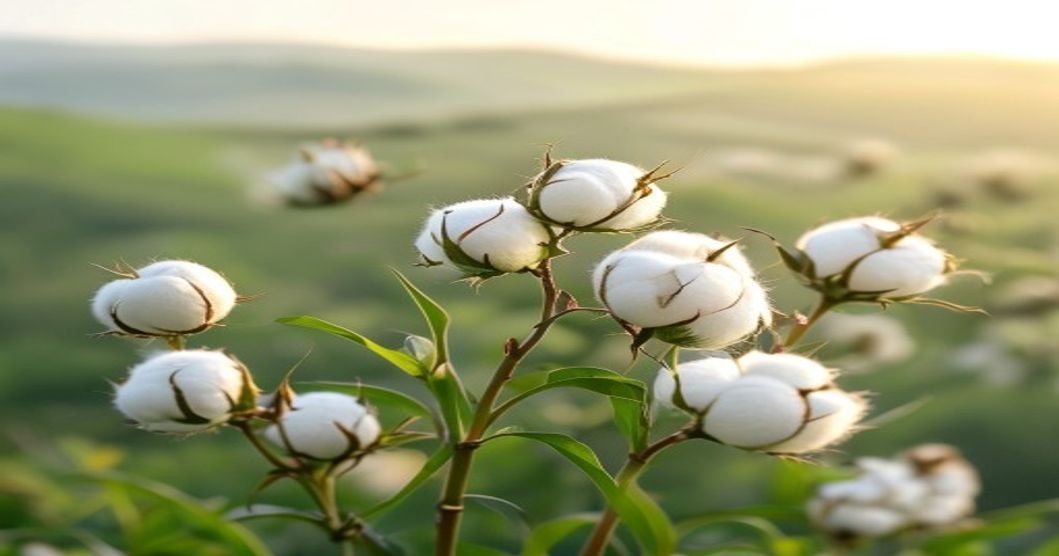
“Some who read this may be resting their feet the while on cotton grown in a Garo jhum,” wrote Rev. William Carey in 1919, noting that Garo hill cotton had found its way into European and Japanese felt and carpet mills.

The Garo farmers who grew that cotton received, at the frontier markets, trade goods: cloth, metal items, and liquor. The Bengali merchants who brokered it upward received a margin. The British trading companies that shipped it received a margin. The mills that processed it received the largest margin of all. The carpet buyer in London who rested their feet on Garo cotton had no idea where it came from, paid a fair market price for a finished product, and completed a supply chain that began with a woman sowing cotton seed in the jhum clearing of a hill she would farm for two years and then abandon.

The structure of value extraction in global commodity supply chains has not materially changed since the frontier markets of the 18th century. The person at the beginning of the chain — the one whose labour and land and knowledge produces the raw material — typically receives the smallest portion of the final sale price. The people who add the least non-replicable value (transportation, branding, retail presence) receive the largest portion.

Tea is not exempt from this. The global tea industry is built on this exact structure. Gardens in Assam, Meghalaya, and Darjeeling supply raw leaf that is auctioned, blended, branded, packaged, and sold at multiples of the garden gate price.

The Tea Story is a direct model: garden-to-consumer, without the auction house, without the broker, without the blend that dilutes the specific with the generic. The value that would ordinarily be distributed across the chain stays at both ends — the garden that produced it and the customer who drinks it. The Garo cotton farmer who walked five days to the frontier market and received cloth in exchange for fibre worth a fortune in London would recognise this problem. And they would recognise the alternative too.
Posted on Leave a comment

The Garo Healer and the Supplement Industry: Two Approaches to Fixing What’s Wrong

Garo Healer Folk Medicine Wellness — The Garo healer worked with what the forest provided. The supplement industry works with what the market will bear. A comparison of two approaches to wellness.

Garo Healer Folk Medicine Wellness: What You Need to Know

For further research, see the Garo people of Meghalaya.

In the Garo hills, illness had two treatments. The first was the priest, who identified which demon was causing the problem and offered an appropriate sacrifice — a chicken, a goat, a set of rituals. If the chicken’s entrails fell apart cleanly, the demon had been appeased and recovery would follow.

The second was the old-country doctor. A few of these existed in each region, people who had acquired knowledge of specific plant preparations for specific ailments. Some of these preparations were, by all accounts, genuinely effective. One 19th-century observer noted that a village that had been severely affected by leprosy had, by the use of these remedies, become “quite free of it” — verified by multiple witnesses.

The modern wellness industry has inherited from both traditions. The supplement section of any health store is largely the priest’s tradition in new packaging: a product sold on the basis that your particular affliction (low energy, poor focus, suboptimal sleep) is caused by a specific deficiency that this specific product will address. The mechanism is different but the psychology is the same — identify the demon, sacrifice the money, receive the relief.

The genuine herbalist tradition — specific plant compounds with specific effects, built on accumulated empirical knowledge rather than theory — is the old-country doctor’s tradition. Green tea catechins actually do what the research says they do. Ginger actually has anti-inflammatory properties. The evidence is not the faith.

The West Garo Hills grows tea in a region where folk medicine and plant knowledge have been accumulating for centuries. The tea itself is not medicine. But it comes from land where the relationship between plants and human health has been taken seriously for a very long time. That’s not a health claim. It’s context. Context changes the flavour of things.

Posted on Leave a comment

The Squirrel and the Deadline: A Garo Story for the Overworked

Garo Story Squirrel Deadline Modern Anxiety — A Garo story about a squirrel and a deadline — for anyone working too hard on too many things at once. What the Garo hills understand about modern anxiety and the wrong kind of busy.

Garo Squirrel Deadline Anxiety: What You Need to Know

Garo Story Squirrel Deadline Modern Anxiety: What You Need to Know

Garo Squirrel Deadline Anxiety — A Garo folktale about a squirrel with a deadline — and what it says about modern work anxiety, urgency, and the cost of always being in a hurry.

For further research, see the Garo people of Meghalaya.

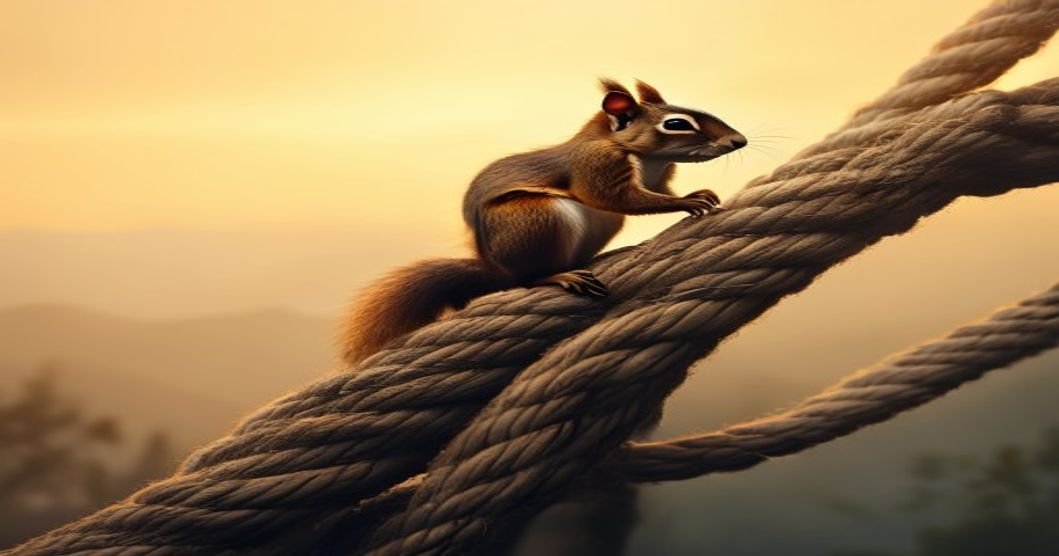
In the Garo hills of Meghalaya, the elders had a theory about earthquakes. The earth, they believed, was a flat square suspended at four corners by great strings. Somewhere up where the strings were tied, a squirrel lived. This squirrel had one defining characteristic: it liked to chew.

A spirit was appointed to watch the squirrel. But one afternoon, the spirit’s attention wandered — a beautiful cloud, a distant song, something. Just for a moment. The squirrel chewed. The earth shook. And since then, the squirrel has never stopped chewing, and the strings are a little thinner every year.

The Garo elders weren’t worried about this. They told the story, shrugged, and went back to tending their jhum clearings. The strings were still there. The earth was still up. Thin strings were enough.

Now consider the modern professional. There is always a squirrel. Sometimes it’s a pending deadline, sometimes a client email unanswered since Tuesday, sometimes a career decision that must be made before — when exactly? Before it’s too late, which is a deadline with no date attached, which is the worst kind.

The difference between the Garo elder and the modern professional is not intelligence or capacity. It’s the relationship to the squirrel. The elder knew the squirrel was there. Accepted it. Poured a cup of chu (rice beer, their equivalent of an evening wind-down) and watched the stars.

There is a specific kind of tiredness that comes not from doing too much, but from watching the squirrel too closely. From narrating your own anxiety in real time. From treating every thin string as if it were already broken.

Brew yourself a cup of something quiet. Look away from the squirrel for twelve minutes. The strings have been holding longer than you think.

From the Garo hills of West Meghalaya, where Tea Story tea is grown on land the Garo people have tended for centuries.

Posted on Leave a comment

The Moon, the Mud, and Your Performance Review: A Garo Myth About Comparison

Garo Story Moon Mud Comparison Culture — A Garo myth about the moon and the mud — and what it has to say about comparison culture, performance reviews, and the damage of measuring unlike things against each other.

Garo Story Moon Mud Comparison Culture: What You Need to Know

Garo Story Moon Mud Comparison — A Garo myth about the moon and the mud — and what it teaches about comparison culture, performance review anxiety, and measuring yourself against others.

For further research, see the Garo people of Meghalaya.

The Garo people of Meghalaya had a beautiful explanation for the dark patches on the moon. The sun and the moon were sisters. The moon was brighter. The sun, from envy, scooped up a handful of wet mud and flung it across her sister’s face while she slept.

When the moon woke and looked at her reflection in the rivers, she saw the dark patches and was sad. But then she noticed something: children on earth were staring up at her and making up stories. One said it was a rabbit. Another, a woman carrying wood. Another, a sleeping giant.

The mud had made her more interesting.

We live in an age of performance reviews, follower counts, salary benchmarks, and LinkedIn posts from people whose careers always seem to be going better than ours. The comparison industry has never been more efficient. You can be outdone by someone in a different city in a different field in a different decade of their life — and you can feel it in real time.

The Garo sun threw mud because she was the sun and she was still not enough. That’s the nature of comparison: it doesn’t require you to be small. It just requires you to stand next to someone and measure.

The moon’s response is worth studying. She didn’t throw mud back. She didn’t diminish. She just — stayed there. Let the children make stories out of her imperfections. And became, eventually, the more beloved of the two.

The Garo people told this story in changys (longhouses) in the hills above the Brahmaputra valley, where the sky was dark enough to see both sisters clearly every night. They grew their cotton, tended their jhums, and measured their worth by the harvest, not by what their neighbour planted.

Your performance review is not the sun’s opinion of whether you’re bright enough. It is one measurement taken on one morning, by someone who has never seen you in the dark.

Brewed with a calm morning cup — our Premium Green Tea from the West Garo Hills is unhurried, like the culture it comes from.

Posted on Leave a comment

The Nokpante Principle: What the Garo Bachelors’ Hall Knew About Loneliness

Garo Nokpante Community Loneliness Epidemic — The nokpante — the Garo bachelors' hall — as an antidote to loneliness. What Garo community design knew about human connection that the loneliness epidemic is only now learning.

Garo Nokpante Community Loneliness Epidemic: What You Need to Know

Garo Nokpante Community Loneliness — The Garo nokpante — the bachelors' hall — was a community institution for shared ritual and belonging. What it teaches about the modern loneliness epidemic.

For further research, see the Garo people of Meghalaya.

At the centre of every Garo village stood the nokpante — a large communal hall, its posts and beams fantastically carved, set in an open clearing. Here the nokma (village headman) held court. Bulls were brought to be baited before festivals. And the village’s young men slept, every night, together.

Not out of necessity. Not for warmth. The nokpante was architecture with a social purpose: a designed space for the unmarried men of the village to be in proximity, to talk until late, to learn the village’s knowledge from those slightly older, to be witnessed and to witness others. It was a communal bedroom that was also a school, a council chamber, and a gathering place.

The Garo did not have a word for the loneliness epidemic, because they had the nokpante.

Modern cities are full of people living in individual units with individual screens and individual deliveries arriving at individual doors. We have never been more connected by infrastructure and more isolated by design. The average urban professional can go three days without speaking to another person face-to-face, and the architecture of their building is organised specifically so that this is easy.

The nokpante principle is not nostalgia. It is the recognition that belonging requires a physical space where you show up regularly and are expected. Not an app. Not a group chat. A room. Chairs. People you will see again tomorrow.

The Garo villages knew something that urban planners are only now beginning to rediscover: community does not self-assemble. It requires a building in the middle of the village, with the lights on, where someone will be.

Tea works a little like this. A kettle is an invitation. The sound of it boiling in a shared kitchen is a signal: someone is making something, you might be offered some, you could talk for a few minutes. The nokpante began with smaller gestures than we think.