
Posted on Leave a comment

The Moon, the Mud, and Your Performance Review: A Garo Myth About Comparison

Garo Story Moon Mud Comparison Culture — A Garo myth about the moon and the mud — and what it has to say about comparison culture, performance reviews, and the damage of measuring unlike things against each other.

Garo Story Moon Mud Comparison Culture: What You Need to Know

Garo Story Moon Mud Comparison — A Garo myth about the moon and the mud — and what it teaches about comparison culture, performance review anxiety, and measuring yourself against others.

For further research, see the Garo people of Meghalaya.

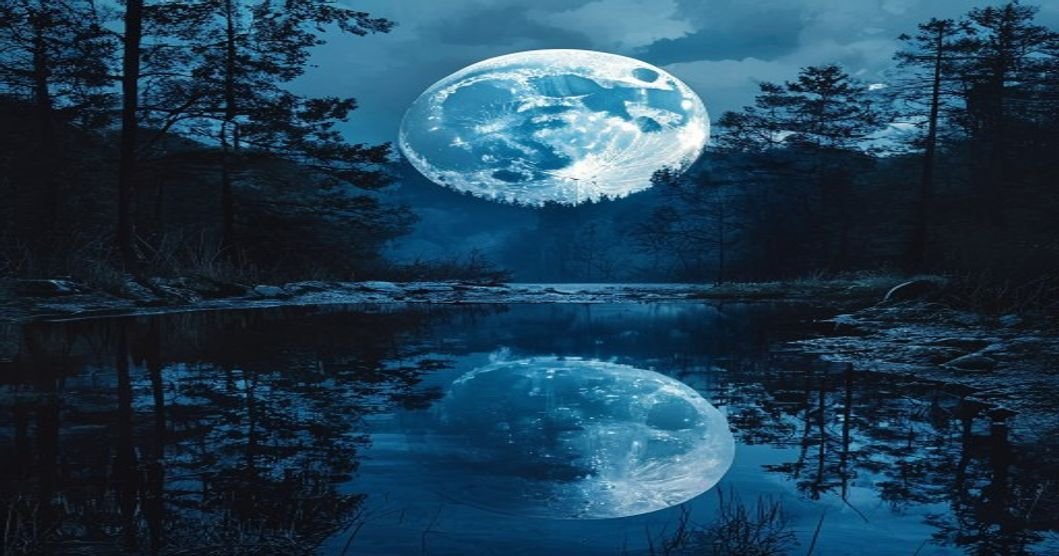
The Garo people of Meghalaya had a beautiful explanation for the dark patches on the moon. The sun and the moon were sisters. The moon was brighter. The sun, from envy, scooped up a handful of wet mud and flung it across her sister’s face while she slept.

When the moon woke and looked at her reflection in the rivers, she saw the dark patches and was sad. But then she noticed something: children on earth were staring up at her and making up stories. One said it was a rabbit. Another, a woman carrying wood. Another, a sleeping giant.

The mud had made her more interesting.

We live in an age of performance reviews, follower counts, salary benchmarks, and LinkedIn posts from people whose careers always seem to be going better than ours. The comparison industry has never been more efficient. You can be outdone by someone in a different city in a different field in a different decade of their life — and you can feel it in real time.

The Garo sun threw mud because she was the sun and she was still not enough. That’s the nature of comparison: it doesn’t require you to be small. It just requires you to stand next to someone and measure.

The moon’s response is worth studying. She didn’t throw mud back. She didn’t diminish. She just — stayed there. Let the children make stories out of her imperfections. And became, eventually, the more beloved of the two.

The Garo people told this story in changys (longhouses) in the hills above the Brahmaputra valley, where the sky was dark enough to see both sisters clearly every night. They grew their cotton, tended their jhums, and measured their worth by the harvest, not by what their neighbour planted.

Your performance review is not the sun’s opinion of whether you’re bright enough. It is one measurement taken on one morning, by someone who has never seen you in the dark.

Brewed with a calm morning cup — our Premium Green Tea from the West Garo Hills is unhurried, like the culture it comes from.
Posted on Leave a comment

The Borang: Why the Garo Built Their Beds in Trees (And What It Says About Rest)

Garo Borang Tree House Rest — The Garo borang — a tree platform for sleeping and watching — was designed for rest and perspective simultaneously. What this architectural choice teaches about recovery.

Garo Borang Tree House Rest: What You Need to Know

For further research, see the Garo people of Meghalaya.

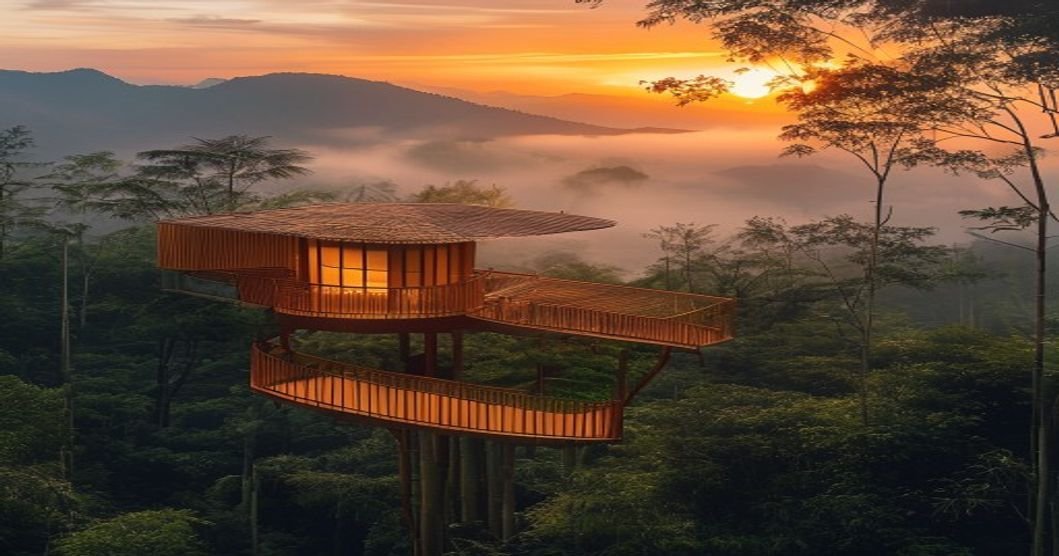
In the Garo hills, a traveller passing through the jungle would sometimes look up and see a house in a tree. Not a children’s platform — a real house. Forty feet off the ground, lashed to the branches with creeper ropes, floored with bamboo, inhabited by an entire family who cooked, ate, and slept up there.

The Garo borang (tree house) was practical: it gave purer air than the jungle floor, protection from mosquitoes, and a vantage point over the jhum fields to watch for birds and animals eating the crops. A mother who needed to descend had to navigate a bamboo ladder with her baby on her back, the rungs a wide stride apart.

But a missionary traveller who passed through in 1898 noted something beyond the practicality. He wrote that the Garos “seem to love a high roosting-place and have a bird’s fondness for being cradled by the wind.” The borang wasn’t just architecture. It was a preference.

Forty feet of elevation changes what you can see. From the ground, a forest is a wall. From the borang, it’s a canopy — you can see the ridgelines, the direction of weather, the clearing where the rice is growing, the river glinting a valley away. You are the same person with the same problems, but the problems are down there and you are up here, swaying slightly.

We have almost no equivalent in modern life. Our buildings keep us at ground level even when we’re twenty floors up, because the windows don’t open and the air conditioning is the same as the floor below. Our phones keep us at ground level because every notification is a pull back to the immediate, the reactive, the ground-floor urgency.

The borang mind is the one that steps slightly out of the ordinary stream — not to avoid the work, but to see it from above. To watch the crops rather than be in them. To feel the wind, which does not carry email.

A cup of tea in a quiet place is the closest most of us get to forty feet in a tree. Take it seriously.

Posted on Leave a comment

The Milky Way Is Stampeding Buffaloes: The Garo Story We Need Right Now

Garo Milky Way Buffaloes Wonder — The Garo see the Milky Way as stampeding buffaloes — a cosmology of wonder and scale. What this way of seeing says about our relationship to the modern world.

Garo Milky Way Buffaloes Wonder: What You Need to Know

For further research, see the Garo people of Meghalaya.

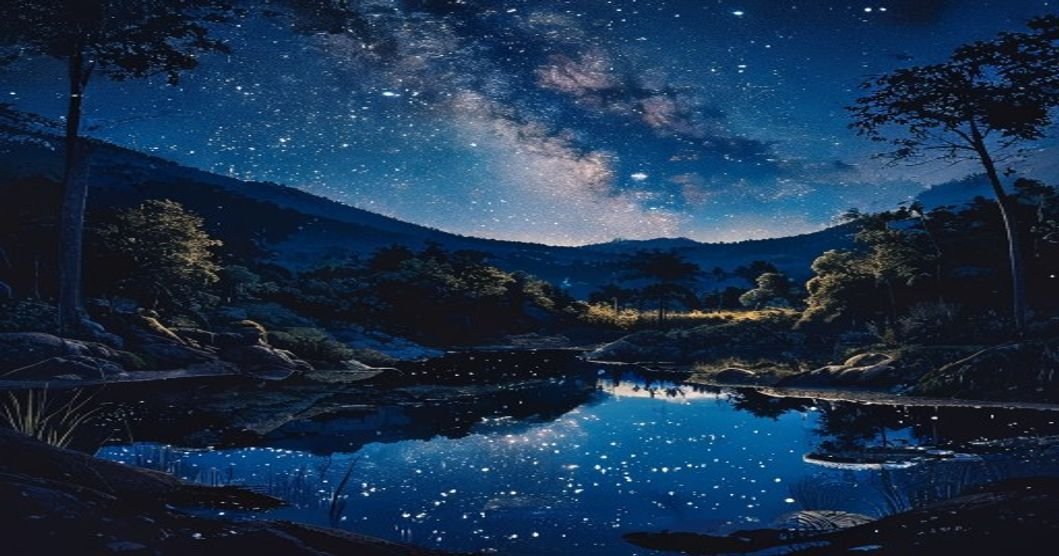
In the Garo hills, there was a story about the Milky Way. A great spirit had died. The other spirits were holding a ceremony — the drums were beating, the wailing had begun. Buffaloes were being brought for sacrifice, many of them, moving in a great herd. And then the drums frightened them. All at once, the herd panicked, turned, and ran — straight off the edge of the earth and into the sky. Their hooves left a dusty track across the darkness.

That track is the Milky Way. It has never faded because the buffaloes are still running.

This is the kind of story that takes ten seconds to hear and stays with you for the rest of the evening. You look up at the sky and you see something different from what you saw before. The pale band of light is no longer just light — it’s a herd in motion, frightened by the sound of grief, running across infinity.

Wonder is not a luxury. It is a cognitive function. The part of the brain that registers surprise and awe — that pauses and reconfigures its model of the world — is the same part that generates creative insight, flexible thinking, and the capacity to see problems from new angles. People who regularly experience wonder are measurably more cognitively flexible than people who don’t.

The Garo elders were not trying to teach cognitive flexibility. They were telling their children a story about the sky. But the effect was the same: every child who grew up knowing that the Milky Way was buffaloes looked up with slightly wider eyes than a child who had been told it was a distant galaxy cluster. Both facts are true. One of them is also alive.

Your next conference call can wait four minutes. Go outside. Look up. The buffaloes are still running.