Garo Milky Way Buffaloes Wonder — The Garo see the Milky Way as stampeding buffaloes — a cosmology of wonder and scale. What this way of seeing says about our relationship to the modern world.
For further research, see the Garo people of Meghalaya.
In the Garo hills, there was a story about the Milky Way. A great spirit had died. The other spirits were holding a ceremony — the drums were beating, the wailing had begun. Buffaloes were being brought for sacrifice, many of them, moving in a great herd. And then the drums frightened them. All at once, the herd panicked, turned, and ran — straight off the edge of the earth and into the sky. Their hooves left a dusty track across the darkness.
That track is the Milky Way. It has never faded because the buffaloes are still running.
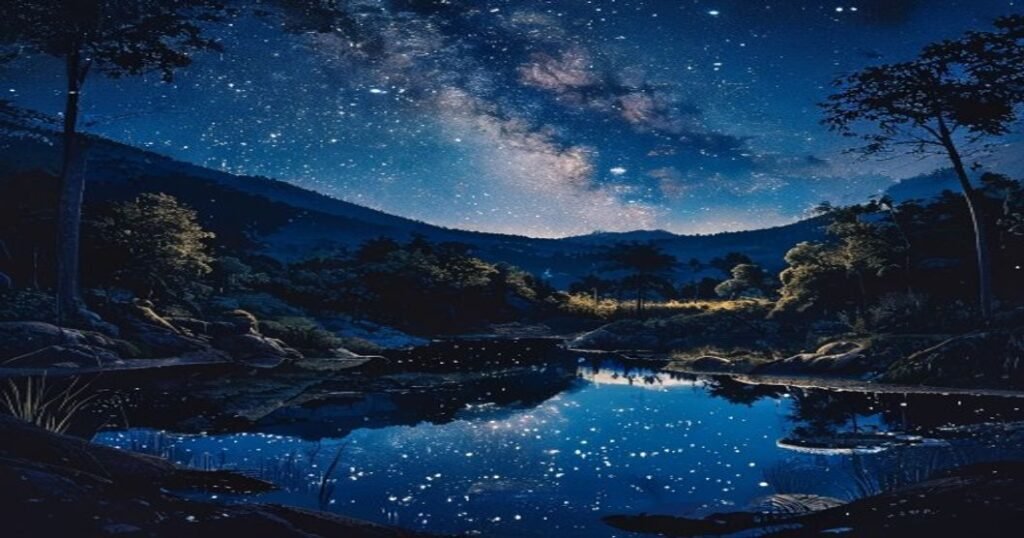
This is the kind of story that takes ten seconds to hear and stays with you for the rest of the evening. You look up at the sky and you see something different from what you saw before. The pale band of light is no longer just light — it’s a herd in motion, frightened by the sound of grief, running across infinity.
Wonder is not a luxury. It is a cognitive function. The part of the brain that registers surprise and awe — that pauses and reconfigures its model of the world — is the same part that generates creative insight, flexible thinking, and the capacity to see problems from new angles. People who regularly experience wonder are measurably more cognitively flexible than people who don’t.
The Garo elders were not trying to teach cognitive flexibility. They were telling their children a story about the sky. But the effect was the same: every child who grew up knowing that the Milky Way was buffaloes looked up with slightly wider eyes than a child who had been told it was a distant galaxy cluster. Both facts are true. One of them is also alive.
Your next conference call can wait four minutes. Go outside. Look up. The buffaloes are still running.
Tea Story tea is grown in the West Garo Hills — one of the world's rainiest, most biodiverse regions. Single-garden. No middlemen. Re-brews three times. Explore our teas →