Posted on Leave a comment

Wangala: The Garo Harvest Festival That Knew How to Stop (And Why We’ve Forgotten)

Garo Wangala Festival Gratitude — The Garo wangala — the harvest festival of gratitude and rest — and what it teaches about celebration, stopping, and the modern inability to mark completion.

Garo Wangala Festival Gratitude: What You Need to Know

For further research, see the Wangala harvest festival of the Garo.

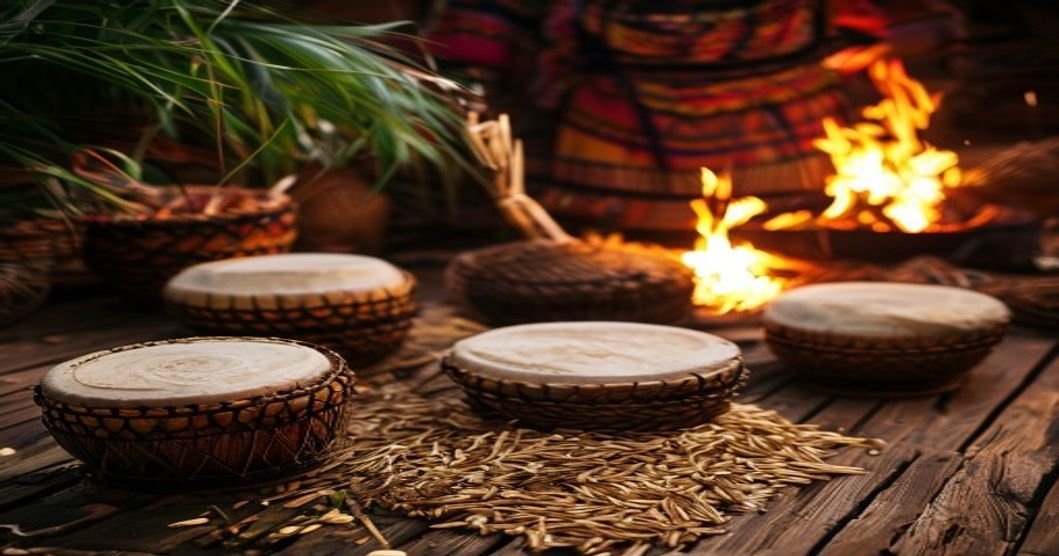
Every year, after the rice was in and the cotton picked, the Garo people of Meghalaya held Wangala — a festival of thanksgiving to Misi Saljong, the Sun God and deity of fertility. The drums began, the Docksiagipa dance moved through the village, the community feasted together on the harvest they had made collectively.

Wangala was not a market fair. Nothing was sold. Nothing was launched. There were no performances for an audience of strangers or metrics of attendance. The festival was a settling of accounts with the year — an acknowledgement that the rain had come, the crops had grown, the harvest was in, and this was worth stopping for.

And then it ended. The drums stopped. The dancers went home. The next season began.

We have lost the art of the festival that knows how to end. Modern celebrations have become performances of celebration — content for the story, the reel, the highlight archive. We document instead of experience, because the documented version is what we use to show that we were, in fact, there and it was, in fact, good.

The Garo harvest festival worked because it was directed at something real: the actual food that was actually harvested by actual people who were standing right there. The gratitude was not abstract. It was addressed to the specific sun that had shone on the specific rice in the specific jhum clearing on the hillside above the village.

Gratitude for the specific is very different from gratitude as a wellness practice. The first is a relationship between a person and a place and a season. The second is a cognitive exercise with general applicability.

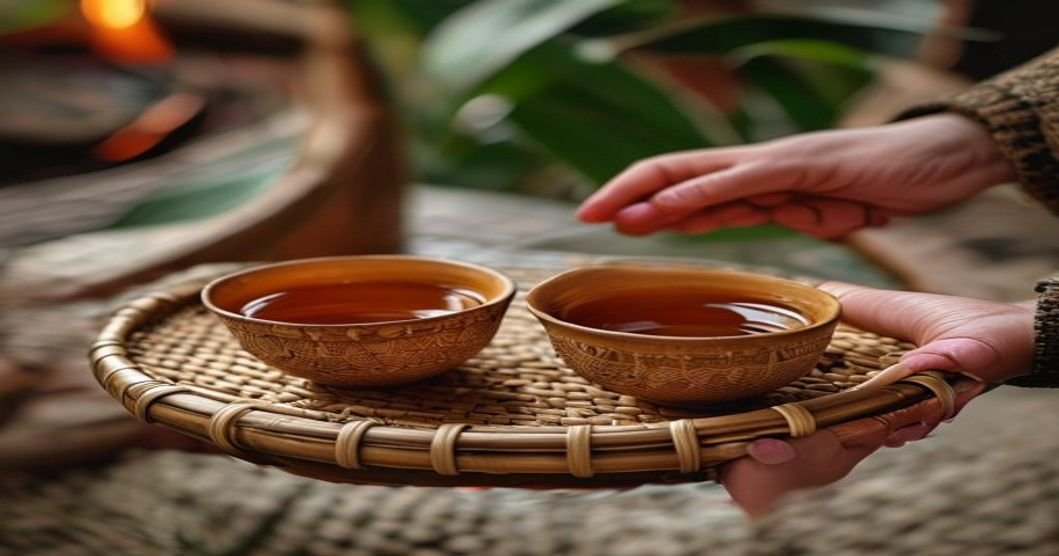
Tea made from leaves grown in the West Garo Hills carries something of this specificity. A particular altitude. A particular rainfall. A particular October harvest. When you drink it, you are drinking a specific thing from a specific place in a specific year. That is worth pausing on. Even without drums.

Posted on Leave a comment

The Nokma’s Authority: What Garo Leadership Knew About Power That Modern Management Has Forgotten

Garo Nokma Leadership Earned Authority — The Garo nokma earned authority through responsibility, not appointment. What this leadership model teaches about management, power, and earning the right to lead.

Garo Nokma Leadership Earned Authority: What You Need to Know

For further research, see the Garo people of Meghalaya.

The Garo nokma was the village headman. He held the lion’s share of land, and the villagers obeyed him. But here is the thing an early British administrator noted with some bafflement: the nokma had no legal authority. None. He could not compel anyone. He issued no orders that carried official weight.

And yet the village followed him.

The nokma’s position was one of honour, not of pay. He was comparatively wealthy, because wealth in the Garo system was redistributed through feasting and festival rather than hoarded — the rich man in a Garo village was the one who fed the most people, not the one with the largest granary. The nokma’s authority was the product of this relationship: he gave, the village recognised, the village followed.

Modern management theory has a word for what the nokma had: psychological safety. Trust. Earned credibility. It has several frameworks, each with a diagram, explaining how to achieve this. The frameworks are largely unnecessary. The nokma’s village didn’t need a diagram. They needed a leader who showed up, distributed fairly, and didn’t mistake the title for the thing.

The adjacent figure in the Garo system was the luskar — a Government officer who collected taxes and could impress labour for road-making. The luskar had legal authority. He could compel. He received a jacket, a turban, and a shawl from the Government each year to mark his office.

Every village had both a nokma and a luskar. Every workplace has both too. The manager who can compel and the colleague whose opinion actually shapes what people do. They are usually not the same person. In the Garo hills, everyone knew which was which. In modern workplaces, people often pretend not to notice.

The nokma’s system lasted several centuries. We will see about the org chart.

Posted on Leave a comment

All Property Descends Through the Women: The Garo Matrilineal System and What We’re Still Arguing About

Garo Matrilineal Women Authority Property — The Garo matrilineal system — where property, land, and clan identity descend through women — and what it shows about gender, authority, and inheritance.

Garo Matrilineal Women Authority Property: What You Need to Know

For further research, see the Garo people of Meghalaya.

In the Garo social system, all property belonged to and descended through women. Not theoretically — actually. The youngest daughter was the heiress of the house. A man who married into a Garo family did so on the understanding that the land was not his. The clan was divided into “motherhoods,” each tracing its line through the female side. The nokma’s wife held as much authority in council debates as the nokma himself — “possibly a little more,” noted an early observer, with what reads as grudging admiration.

The Garo system was not matriarchal in the sense of women holding all social power. It was matrilineal in the sense that the economic basis of the family — the land, the house, the inheritance — moved through the female line. Men held political and ceremonial roles. Women held the property. The system worked because both were considered necessary.

We are, in 2024, still discussing whether women should hold equal positions in corporate governance, whether the gender pay gap reflects structural bias or individual choice, whether maternal leave policies disadvantage careers. These are not new questions. They are ancient questions that the Garo hills had a working answer to several centuries before the modern corporation existed.

The Garo answer was not utopian. No system is. But it was functional, durable, and organised around a simple principle: the person who sustains the home has the claim to the home. The person who is most likely to be there across generations holds the thing that persists across generations.

The Garo woman who gave away her bark-cloth blanket — just pulled it off the roof and handed it to a stranger, smiling — did so from a position of security. She owned the house. She owned the land. She could afford to be generous. Generosity is easier when you are not afraid of losing the thing you give from.

Posted on Leave a comment

The Milky Way Is Stampeding Buffaloes: The Garo Story We Need Right Now

Garo Milky Way Buffaloes Wonder — The Garo see the Milky Way as stampeding buffaloes — a cosmology of wonder and scale. What this way of seeing says about our relationship to the modern world.

Garo Milky Way Buffaloes Wonder: What You Need to Know

For further research, see the Garo people of Meghalaya.

In the Garo hills, there was a story about the Milky Way. A great spirit had died. The other spirits were holding a ceremony — the drums were beating, the wailing had begun. Buffaloes were being brought for sacrifice, many of them, moving in a great herd. And then the drums frightened them. All at once, the herd panicked, turned, and ran — straight off the edge of the earth and into the sky. Their hooves left a dusty track across the darkness.

That track is the Milky Way. It has never faded because the buffaloes are still running.

This is the kind of story that takes ten seconds to hear and stays with you for the rest of the evening. You look up at the sky and you see something different from what you saw before. The pale band of light is no longer just light — it’s a herd in motion, frightened by the sound of grief, running across infinity.

Wonder is not a luxury. It is a cognitive function. The part of the brain that registers surprise and awe — that pauses and reconfigures its model of the world — is the same part that generates creative insight, flexible thinking, and the capacity to see problems from new angles. People who regularly experience wonder are measurably more cognitively flexible than people who don’t.

The Garo elders were not trying to teach cognitive flexibility. They were telling their children a story about the sky. But the effect was the same: every child who grew up knowing that the Milky Way was buffaloes looked up with slightly wider eyes than a child who had been told it was a distant galaxy cluster. Both facts are true. One of them is also alive.

Your next conference call can wait four minutes. Go outside. Look up. The buffaloes are still running.

Posted on Leave a comment

What the Garo Hills Know About Hospitality That Your Favourite Café Doesn’t

Garo Hospitality Gift Culture Tea — Garo hospitality is built on the gift — tea offered without transaction. What this cultural practice teaches about welcome, generosity, and what cafés have got wrong.

Garo Hospitality Gift Culture Tea: What You Need to Know

For further research, see the Garo people of Meghalaya.

There is a scene in the 1898 accounts of a journey through the Garo hills: a researcher stops at a village in the hills, admires a woman’s simpak cloth — a bark-cloth blanket drying on the roof. The woman, without hesitation, pulls it off the thatch and presents it. With a smile.

He hadn’t asked. She didn’t haggle. The offer was simply made because he had noticed it, and noticing a thing in a Garo context was understood as a kind of wanting, and wanting a thing that someone had was a social occasion for giving. The exchange was not transactional. It was relational. She gave; he was now in a relationship with her that carried its own obligations, which would play out through the social fabric of the village in ways he didn’t fully understand.

The Garo concept of hospitality was built on this principle: the gift precedes the request. You offer before you are asked. The feast is prepared before the guests arrive. The chu is poured before the news is shared. The social contract begins with generosity and works backward to need.

Modern hospitality — the café, the hotel, the concierge economy — begins with the menu. You tell us what you want; we provide it; you pay; the relationship ends. It is efficient and entirely pleasant and contains almost no human exchange whatsoever.

Tea sits at an interesting point in this. In most cultures that have a serious tea tradition, the offering of tea precedes everything — conversation, business, disclosure, need. You are given the cup before you are asked what you want. The cup is the statement that you are welcome, that your presence is noticed, that something is being made for you before you have explained yourself.

This is old. The Garo hills knew it. The Japanese tea ceremony knows it. The Bengali adda knows it. The Irish farmhouse cup-before-question knows it. The moment you give someone a cup of tea before they ask for it, you have done something small and genuinely human. It costs almost nothing. It is not nothing.