
Garo Hospitality Gift Culture Tea — Garo hospitality is built on the gift — tea offered without transaction. What this cultural practice teaches about welcome, generosity, and what cafés have got wrong.
For further research, see the Garo people of Meghalaya.
There is a scene in the 1898 accounts of a journey through the Garo hills: a researcher stops at a village in the hills, admires a woman’s simpak cloth — a bark-cloth blanket drying on the roof. The woman, without hesitation, pulls it off the thatch and presents it. With a smile.
He hadn’t asked. She didn’t haggle. The offer was simply made because he had noticed it, and noticing a thing in a Garo context was understood as a kind of wanting, and wanting a thing that someone had was a social occasion for giving. The exchange was not transactional. It was relational. She gave; he was now in a relationship with her that carried its own obligations, which would play out through the social fabric of the village in ways he didn’t fully understand.
The Garo concept of hospitality was built on this principle: the gift precedes the request. You offer before you are asked. The feast is prepared before the guests arrive. The chu is poured before the news is shared. The social contract begins with generosity and works backward to need.
Modern hospitality — the café, the hotel, the concierge economy — begins with the menu. You tell us what you want; we provide it; you pay; the relationship ends. It is efficient and entirely pleasant and contains almost no human exchange whatsoever.
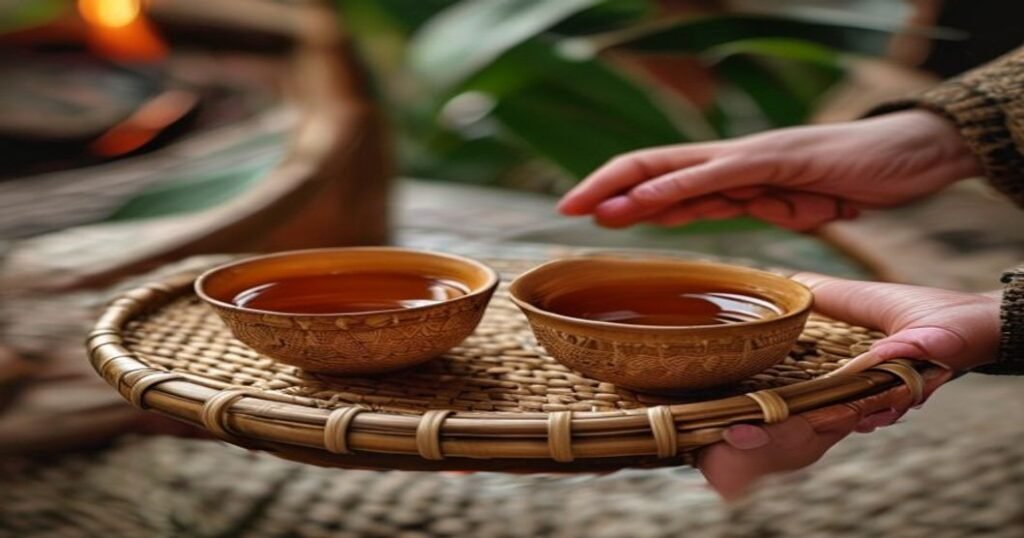
Tea sits at an interesting point in this. In most cultures that have a serious tea tradition, the offering of tea precedes everything — conversation, business, disclosure, need. You are given the cup before you are asked what you want. The cup is the statement that you are welcome, that your presence is noticed, that something is being made for you before you have explained yourself.
This is old. The Garo hills knew it. The Japanese tea ceremony knows it. The Bengali adda knows it. The Irish farmhouse cup-before-question knows it. The moment you give someone a cup of tea before they ask for it, you have done something small and genuinely human. It costs almost nothing. It is not nothing.
Tea Story tea is grown in the West Garo Hills — one of the world's rainiest, most biodiverse regions. Single-garden. No middlemen. Re-brews three times. Explore our teas →