Achik Tale Muni First Cup — The Garo creation story of Muni — fire, water, and warmth — and its connection to the cup of tea that comes from the same West Garo Hills today.
Achik Tale Muni First Cup: What You Need to Know
For further research, see the Garo people of Meghalaya.
From A’Chik Golporang (Garo Folklore) Part III, Story 1 (Muniko Manchengani — The Story of Muni), collected by Dhoronsing K. Sangma.
The first story in the third and final book of A’Chik Golporang is the creation story — Muniko Manchengani, the story of Muni, the primordial creator in Garo cosmology.
In the story, Muni establishes the first great things: the first rules of the forest, the first understanding between the living world and the spirit world, the first agreements that make the hills habitable. Niba Jonja, who is to Garo cosmology what Arjuna is to the Mahabharata — the figure who carries the living world’s case before the great powers — undertakes the first journey to Salgra to receive Muni’s guidance.
The journey requires fire. Not fire as destruction — fire as the thing that makes the cold habitable, that turns raw into nourishing, that marks the boundary between the sheltered and the unsheltered. Before Muni’s establishment of the fire rules, the Garo hills were habitable in body but not in spirit. After: the changy had a hearth in the middle of the floor. The nokpante had a fire around which the young men gathered. The jhum clearing had fires lit at the right moment in March that returned the cut bamboo to ash and the ash to soil.
Fire was the technology that made the Garo hills home.
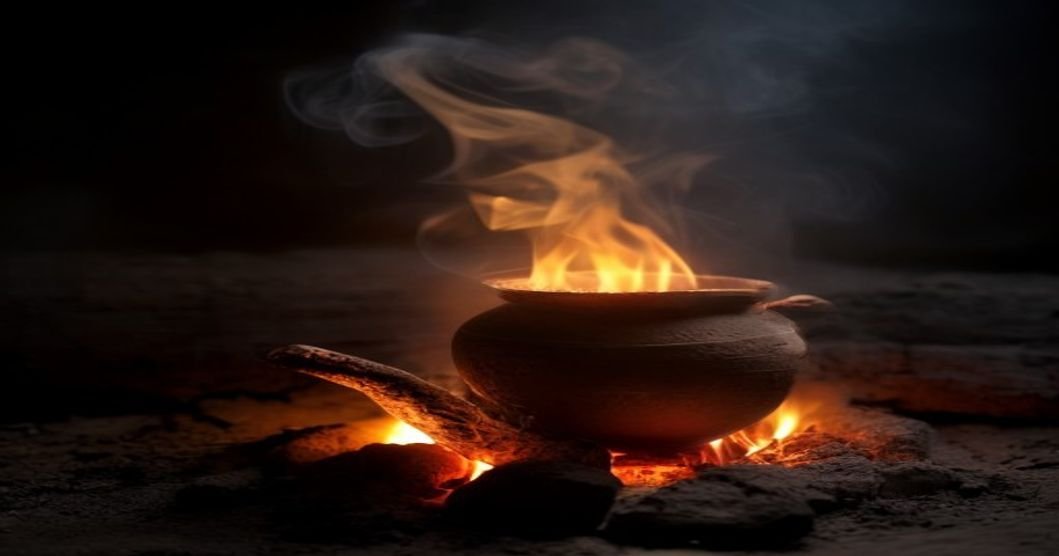
But fire alone was not the gift. The gift was the combination — fire and water together. The cooking pot over the flame. The steam that rose from the water as it heated. The specific chemistry that happens when the two meet at the right temperature and in the right vessel.
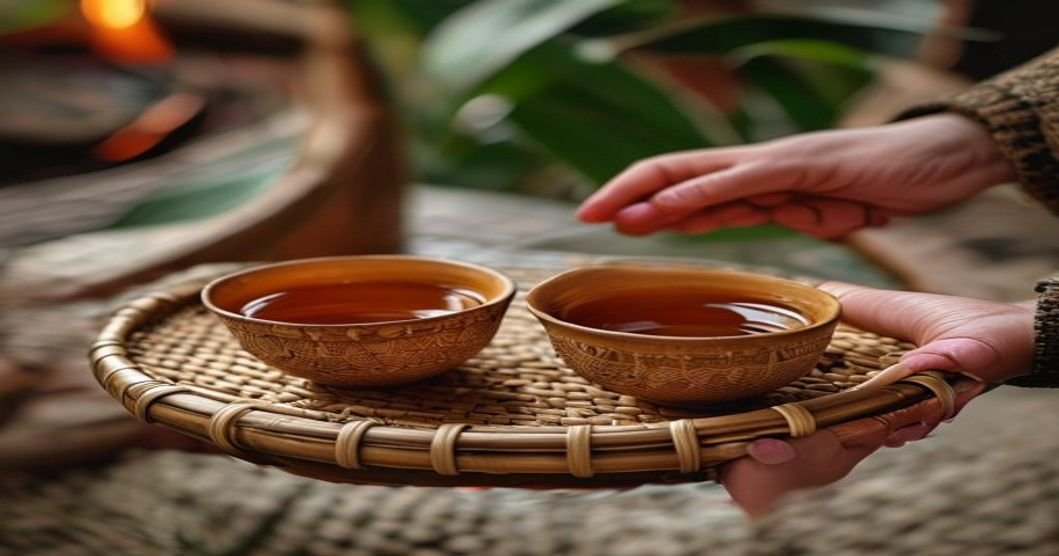
Tea is Muni’s logic in a cup. Fire and water, combined in the right proportion, at the right temperature, for the right amount of time, produce something that neither can produce alone.
The Garo changy had its fire in the middle of the floor, and the first thing that happened around it each morning was the heating of water. Not for cooking yet — cooking came later. The first use was warmth in a liquid form. Something that moved from the pot to the body, from the cold morning to the working day.
Muni’s first gift to the Garo hills was the means to make things habitable. The means to turn cold into warmth. The means to take what the forest provides and transform it, through fire, into something the body can receive.
This is still happening, every morning, in every kitchen, everywhere. The fire goes under the kettle. The water heats. The leaves — from the West Garo Hills, where the Muni story lives — release into the water what the season put into them.
The cup in your hand is a very old creation. Older than the hills, said Muni. Older than the fire, said the water. They have been working on it together since before your name.
The hills where this story lives are the same hills where our tea grows. Explore teas from West Garo Hills →