

Posted on Leave a comment

Bisi and Bijong: The Garo Story About the Friendship That Does Not Need a Reason

Bisi Bijong Garo Friendship Story — A Garo A'Chik folktale about Bisi and Bijong — two friends whose loyalty asks nothing in return. What the Garo know about the friendships that last.

Achik Tale Bisi Bijong Friends: What You Need to Know

Bisi Bijong Garo Friendship Story: What You Need to Know

Achik Tale Bisi Bijong Friends — A Garo A'Chik folktale about Bisi and Bijong — two friends whose loyalty asks nothing in return. What this story teaches about real connection.

For further research, see the Garo people of Meghalaya.

From A’Chik Golporang (Garo Folklore) Part III, Story 17 (Bisi-Bijong), collected by Dhoronsing K. Sangma.

In the third book of A’Chik Golporang, there is a story called Bisi-Bijong — two names held together without a connective, the way you hold two things that simply belong in each other’s company. The story is short. The friendship is the whole point.

Bisi and Bijong live in the Garo hills. They are not siblings. They are not related by the matrilineal clan system that governs Garo social structure. They chose each other. In a society where almost everything — property, marriage, social standing — is determined by which family you were born into, the freely chosen friendship was a notable act.

The story tracks them through a series of ordinary difficulties — a bad harvest season, a dispute with a neighbour, a period when one of them is ill and cannot tend the jhum. Through each, the friendship continues. Not heroically. Not with dramatic demonstrations. Bijong simply shows up at Bisi’s clearing. Bisi simply stays at Bijong’s changy an extra night.

The A’chik tradition does not romanticise this. The story does not end with a great sacrifice or a dramatic rescue. It ends with both of them old, sitting on the platform of Bijong’s borang, watching the valley below. Nothing required saving. Everything continued. This was the whole gift.

The A’chik proverb that closes the story: Ango tangka sona gri; indiba ango je gnang uko jatna on’a. — “What we carry as gold is heavy; but what stays without being asked — that is the actual thing.”


The gift of tea is a Bisi-Bijong gesture. Not the grand gesture. Not the thing that requires a reason. The thing that says: I was thinking of you, here is something that will make one morning yours.

It doesn’t need a birthday to justify it. It doesn’t need a relationship milestone. It just needs a person who would appreciate it and a moment when you thought of them.

The best friendships are like this too. No occasion required. Just: here. I thought of you.

The hills where this story lives are the same hills where our tea grows. Explore teas from West Garo Hills →
Posted on Leave a comment

Silkamal the Spider and Mande the Ant: The Garo Story About Who Gets There First

Silkamal Mande Garo Story Spider Ant — A Garo A'Chik folktale about Silkamal the spider and Mande the ant — and what the Garo understand about patience, persistence, and who arrives first.

Achik Tale Silkamal Spider Ant: What You Need to Know

Silkamal Mande Garo Story Spider Ant: What You Need to Know

Achik Tale Silkamal Spider Ant — A Garo folktale about Silkamal the spider and Mande the ant — and what their race teaches about patience, pace, and the long game.

For further research, see the Garo people of Meghalaya.

From A’Chik Golporang (Garo Folklore) Part II, Story 45 (Silkamal aro Mande), collected by Dhoronsing K. Sangma.

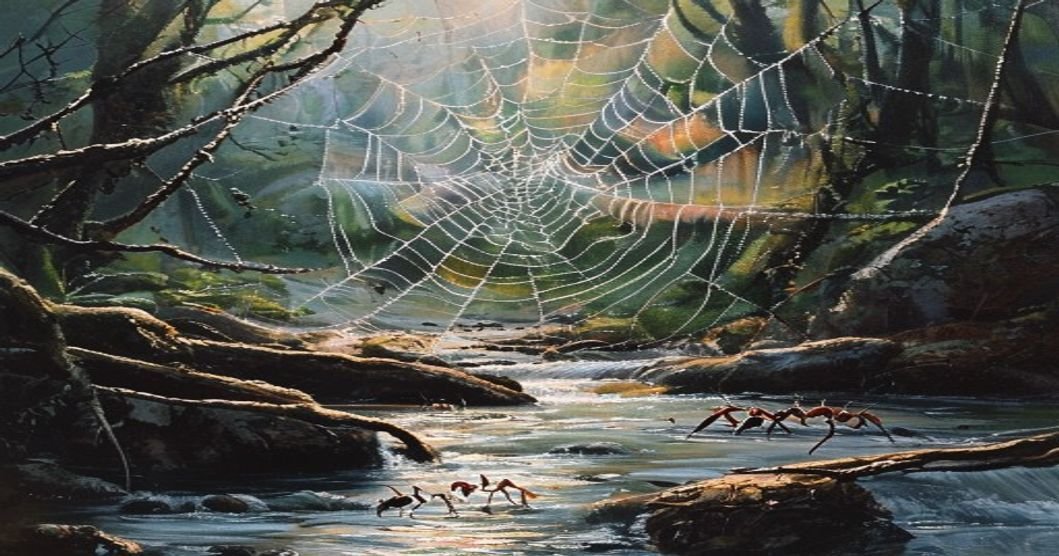
At the edge of a stream in the Garo hills, Silkamal the spider and Mande the ant wanted to reach the same thing — a large, flat stone on the other side where a particular kind of bark had fallen, rich and dark.

Mande began immediately. The ant colony was fast — they moved in their organised line, found a narrow point in the stream, crossed quickly on a bridge of their own bodies, and were at the stone within an hour.

Silkamal started differently. The spider found two anchor points on either bank — a root on one side, a strong grass stem on the other — and began to string a bridge. The first strand, then the cross-strands, then the web that held it. This took the whole morning.

By the time Silkamal crossed, Mande had already been there, taken what was needed, and gone. The stone was partially stripped.

“You are too slow,” Mande said, passing back. “You spent the whole morning building when you could have been doing.”

“Yes,” said Silkamal. “But the bridge will be here tomorrow. And the day after. And when the rains come and the stream rises and your crossing point disappears, I will still cross.”

The rains came three days later. The narrow crossing point filled with the flood. The ant colony could not cross for two weeks. Silkamal’s bridge bent in the current, submerged briefly, and then rose again when the water dropped. It held.

The A’chik proverb: The one who takes longest to arrive is often the one who arrives the most times.


Agricultural patience is Silkamal’s patience. The tea plant that is allowed to develop slowly — in soil that was not forced, in altitude that was not compromised, without chemicals that accelerate what is better grown slowly — produces first flush leaves in April that could not have been rushed into existence.

The first flush is the most anticipated moment of the tea year. It arrives when the plant decides it is time — when the soil has warmed enough, when the rains have begun, when the photosynthesis of the long winter has been stored and is ready to express itself in the first two leaves and a bud. You cannot hurry this. The spider is already working.

The Garo jhum farmers understood Silkamal’s logic: the clearing abandoned seven years ago, left to the forest, is ready now. The waiting was the work. The empty clearing was not empty — it was Silkamal building a bridge.

When the first flush arrives in your post, the patience that created it is in the packet. Twelve months of it, in the West Garo Hills, working in silence.

The hills where this story lives are the same hills where our tea grows. Explore teas from West Garo Hills →
Posted on Leave a comment

Kalkame: The Garo Craftsperson Who Made Things That Remembered

Kalkame Garo Craftsperson Story — A Garo A'Chik folktale about Kalkame the craftsperson — and what the Garo understand about memory, craft, and the things we make that outlast us.

Achik Tale Kalkame Craftsperson: What You Need to Know

Kalkame Garo Craftsperson Story: What You Need to Know

Achik Tale Kalkame Craftsperson — The story of Kalkame — the Garo craftsperson who made things that remembered. A'Chik folktale on mastery, care, and what we leave behind.

For further research, see the Garo people of Meghalaya.

From A’Chik Golporang (Garo Folklore) Parts I (Story 62: Kalgra Kalkame) and III (Story 12: Kalkame), collected by Dhoronsing K. Sangma.

In the A’chik storytelling tradition, Kalkame is the craftsperson — the figure who appears in Part I and again in Part III, which means, as with the Sal and Jajong story, that this is a figure worth knowing twice.

Kalkame makes things. But the A’chik stories are careful to distinguish between making-for-use and making-that-holds-memory. The first kind of making is necessary and everywhere — baskets woven for the market journey, pottery made for the kitchen, cloth made for clothing. The second kind is rarer. Kalkame is the figure who practices the second kind.

What Kalkame makes, in the Part III story, are objects that carry a record. The carved posts outside a Garo house — roughly human-shaped, decorated with beads and cloth, representing the departed members of the family — were Kalkame’s category of work. They were not functional. They were not useful in the way a dao or a cooking pot was useful. They held memory in a visible form so that the living could navigate the present in relation to the past.

In Part I, the same name appears in a different context — a skilled person who is known across several villages not for power or land but for precision. Others brought their problems to Kalkame not to be solved but to be looked at clearly. Kalkame’s gift was attention — the close, unhurried attention that making demands and that the rest of life rarely allows.

The A’chik observation: objects made with Kalkame’s attention are different from objects made without it. Not necessarily more elaborate. Sometimes simpler. But held differently. Used differently. Not thrown away when they wear — kept, or given deliberately to someone who will hold them the same way.


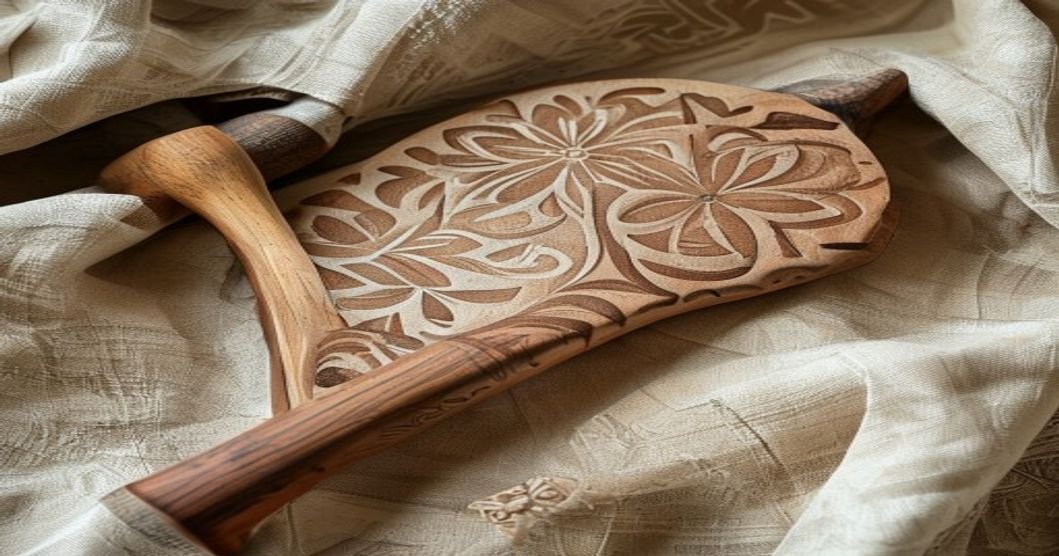
The block-printed wrapping on a Tea Story hamper is Kalkame’s category of work. The Dakmanda check — the traditional Garo textile pattern — carved into a wooden block in Jaipur by a specialist craftsperson, printed by hand onto the wrapping in Guwahati. Each print slightly different. The weight of the hand in the pressure of the ink.

This is not decoration. This is the record of attention — the same thing Kalkame made. The pattern says: someone looked at this closely enough to carve it. Someone held the block at the right angle. Someone decided this wrapping was worth Kalkame’s category of work rather than a printer’s efficient reproduction.

The AHF story card inside the hamper is also Kalkame’s work. It carries a Garo story — an abisa tale, or a Saljong story, or Bisi and Bijong — to a child who will receive the hamper’s gift. The card is small. The story is short. But it holds memory in a visible form, which is what Kalkame always made.

The best gifts are Kalkame gifts. Not the most expensive. The most attended to. The ones that say: someone considered what you would find when you opened this, and made sure there was something there worth finding.

There is.

The hills where this story lives are the same hills where our tea grows. Explore teas from West Garo Hills →
Posted on Leave a comment

Nawang: The Garo Wind Spirit Who Shapes the Hills That Grow Your Tea

Achik Tale Nawang Wind Spirit — The story of Nawang — the Garo wind spirit who moves through the hills where our tea grows. An A'Chik tale about weather, nature, and the forces that shape everything.

Achik Tale Nawang Wind Spirit: What You Need to Know

For further research, see the Garo people of Meghalaya.

From A’Chik Golporang (Garo Folklore) Part III, Story 13 (Nawang), collected by Dhoronsing K. Sangma. Nawang is the A’chik spirit of the high wind.

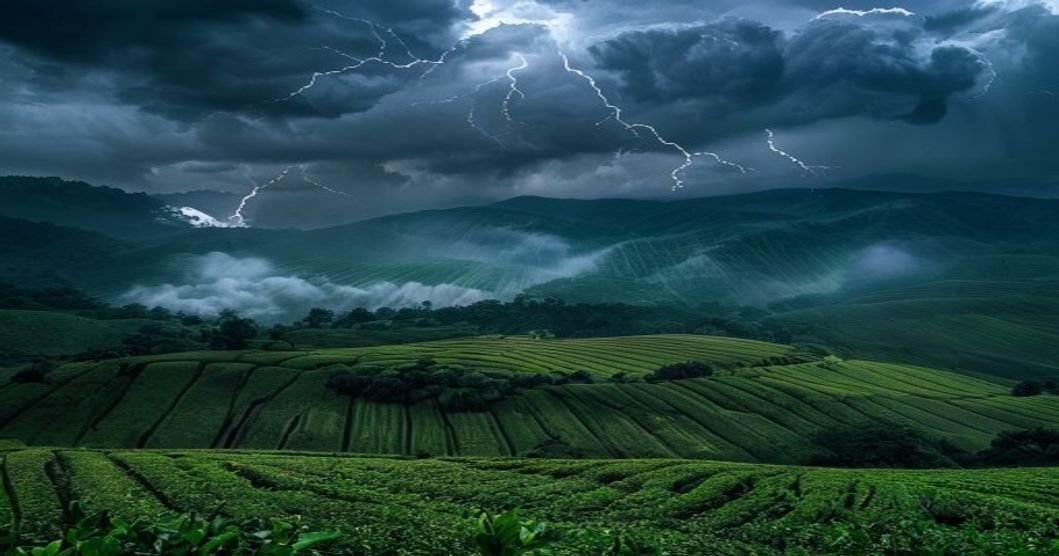
In the cosmology of A’Chik Golporang Part III, Nawang is not a destructive force. The wind spirit is not the hurricane or the flood. Nawang is the high, steady wind that moves through the Garo Hills from the Bay of Bengal — the wind that carries moisture up the slopes, that pushes the monsoon clouds against the hills until they have no choice but to release.

Cherrapunji and Mawsynram — the world’s wettest places — sit in the same hill system as the West Garo Hills. The reason they receive 12,000 to 15,000mm of rain annually is Nawang. The wind picks up moisture over the Bay of Bengal, carries it north and east, and finds the wall of the Meghalaya hills. The hills stop the wind. The wind cannot go further. It gives everything it carried.

In the Garo understanding, Nawang was the mechanism of abundance — the carrier between the sea’s water and the hill’s soil. Without Nawang, no rain. Without rain, no rice, no cotton, no forest, no stream. Without the stream, no village by the stream. Without the village, no changy, no nokpante, no story.

Nawang, in the cosmological structure of Part III, works alongside Susime (the wealth-giver) and Saljong (the fertility deity). Nawang brings the water. Saljong brings the light. Susime brings the abundance that results when these two work together. No single element is sufficient. The system requires all three.


When you open a packet of tea from the West Garo Hills, the smell that comes out is partly Nawang. It is the smell of leaves that grew in 12,000mm of annual rainfall — leaves that were never dry, never stressed by shortage, leaves that had more water available than they could use and used it to produce exactly the complex, layered chemistry that makes this tea taste like this and nothing else.

Tea from rain-saturated land is different from tea grown under irrigation. The rain that falls from the sky carries chemistry from the atmosphere — minerals, organic compounds, the specific mix that this particular Nawang-driven rainfall delivers to this particular hill. Irrigation water is neutral. Nawang’s water is not.

The Garo hills morning begins in the dark, before sunrise, when the mist from the previous night’s rain is still sitting in the valley below the borang. In that hour, between Nawang’s night work and the morning, the leaves are at their most saturated, most alive, most ready. The plucking that happens in that hour carries Nawang’s work in every leaf.

The rain that fills your cup began over the Bay of Bengal. Nawang carried it. The hills received it. You are drinking a transaction between the sea and the sky.

The hills where this story lives are the same hills where our tea grows. Explore teas from West Garo Hills →

Posted on Leave a comment

Makkre and the Mirror: The Garo Story About Fighting Your Own Reflection

This is an Achik Tale Makkre Cat Mirror — a story from the A’Chik tradition of the Garo people of West Garo Hills, Meghalaya, the same hills where our tea grows. The A'Chik tale of Makkre the cat who fights his own reflection — a Garo folktale about ego and self-sabotage.

Achik Tale Makkre Cat Mirror: What You Need to Know

Makkre Cat Mirror Garo Story Reflection — A Garo A'Chik folktale about Makkre the cat and the enemy in the mirror — and what the Garo hills understand about the battles we pick with ourselves.

Makkre Cat Mirror Garo Story Reflection: What You Need to Know

Achik Tale Makkre Cat Mirror — A Garo A'Chik folktale — Makkre the cat fights his own reflection. A sharp story about ego, self-sabotage, and the enemy we most consistently underestimate.

For further research, see the Garo people of Meghalaya.

From A’Chik Golporang (Garo Folklore) Part I, collected by Dhoronsing K. Sangma. This story is a new telling in English, drawing on the original A’chik tale.

Long ago in the Garo hills, there was a cat named Makkre who was known throughout the forest for being the finest, most capable cat in the valley. Makkre had never lost a fight, never missed a bird, never backed down from anything.

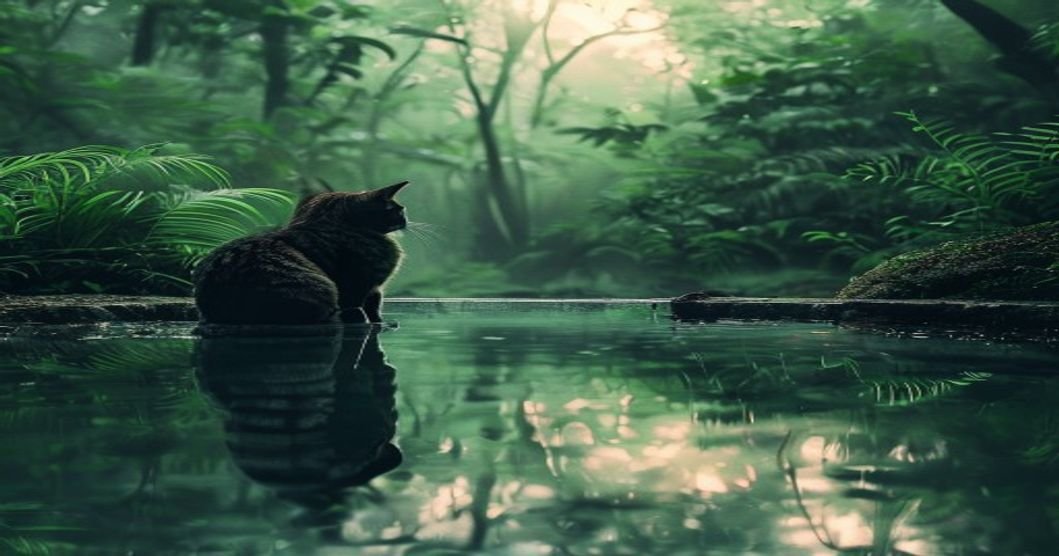
One morning, Makkre was exploring a house at the edge of the village when she found something she had never seen before. Propped against the wall was a flat, bright surface — a mirror that a trader had brought from the plains and left in the house.

Makkre looked at it. And there, looking back, was another cat. The same size. The same posture. The same bright, confident eyes.

Who are you? Makkre’s whole body said, arching.

The cat in the mirror arched back.

Makkre hissed. The other cat hissed at exactly the same moment. Makkre swiped. The other cat swiped. For hours — the whole long Meghalaya morning — Makkre fought this rival who matched her perfectly, who knew every move before she made it, who never tired, never retreated, never lost.

By afternoon, Makkre was exhausted. Panting. No blood, no victory, no defeat. Just the same cat still there, still watching.

A child from the village had been watching. She brought Makkre a small bowl of water and sat beside her. Makkre, too tired to be dignified, drank. When she looked up at the child, the child said nothing — just stroked her head.

Makkre looked back at the mirror. The other cat was doing the same thing. Being stroked. Resting. Looking just as tired.

The A’chik storytellers end this tale with a proverb: The enemy who matches you perfectly in every movement is worth examining closely.


There is a kind of morning that begins at the mirror. You look at what you’ve done, what someone else has done, what you haven’t done yet — and the fight starts before the day has actually begun. The comparison runs on a loop. Every scroll is another reflection. And the reflected cat is always exactly your level, always watching, always ready to respond.

The Garo cat fought her reflection for an entire day. The resolution wasn’t victory. It was a child with water, a moment of care, the decision to look away.

Brew your tea before you open the phone. Take ten minutes to be an animal resting by a bowl, not a cat fighting glass. The mirror will still be there. The rival will still match you perfectly. But you will have had your morning.

Our tea from the West Garo Hills is grown in the same hills where this story lives. It tastes best when you are not fighting anyone.

Ma’sichenggija gipinni kamko ja’rikpaania an’targna gimaanikosan ra’baa.
“The one who fights the image in the water is the one who never knows the forest’s actual work.” — A’Chik proverb

The hills where this story lives are the same hills where our tea grows. Explore teas from West Garo Hills →