
Silkamal Mande Garo Story Spider Ant — A Garo A'Chik folktale about Silkamal the spider and Mande the ant — and what the Garo understand about patience, persistence, and who arrives first.
Achik Tale Silkamal Spider Ant: What You Need to Know
Silkamal Mande Garo Story Spider Ant: What You Need to Know
Achik Tale Silkamal Spider Ant — A Garo folktale about Silkamal the spider and Mande the ant — and what their race teaches about patience, pace, and the long game.
For further research, see the Garo people of Meghalaya.
From A’Chik Golporang (Garo Folklore) Part II, Story 45 (Silkamal aro Mande), collected by Dhoronsing K. Sangma.
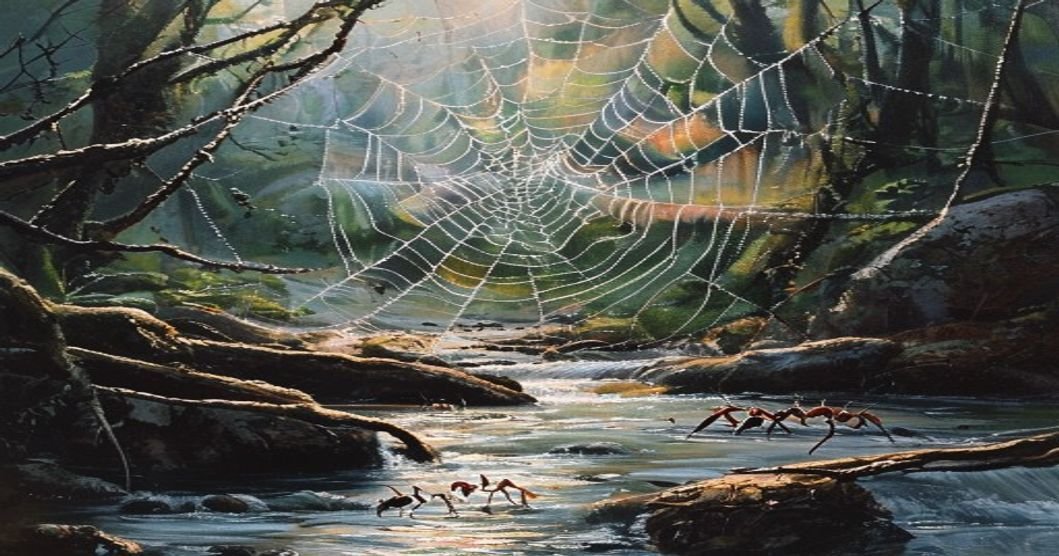
At the edge of a stream in the Garo hills, Silkamal the spider and Mande the ant wanted to reach the same thing — a large, flat stone on the other side where a particular kind of bark had fallen, rich and dark.
Mande began immediately. The ant colony was fast — they moved in their organised line, found a narrow point in the stream, crossed quickly on a bridge of their own bodies, and were at the stone within an hour.
Silkamal started differently. The spider found two anchor points on either bank — a root on one side, a strong grass stem on the other — and began to string a bridge. The first strand, then the cross-strands, then the web that held it. This took the whole morning.
By the time Silkamal crossed, Mande had already been there, taken what was needed, and gone. The stone was partially stripped.
“You are too slow,” Mande said, passing back. “You spent the whole morning building when you could have been doing.”
“Yes,” said Silkamal. “But the bridge will be here tomorrow. And the day after. And when the rains come and the stream rises and your crossing point disappears, I will still cross.”
The rains came three days later. The narrow crossing point filled with the flood. The ant colony could not cross for two weeks. Silkamal’s bridge bent in the current, submerged briefly, and then rose again when the water dropped. It held.
The A’chik proverb: The one who takes longest to arrive is often the one who arrives the most times.
Agricultural patience is Silkamal’s patience. The tea plant that is allowed to develop slowly — in soil that was not forced, in altitude that was not compromised, without chemicals that accelerate what is better grown slowly — produces first flush leaves in April that could not have been rushed into existence.
The first flush is the most anticipated moment of the tea year. It arrives when the plant decides it is time — when the soil has warmed enough, when the rains have begun, when the photosynthesis of the long winter has been stored and is ready to express itself in the first two leaves and a bud. You cannot hurry this. The spider is already working.
The Garo jhum farmers understood Silkamal’s logic: the clearing abandoned seven years ago, left to the forest, is ready now. The waiting was the work. The empty clearing was not empty — it was Silkamal building a bridge.
When the first flush arrives in your post, the patience that created it is in the packet. Twelve months of it, in the West Garo Hills, working in silence.
The hills where this story lives are the same hills where our tea grows. Explore teas from West Garo Hills →