Mongma Bear Crab Garo Story Patience — A Garo A'Chik folktale about Mongma the bear and the crab who did not move — and what patience means when you are built differently from everything around you.
Achik Tale Mongma Bear Crab: What You Need to Know
Mongma Bear Crab Garo Story Patience: What You Need to Know
Achik Tale Mongma Bear Crab — A Garo A'Chik folktale — Mongma the bear meets a crab who will not move. What this story teaches about the right response to immovable obstacles.
For further research, see the Garo people of Meghalaya.
From A’Chik Golporang (Garo Folklore) Part I, collected by Dhoronsing K. Sangma.
In the streams of the Garo hills, there lived a crab — small, sideways-moving, armoured, unhurried. And in the forest above the stream, there lived Mongma the bear, who was large and knew it.
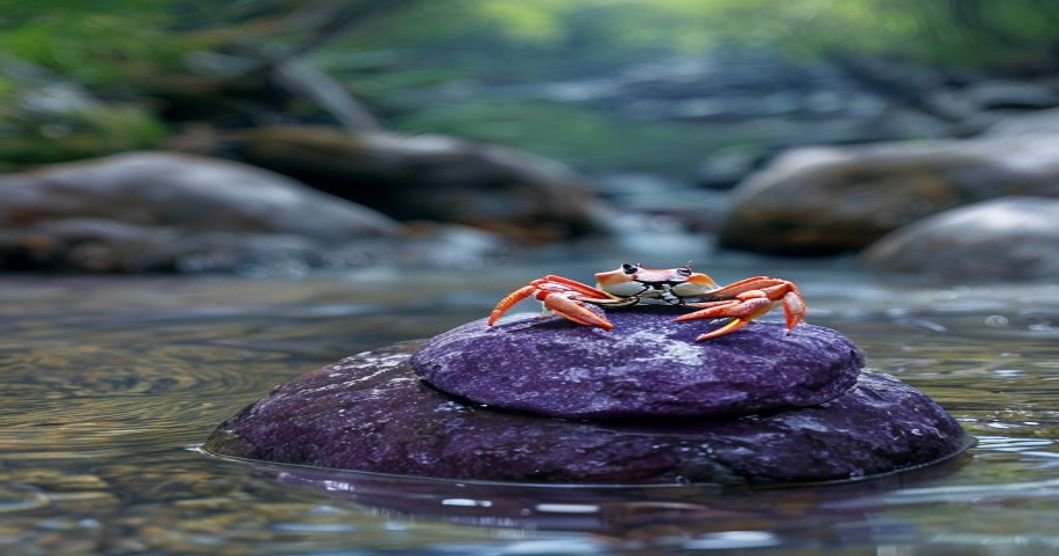
One afternoon, Mongma came down to the stream to drink and found the crab sitting precisely in the best spot — the cool flat rock where the water ran clear and cold over smooth stones.
“Move,” said Mongma.
The crab did not move.
“I said move. I am Mongma. I am the largest thing in this forest.”
The crab looked at Mongma with its small eyes. “Yes,” the crab said. “You are the largest. I can see that from here, where I am sitting.”
Mongma roared. The trees shook. Birds flew up from the canopy. The crab’s antennae moved slightly in the wind of the roar, and then went still again.
“Your roar is very large,” the crab said. “But the rock is the same size it was before.”
Mongma tried everything — noise, display, circling, stomping. The crab sat. Eventually, the bear got thirsty enough to drink from the other side of the stream. The water tasted exactly the same.
The A’chik storytellers say: Biltangko nichenggija gaona dena nangja. — “What holds its ground without anger is what the forest actually remembers.”
The modern economy rewards Mongma-behaviour. Make noise. Display size. Announce your presence. The roar is the product.
But every industry eventually discovers its crab — the thing that simply sits in its place, does exactly what it does, refuses to be moved by bluster, and is still there when the noise has moved on.
Good tea is a crab. It does not perform its quality. It does not roar about its terroir or its processing or its altitude. You brew it. It either tastes like the West Garo Hills in your cup or it doesn’t. No amount of Mongma-energy from any direction changes what the leaf actually is.
Drink it from the cool side of the stream.
The hills where this story lives are the same hills where our tea grows. Explore teas from West Garo Hills →