
Posted on Leave a comment

Silkamal the Spider and Mande the Ant: The Garo Story About Who Gets There First

Silkamal Mande Garo Story Spider Ant — A Garo A'Chik folktale about Silkamal the spider and Mande the ant — and what the Garo understand about patience, persistence, and who arrives first.

Achik Tale Silkamal Spider Ant: What You Need to Know

Silkamal Mande Garo Story Spider Ant: What You Need to Know

Achik Tale Silkamal Spider Ant — A Garo folktale about Silkamal the spider and Mande the ant — and what their race teaches about patience, pace, and the long game.

For further research, see the Garo people of Meghalaya.

From A’Chik Golporang (Garo Folklore) Part II, Story 45 (Silkamal aro Mande), collected by Dhoronsing K. Sangma.

At the edge of a stream in the Garo hills, Silkamal the spider and Mande the ant wanted to reach the same thing — a large, flat stone on the other side where a particular kind of bark had fallen, rich and dark.

Mande began immediately. The ant colony was fast — they moved in their organised line, found a narrow point in the stream, crossed quickly on a bridge of their own bodies, and were at the stone within an hour.

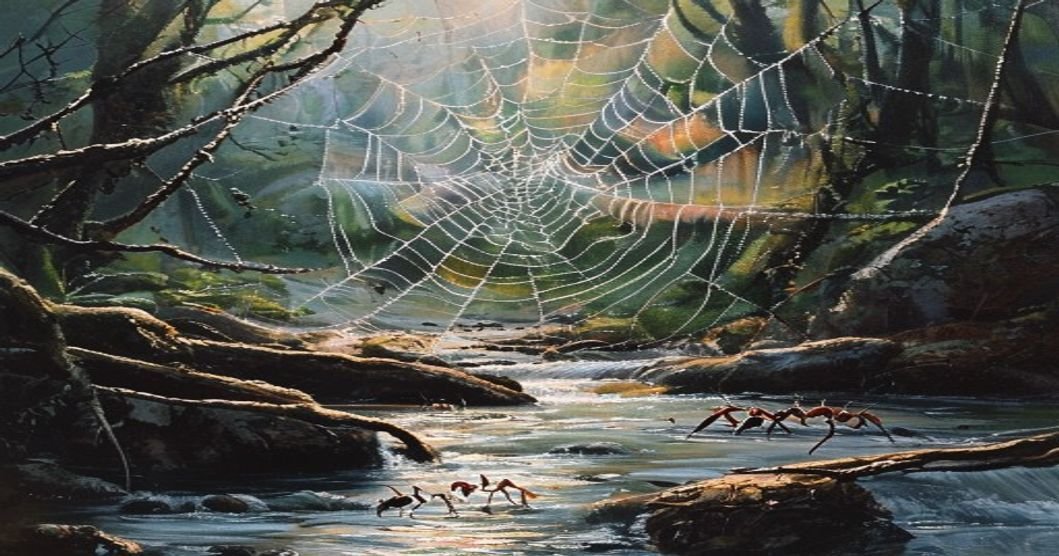
Silkamal started differently. The spider found two anchor points on either bank — a root on one side, a strong grass stem on the other — and began to string a bridge. The first strand, then the cross-strands, then the web that held it. This took the whole morning.

By the time Silkamal crossed, Mande had already been there, taken what was needed, and gone. The stone was partially stripped.

“You are too slow,” Mande said, passing back. “You spent the whole morning building when you could have been doing.”

“Yes,” said Silkamal. “But the bridge will be here tomorrow. And the day after. And when the rains come and the stream rises and your crossing point disappears, I will still cross.”

The rains came three days later. The narrow crossing point filled with the flood. The ant colony could not cross for two weeks. Silkamal’s bridge bent in the current, submerged briefly, and then rose again when the water dropped. It held.

The A’chik proverb: The one who takes longest to arrive is often the one who arrives the most times.


Agricultural patience is Silkamal’s patience. The tea plant that is allowed to develop slowly — in soil that was not forced, in altitude that was not compromised, without chemicals that accelerate what is better grown slowly — produces first flush leaves in April that could not have been rushed into existence.

The first flush is the most anticipated moment of the tea year. It arrives when the plant decides it is time — when the soil has warmed enough, when the rains have begun, when the photosynthesis of the long winter has been stored and is ready to express itself in the first two leaves and a bud. You cannot hurry this. The spider is already working.

The Garo jhum farmers understood Silkamal’s logic: the clearing abandoned seven years ago, left to the forest, is ready now. The waiting was the work. The empty clearing was not empty — it was Silkamal building a bridge.

When the first flush arrives in your post, the patience that created it is in the packet. Twelve months of it, in the West Garo Hills, working in silence.

The hills where this story lives are the same hills where our tea grows. Explore teas from West Garo Hills →

Posted on Leave a comment

Balgitchak the Cricket and the Spider’s Web: What the Garo Know About Real Work

Balgitchak Cricket Garo Story Real Work — A Garo A'Chik folktale about Balgitchak the cricket and the spider's web — and what the Garo hills know about the difference between real work and visible work.

This is an Achik Tale Balgitchak Cricket — a story from the A’Chik tradition of the Garo people of West Garo Hills, Meghalaya, the same hills where our tea grows. The A'Chik tale of Balgitchak the cricket and the spider's web. A Garo folktale about visible effort versus invisible preparation.

Achik Tale Balgitchak Cricket: What You Need to Know

Balgitchak Cricket Garo Story Real Work — A Garo A'Chik folktale about Balgitchak the cricket and the spider's web — and what the Garo hills know about the difference between real work and visible work.

Balgitchak Cricket Garo Story Real Work: What You Need to Know

Achik Tale Balgitchak Cricket — Balgitchak the cricket meets a spider's web. A Garo A'Chik tale about visible effort vs invisible preparation — and which one actually counts.

For further research, see the Garo people of Meghalaya.

From A’Chik Golporang (Garo Folklore) Part II, Stories 1 (Balgitchak) and 45 (Silkamal aro Mande), collected by Dhoronsing K. Sangma.

When the rains came to the Garo hills, Balgitchak the cricket began to sing. This was not unusual — the cricket had always sung when it rained. But this year, Balgitchak had developed a theory.

“The rain comes because I sing,” Balgitchak announced to no one in particular, and then to everyone in general.

The forest listened politely. The trees said nothing. The stream continued without comment. Silkamal the spider, working in the corner of a large leaf, did not even turn around.

“Did you hear me?” Balgitchak asked the spider.

“Yes,” said Silkamal. “You said the rain comes because of your singing.”

“It does.”

“The rain came before you were born,” Silkamal said. “And it will come after. It also came last Tuesday when you were asleep.” The spider returned to the web.

Balgitchak was not discouraged. The cricket’s song was genuinely beautiful — complex, rhythmic, filling the whole forest. Even Silkamal, working in silence, would sometimes pause when Balgitchak sang a particularly good phrase.

But the web was the web. In the morning, after the rain, it held the drops perfectly. Each one a small mirror. Each strand in exactly the place it needed to be, made in the dark, in silence, while the cricket was singing about the coming rain.

The A’chik storytellers say of Balgitchak: Pilakkoba chonniknabe, nangrime ku’cholsan dakanichi dal’a kamko chu’sokatna. — “The beautiful sound is welcome, but when the sun comes, do not mistake the singing for the shelter.”


The attention economy is a world organised by Balgitchak’s logic. Make the most sound. Be the loudest thing in the forest when the rain comes. The song becomes the product, the proof of work, the evidence of value.

But every field — technology, food, craft, medicine — has its Silkamal. The person who turns around and works. Whose product in the morning, after the rain, is the web. Not a description of a web. Not a post about web-making. The actual web, holding the actual drops.

Tea from the West Garo Hills is Silkamal’s work. The garden is worked before sunrise. The plucking is done in the rain and after the rain. The processing is precise and unhurried. The result is in your cup. There is no Balgitchak moment — no announcement, no performance, no theory about why the rain came.

Just the web. Just the morning. Just the tea.

The hills where this story lives are the same hills where our tea grows. Explore teas from West Garo Hills →

Posted on Leave a comment

The Sal Tree and the Jajong: A Garo Story About Being Rooted

Achik Tale Sal Jajong Rooted — A Garo A'Chik story about the Sal tree and the Jajong — on rootedness, flexibility, and why being grounded does not mean being still.

Achik Tale Sal Jajong Rooted: What You Need to Know

For further research, see the Garo people of Meghalaya.

From A’Chik Golporang (Garo Folklore) Parts II and III, collected by Dhoronsing K. Sangma. The story of Sal aro Jajong appears twice in the collection — once in Part II and once in Part III — which in the A’chik tradition signals a story of central importance.

There is a story in the Garo hills that is told twice. When a story is told twice in the same collection — once in the middle book and once in the final book — the storytellers are marking it as something that cannot be said only once.

The story is about the sal tree (Shorea robusta) and the jajong, a smaller plant that grows along the stream banks of the Garo hills. In the story, the jajong admires the sal’s height — the way it can see far, the way birds rest in it, the way its canopy changes the light for everything beneath.

“How did you get so tall?” the jajong asked.

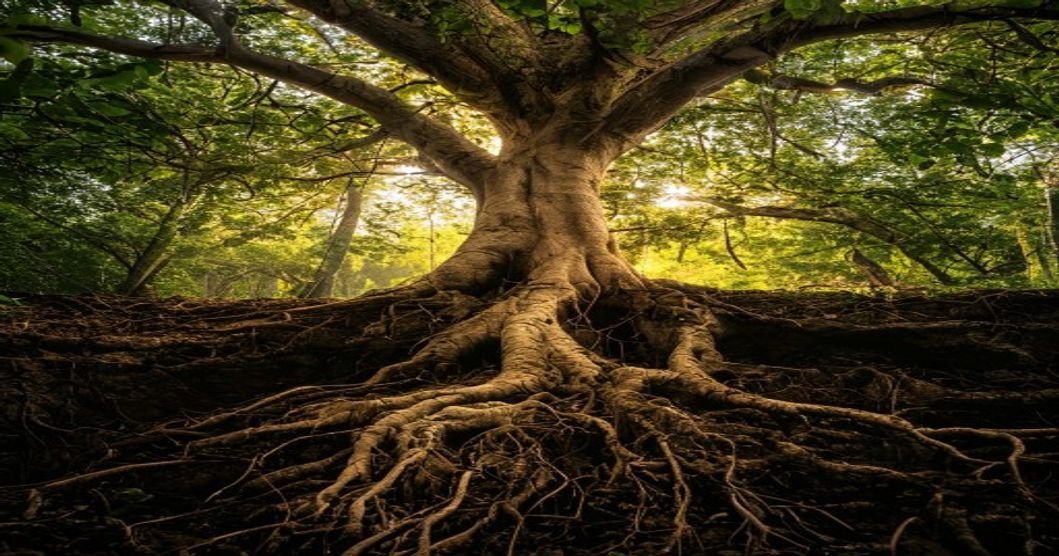
“I did not try to be tall,” the sal said. “I went down. I went as far into the ground as I now go into the sky. Every year of height is a year of depth first.”

The jajong thought about this. “But you cannot move. You are in one place always.”

“Yes,” the sal said. “That is what it costs.”

In the Garo hills, the sal tree was not merely a tree. It was a marker of history — sal forests were old forests, forests where the land had never been cleared, where the rootstock went back generations. To sit under a sal was to sit under something that knew the hill from the inside. The sal could tell you the water table. The sal could tell you the history of the rains. The sal’s wood had a specific quality — a density and an aromatic quality — that came entirely from which hill it grew on and how many years it had grown there.

This is what the Garo called quality. Not the quality of the object in isolation, but the quality of the place in the object.


The tea world uses the French word terroir for this — the taste of the place in the cup. But the Garo were describing it long before the French needed a word for it. The sal tree had terroir. The sal tree was terroir — it was so completely the product of its specific hill that you could not move it and have the same tree.

Single-origin tea works the same way. Tea grown in the West Garo Hills tastes like the West Garo Hills — the basalt soil, the 12,000mm annual rainfall, the specific altitude, the specific fog that moves through the valley between 4am and 7am each morning. Move the plant. Change the soil. Change the rain. You have tea. But you do not have this tea.

The story is told twice because it is worth knowing twice. The jajong moves. The sal stays. The sal can be seen from far away. This is what it costs — to be always in one place — and this is also what it gives.

Your cup holds a sal tree’s logic. It could only come from here.

The hills where this story lives are the same hills where our tea grows. Explore teas from West Garo Hills →

Posted on Leave a comment

The Cotton That Went to Europe: Garo Producers, Global Markets, and Who Keeps the Value

Garo Cotton Global Trade Supply Chain — How Garo cotton producers in West Garo Hills entered global markets — and who kept the value. A story about supply chains, ethics, and what direct trade actually means.

Garo Cotton Global Trade Supply Chain: What You Need to Know

For further reading, see Garo Hills (Wikipedia).

Garo Cotton Global Trade — How Garo cotton producers were connected to European markets — and what this historical supply chain teaches about fair trade, ethics, and where value goes.

For further research, see the Garo people of Meghalaya.

“Some who read this may be resting their feet the while on cotton grown in a Garo jhum,” wrote Rev. William Carey in 1919, noting that Garo hill cotton had found its way into European and Japanese felt and carpet mills.

The Garo farmers who grew that cotton received, at the frontier markets, trade goods: cloth, metal items, and liquor. The Bengali merchants who brokered it upward received a margin. The British trading companies that shipped it received a margin. The mills that processed it received the largest margin of all. The carpet buyer in London who rested their feet on Garo cotton had no idea where it came from, paid a fair market price for a finished product, and completed a supply chain that began with a woman sowing cotton seed in the jhum clearing of a hill she would farm for two years and then abandon.

The structure of value extraction in global commodity supply chains has not materially changed since the frontier markets of the 18th century. The person at the beginning of the chain — the one whose labour and land and knowledge produces the raw material — typically receives the smallest portion of the final sale price. The people who add the least non-replicable value (transportation, branding, retail presence) receive the largest portion.

Tea is not exempt from this. The global tea industry is built on this exact structure. Gardens in Assam, Meghalaya, and Darjeeling supply raw leaf that is auctioned, blended, branded, packaged, and sold at multiples of the garden gate price.

The Tea Story is a direct model: garden-to-consumer, without the auction house, without the broker, without the blend that dilutes the specific with the generic. The value that would ordinarily be distributed across the chain stays at both ends — the garden that produced it and the customer who drinks it. The Garo cotton farmer who walked five days to the frontier market and received cloth in exchange for fibre worth a fortune in London would recognise this problem. And they would recognise the alternative too.