
Balgitchak Cricket Garo Story Real Work — A Garo A'Chik folktale about Balgitchak the cricket and the spider's web — and what the Garo hills know about the difference between real work and visible work.
This is an Achik Tale Balgitchak Cricket — a story from the A’Chik tradition of the Garo people of West Garo Hills, Meghalaya, the same hills where our tea grows. The A'Chik tale of Balgitchak the cricket and the spider's web. A Garo folktale about visible effort versus invisible preparation.
Achik Tale Balgitchak Cricket: What You Need to Know
Balgitchak Cricket Garo Story Real Work — A Garo A'Chik folktale about Balgitchak the cricket and the spider's web — and what the Garo hills know about the difference between real work and visible work.
Balgitchak Cricket Garo Story Real Work: What You Need to Know
Achik Tale Balgitchak Cricket — Balgitchak the cricket meets a spider's web. A Garo A'Chik tale about visible effort vs invisible preparation — and which one actually counts.
For further research, see the Garo people of Meghalaya.
From A’Chik Golporang (Garo Folklore) Part II, Stories 1 (Balgitchak) and 45 (Silkamal aro Mande), collected by Dhoronsing K. Sangma.
When the rains came to the Garo hills, Balgitchak the cricket began to sing. This was not unusual — the cricket had always sung when it rained. But this year, Balgitchak had developed a theory.
“The rain comes because I sing,” Balgitchak announced to no one in particular, and then to everyone in general.
The forest listened politely. The trees said nothing. The stream continued without comment. Silkamal the spider, working in the corner of a large leaf, did not even turn around.
“Did you hear me?” Balgitchak asked the spider.
“Yes,” said Silkamal. “You said the rain comes because of your singing.”
“It does.”
“The rain came before you were born,” Silkamal said. “And it will come after. It also came last Tuesday when you were asleep.” The spider returned to the web.
Balgitchak was not discouraged. The cricket’s song was genuinely beautiful — complex, rhythmic, filling the whole forest. Even Silkamal, working in silence, would sometimes pause when Balgitchak sang a particularly good phrase.
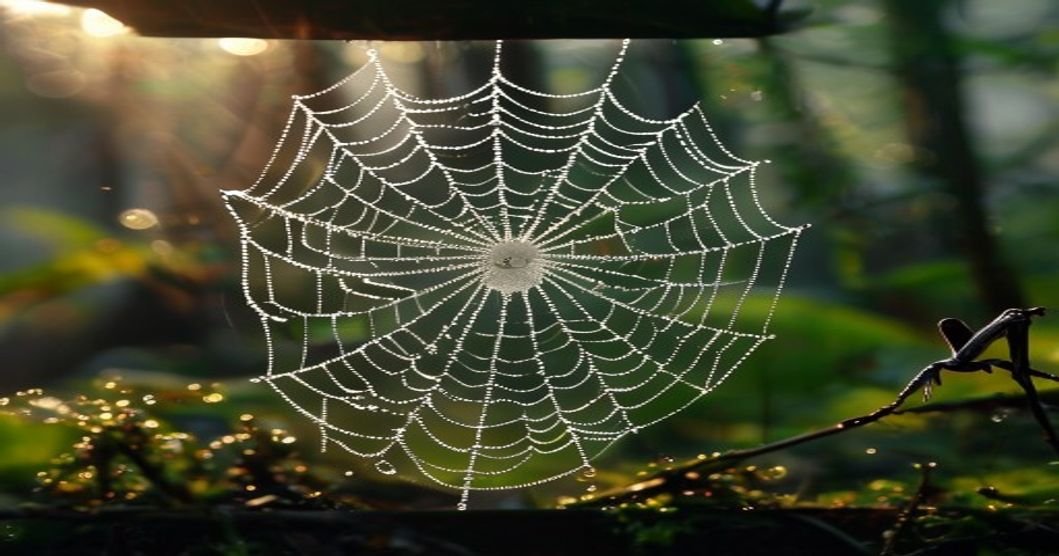
But the web was the web. In the morning, after the rain, it held the drops perfectly. Each one a small mirror. Each strand in exactly the place it needed to be, made in the dark, in silence, while the cricket was singing about the coming rain.
The A’chik storytellers say of Balgitchak: Pilakkoba chonniknabe, nangrime ku’cholsan dakanichi dal’a kamko chu’sokatna. — “The beautiful sound is welcome, but when the sun comes, do not mistake the singing for the shelter.”
The attention economy is a world organised by Balgitchak’s logic. Make the most sound. Be the loudest thing in the forest when the rain comes. The song becomes the product, the proof of work, the evidence of value.
But every field — technology, food, craft, medicine — has its Silkamal. The person who turns around and works. Whose product in the morning, after the rain, is the web. Not a description of a web. Not a post about web-making. The actual web, holding the actual drops.
Tea from the West Garo Hills is Silkamal’s work. The garden is worked before sunrise. The plucking is done in the rain and after the rain. The processing is precise and unhurried. The result is in your cup. There is no Balgitchak moment — no announcement, no performance, no theory about why the rain came.
Just the web. Just the morning. Just the tea.
The hills where this story lives are the same hills where our tea grows. Explore teas from West Garo Hills →