

Posted on Leave a comment

Mongma the Bear and the Crab Who Did Not Move: A Garo Story About Patience

Mongma Bear Crab Garo Story Patience — A Garo A'Chik folktale about Mongma the bear and the crab who did not move — and what patience means when you are built differently from everything around you.

Achik Tale Mongma Bear Crab: What You Need to Know

Mongma Bear Crab Garo Story Patience: What You Need to Know

Achik Tale Mongma Bear Crab — A Garo A'Chik folktale — Mongma the bear meets a crab who will not move. What this story teaches about the right response to immovable obstacles.

For further research, see the Garo people of Meghalaya.

From A’Chik Golporang (Garo Folklore) Part I, collected by Dhoronsing K. Sangma.

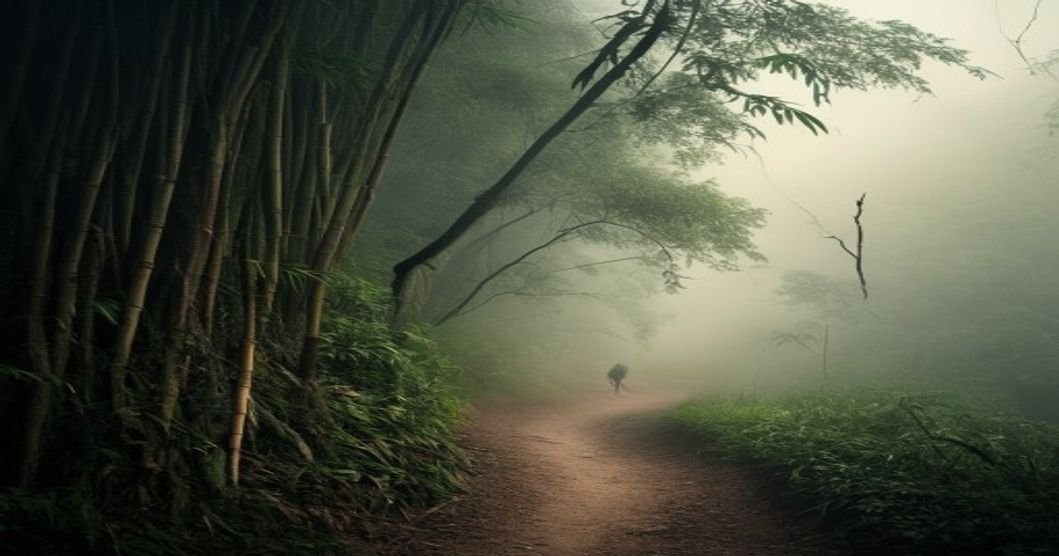
In the streams of the Garo hills, there lived a crab — small, sideways-moving, armoured, unhurried. And in the forest above the stream, there lived Mongma the bear, who was large and knew it.

One afternoon, Mongma came down to the stream to drink and found the crab sitting precisely in the best spot — the cool flat rock where the water ran clear and cold over smooth stones.

“Move,” said Mongma.

The crab did not move.

“I said move. I am Mongma. I am the largest thing in this forest.”

The crab looked at Mongma with its small eyes. “Yes,” the crab said. “You are the largest. I can see that from here, where I am sitting.”

Mongma roared. The trees shook. Birds flew up from the canopy. The crab’s antennae moved slightly in the wind of the roar, and then went still again.

“Your roar is very large,” the crab said. “But the rock is the same size it was before.”

Mongma tried everything — noise, display, circling, stomping. The crab sat. Eventually, the bear got thirsty enough to drink from the other side of the stream. The water tasted exactly the same.

The A’chik storytellers say: Biltangko nichenggija gaona dena nangja. — “What holds its ground without anger is what the forest actually remembers.”


The modern economy rewards Mongma-behaviour. Make noise. Display size. Announce your presence. The roar is the product.

But every industry eventually discovers its crab — the thing that simply sits in its place, does exactly what it does, refuses to be moved by bluster, and is still there when the noise has moved on.

Good tea is a crab. It does not perform its quality. It does not roar about its terroir or its processing or its altitude. You brew it. It either tastes like the West Garo Hills in your cup or it doesn’t. No amount of Mongma-energy from any direction changes what the leaf actually is.

Drink it from the cool side of the stream.

The hills where this story lives are the same hills where our tea grows. Explore teas from West Garo Hills →
Posted on Leave a comment

The Orphan Walks Into the Forest: A Garo Story for Anyone Building Alone

Abisa Orphan Garo Story Building Alone — A Garo A'Chik folktale about Abisa the orphan who walks into the forest alone — for anyone who is building something without a map, a model, or company.

Achik Tale Abisa Orphan: What You Need to Know

Abisa Orphan Garo Story Building Alone: What You Need to Know

Achik Tale Abisa Orphan — An A'Chik folktale about Abisa — the orphan who sets out alone into the forest. A story for founders, solo builders, and anyone starting from nothing.

For further research, see the Garo people of Meghalaya.

From A’Chik Golporang (Garo Folklore) Parts I and II, collected by Dhoronsing K. Sangma. The abisa figure appears across all three books of A’Chik Golporang as the most consistent hero in Garo storytelling.

In every Garo story about the abisa — the orphan, the one without family support, the one who sets out without a network — the beginning is always the same. The child is alone. There is no elder to ask, no parent to fund the journey, no older sibling who knows the way.

And then the child starts walking. And singing.

The songs the abisa sings as they walk through the forest in the A’chik tales are some of the most beautiful fragments in all three books. Here is one, from Part I:

Gong gegong ang’ke grong, gegong,
Bil’ik kambe gongritong, gegong,
Den’na dako tapritgong, gegong,
Mia Misi rimitak, gegong,
Ang’ke ja’si ja’ritak, gegong.

The song doesn’t ask for help. It doesn’t complain about the road. It just marks the movement — the feet going, the forest passing, the self moving through the world that was not arranged for them.

The A’chik tales are consistent about what happens to the abisa. They are tested — by larger creatures, by spirits, by situations that seem designed to defeat them. They are offered shortcuts that turn out to be traps. They find allies in unexpected places — a bird who knows the way, a fish who can navigate the flooded river, an old woman by a stream who gives them food and one piece of true information.

And they arrive. Not because they were powerful. Because they kept walking and kept singing.


Northeast India is full of abisa stories that are not in any book. The first-generation professional who came to the city without connections. The woman who started a business in a community that didn’t have a category for what she was doing. The farmer who decided to sell directly instead of through the auction house, because the auction house was not built for people like him.

The Tea Story is an abisa story. A garden in the West Garo Hills that decided to sell its own tea directly, without the middlemen, without the auction, without the infrastructure that was built for someone else. The beginning was the same as every A’chik abisa tale: alone, no map, walking, singing.

If you are building something without a support structure that was designed for you, you are in a very old story. The forest knows the way. Keep walking.

The hills where this story lives are the same hills where our tea grows. Explore teas from West Garo Hills →
Posted on Leave a comment

Do’kru and the Perfect Plan: The Garo Fool Who Teaches Us About Over-Thinking

Dokru Garo Fool Story Perfect Plan — A Garo A'Chik folktale about Do'kru the fool and the plan that kept failing. What Garo storytelling teaches about over-thinking and the same mistake repeated.

Achik Tale Dokru Perfect Plan: What You Need to Know

Dokru Garo Fool Story Perfect Plan: What You Need to Know

Achik Tale Dokru Perfect Plan — Do'kru makes the perfect plan — and still fails. This Garo A'Chik folktale is a sharp lesson in the trap of endless preparation over action.

For further research, see the Garo people of Meghalaya.

From A’Chik Golporang (Garo Folklore) Part II, Stories 19-24 (Do’kru I through Do’kru VI), collected by Dhoronsing K. Sangma.

In the Garo storytelling tradition, Do’kru is a special figure. He is not stupid. He is, in fact, quite clever in his own estimation. He plans carefully. He reasons things through. He has a good explanation for why his approach will definitely work this time.

And then he makes the same mistake again.

Across six consecutive stories in A’Chik Golporang Part II — Do’kru I through Do’kru VI — the same character wanders through the Garo hills encountering different situations, applying his particular logic to each one, and arriving at outcomes that are somehow always both surprising and inevitable.

In Do’kru I, he sets a fire to stay warm and burns down the shelter he needed to sleep in. In Do’kru II, he tries to trick a spirit and the trick works, but on the wrong spirit. In Do’kru III, he falls asleep at the exact moment the thing he was waiting for arrives, and wakes up to evidence of everything he missed. In Do’kru IV, he prepares for the problem so thoroughly that he creates it. In Do’kru V, he gives such excellent advice to someone else that he forgets to follow it himself. In Do’kru VI, he tries to do two things at once and completes both of them wrong in ways that were individually avoidable.

The pattern the A’chik storytellers are drawing is not simply “this character is a fool.” The pattern is: there is a particular kind of intelligence that always interferes with itself. Do’kru isn’t incapable. He’s over-capable. He thinks so clearly and completely about what he is going to do that he never quite arrives at the actual doing.

After Do’kru VI, the storytellers give him a companion — Awil Singwil, the orphan girl who becomes his partner through the later stories. Awil does not over-think. She sees what is in front of her and acts. Together, they are complete.


The modern professional is Do’kru. This is not an insult — it is the description of a particular intelligence operating in its characteristic mode.

The strategy deck that is perfectly prepared for a conversation that never happens. The morning routine optimised through six iterations without ever being fully followed. The product that was researched so thoroughly that the market moved while the research was being completed.

Do’kru’s problem is not that he doesn’t know enough. It’s that the knowing has become the activity.

Brewing tea is the opposite of Do’kru. There is almost nothing to plan. Heat water. Measure leaves. Wait three minutes. The simplicity is the point. The hands do the thing. The mind can rest.

Awil Singwil — the one who just acts — is the cup of tea. Have it first. Then Do’kru can begin his planning for the day.

The hills where this story lives are the same hills where our tea grows. Explore teas from West Garo Hills →
Posted on Leave a comment

Balgitchak the Cricket and the Spider’s Web: What the Garo Know About Real Work

Balgitchak Cricket Garo Story Real Work — A Garo A'Chik folktale about Balgitchak the cricket and the spider's web — and what the Garo hills know about the difference between real work and visible work.

This is an Achik Tale Balgitchak Cricket — a story from the A’Chik tradition of the Garo people of West Garo Hills, Meghalaya, the same hills where our tea grows. The A'Chik tale of Balgitchak the cricket and the spider's web. A Garo folktale about visible effort versus invisible preparation.

Achik Tale Balgitchak Cricket: What You Need to Know

Balgitchak Cricket Garo Story Real Work — A Garo A'Chik folktale about Balgitchak the cricket and the spider's web — and what the Garo hills know about the difference between real work and visible work.

Balgitchak Cricket Garo Story Real Work: What You Need to Know

Achik Tale Balgitchak Cricket — Balgitchak the cricket meets a spider's web. A Garo A'Chik tale about visible effort vs invisible preparation — and which one actually counts.

For further research, see the Garo people of Meghalaya.

From A’Chik Golporang (Garo Folklore) Part II, Stories 1 (Balgitchak) and 45 (Silkamal aro Mande), collected by Dhoronsing K. Sangma.

When the rains came to the Garo hills, Balgitchak the cricket began to sing. This was not unusual — the cricket had always sung when it rained. But this year, Balgitchak had developed a theory.

“The rain comes because I sing,” Balgitchak announced to no one in particular, and then to everyone in general.

The forest listened politely. The trees said nothing. The stream continued without comment. Silkamal the spider, working in the corner of a large leaf, did not even turn around.

“Did you hear me?” Balgitchak asked the spider.

“Yes,” said Silkamal. “You said the rain comes because of your singing.”

“It does.”

“The rain came before you were born,” Silkamal said. “And it will come after. It also came last Tuesday when you were asleep.” The spider returned to the web.

Balgitchak was not discouraged. The cricket’s song was genuinely beautiful — complex, rhythmic, filling the whole forest. Even Silkamal, working in silence, would sometimes pause when Balgitchak sang a particularly good phrase.

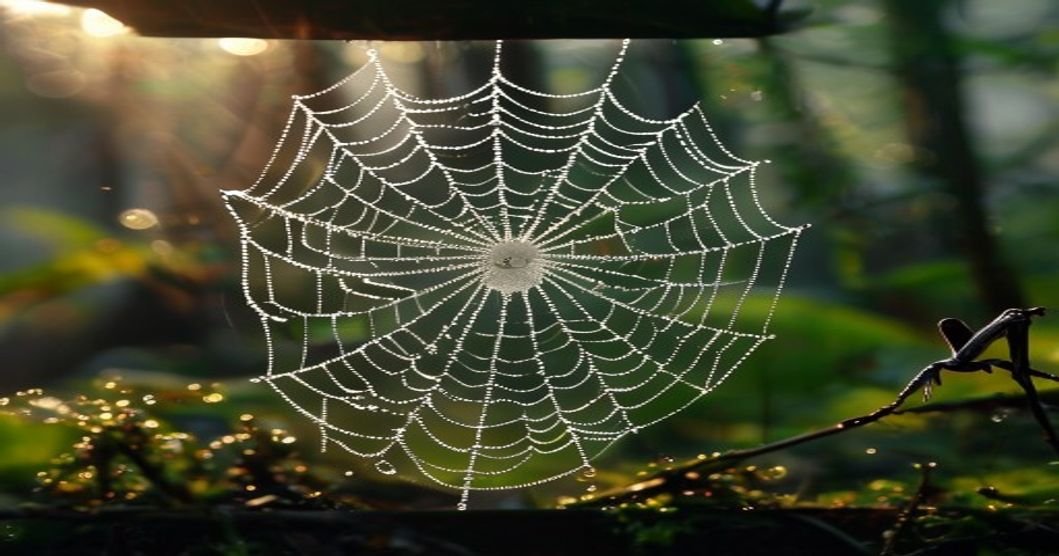
But the web was the web. In the morning, after the rain, it held the drops perfectly. Each one a small mirror. Each strand in exactly the place it needed to be, made in the dark, in silence, while the cricket was singing about the coming rain.

The A’chik storytellers say of Balgitchak: Pilakkoba chonniknabe, nangrime ku’cholsan dakanichi dal’a kamko chu’sokatna. — “The beautiful sound is welcome, but when the sun comes, do not mistake the singing for the shelter.”


The attention economy is a world organised by Balgitchak’s logic. Make the most sound. Be the loudest thing in the forest when the rain comes. The song becomes the product, the proof of work, the evidence of value.

But every field — technology, food, craft, medicine — has its Silkamal. The person who turns around and works. Whose product in the morning, after the rain, is the web. Not a description of a web. Not a post about web-making. The actual web, holding the actual drops.

Tea from the West Garo Hills is Silkamal’s work. The garden is worked before sunrise. The plucking is done in the rain and after the rain. The processing is precise and unhurried. The result is in your cup. There is no Balgitchak moment — no announcement, no performance, no theory about why the rain came.

Just the web. Just the morning. Just the tea.

The hills where this story lives are the same hills where our tea grows. Explore teas from West Garo Hills →

Posted on Leave a comment

Goerani Milam: What the Garo Said About Dreams, and the Tea That Meets Them

Goerani Milam Garo Dreams Story — A Garo A'Chik folktale about Goerani Milam — the dream that arrives before the morning. What Garo wisdom says about dreams, thresholds, and beginning.

Achik Tale Goerani Milam: What You Need to Know

Goerani Milam Garo Dreams Story: What You Need to Know

Achik Tale Goerani Milam — A Garo A'Chik story about Goerani Milam — the dream — and the tea that meets it. On rest, imagination, and what the Garo understood about the unconscious mind.

For further research, see the Garo people of Meghalaya.

From A’Chik Golporang (Garo Folklore) Part II, Story 10 (Goerani Milam), collected by Dhoronsing K. Sangma. Milam means dream in A’chik.

In the Garo hills, the dream was not decoration. It was information.

The A’chik storytellers placed dreams — milam — at the centre of some of their most important stories. In Goerani Milam, a vision arrives in the space between sleeping and waking that contains something the waking world cannot carry on its own. It is not a fantasy or a wish. It is a message from the part of the self that can only speak when the rest of the self is quiet.

The Garo understanding was precise: certain things can only be known in the threshold state. The demon that has been causing your sickness reveals its name at the edge of sleep. The answer to the problem you have been circling for days comes in the moment just before waking. The person you need to visit appears in a dream that functions as a summons.

This was not mysticism. It was a practical system for accessing knowledge that the busy waking mind does not have time to surface. The dream state was a tool.

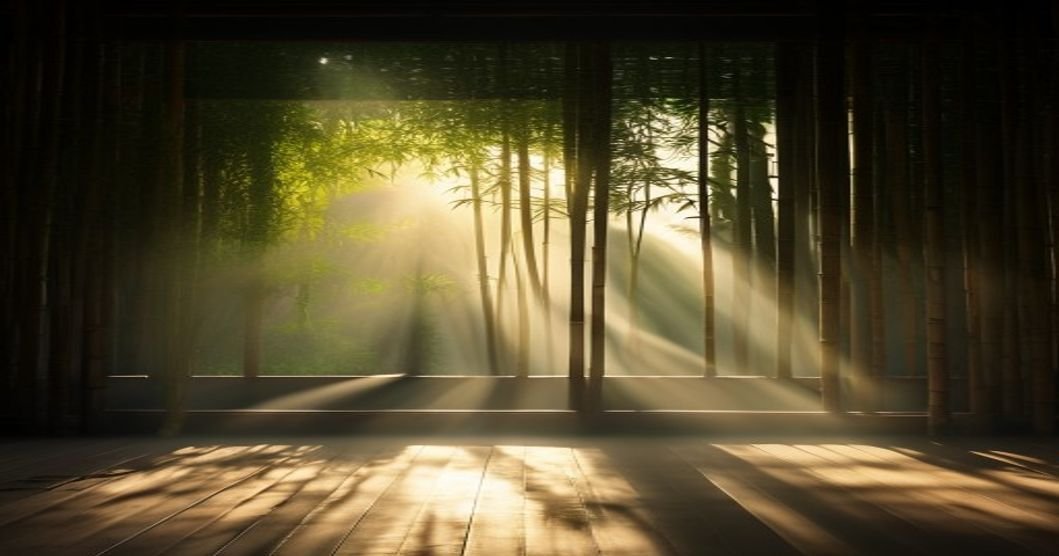
The threshold itself was considered sacred — the moment when the borang’s bamboo floor creaks as the first light comes through the gaps, when the birds begin before dawn, when you are neither in sleep nor fully in the day. In that minute, something is available that will be gone once the morning fire is lit and the children wake and the village begins.


Modern neuroscience agrees with the Garo on this, though it uses different words. The hypnagogic state — the border between sleep and waking — is when the default mode network is still active and the executive function hasn’t fully engaged. It is when free association is richest, when the brain connects things it cannot connect during focused work, when the answer that was inaccessible at 11pm is suddenly obvious at 6am.

The problem is we have organised the morning to destroy this state as quickly as possible. The phone alarm fires. The notifications begin. The world starts pulling at full volume before the threshold moment has had time to say its piece.

The Garo built in a space for the milam to speak. The fire was lit slowly. The first words of the day were quiet. There was no urgency until the urgency actually began.

A cup of tea — made before the phone is touched, drunk in the threshold space between the night and the day — is a small act of Garo intelligence. It says: the milam gets five minutes. Then the day begins.

Brew it slowly. The dream has something to tell you.

The hills where this story lives are the same hills where our tea grows. Explore teas from West Garo Hills →