
Posted on Leave a comment

What Susime the Wealth-Giver Teaches About Honest Trade

Susime Garo Wealth Honest Trade Story — A Garo A'Chik folktale about Susime the wealth-giver — and what the Garo understand about honest exchange, fair trade, and the difference between abundance and greed.

Achik Tale Susime Wealth: What You Need to Know

Susime Garo Wealth Honest Trade Story: What You Need to Know

Achik Tale Susime Wealth — What the Garo story of Susime teaches about the right relationship between wealth, honesty, and giving — and why the approach matters more than the outcome.

For further research, see the Garo people of Meghalaya.

From A’Chik Golporang (Garo Folklore) Part III, Story 8 (Susime) and Story 5 (Miko Man’a), collected by Dhoronsing K. Sangma. Susime is the wealth-giving spirit in Garo cosmology.

In the Garo hills, there was a spirit called Susime — Misi Biari Katchi Susime — who governed abundance. When a family’s cattle were healthy, when the harvest was good, when the cotton crop was thick and white in the jhum clearing, it was Susime’s doing.

But Susime was specific about who received this abundance.

The story in Part III of A’Chik Golporang describes the approach to Susime. Those who came with elaborate requests, with calculations about what they deserved, with demonstrations of how hard they had worked and therefore how much they were owed — these people Susime considered carefully, and then sent away with exactly what they had calculated they deserved. Which was less than they thought.

Those who came simply — who said, here is what I have, here is what I have done, here is what I need — these Susime regarded differently. The ones who did not perform their need. Who stated it plainly. Who were prepared to receive honestly or not at all.

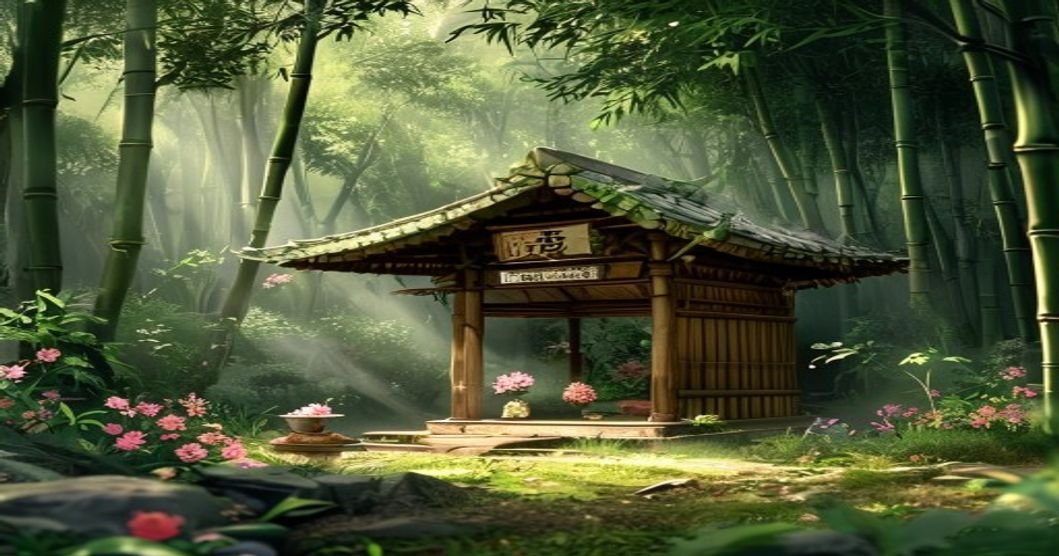
The bamboo shrine to Susime in a Garo village was not elaborate. A few branches stuck in the ground. An honest offering. The prayer was simple: You bless others, so bless me. Not: I deserve more than the others. Not: look how much I have sacrificed. Just: you give to those who tend the forest, and I tend the forest, and here I am.

The Garo farmers who walked five days to the frontier markets to sell their cotton carried something of Susime’s logic with them. They came with what they had grown. They named the price it was worth. They did not stay beyond the second night for a negotiation. They had either been met honestly or they had not — and if not, they walked back into the hills with the cotton, which was still worth what it was worth.


The supply chain that dominates most agricultural trade is the opposite of Susime’s logic. It is built for the people who can perform the most — who can wait longest, transport farthest, package most convincingly. The farmer, who does the most fundamental work, performs the least and receives accordingly.

A garden selling its tea directly — without the auction, without the broker, without the brand that packages someone else’s leaves under its name — is Susime’s approach. Come with what you have. State the price it is worth. Do not stay beyond the second night for a negotiation. Be met honestly or return to the hills.

Every packet of Tea Story tea is a Susime transaction. No inflation, no performance, no elaborate calculation of what we are owed. The garden is in the West Garo Hills. The leaves are from this season. The price is the honest price for what this is. Susime, the storytellers say, recognises this approach.

The hills where this story lives are the same hills where our tea grows. Explore teas from West Garo Hills →
Posted on Leave a comment

Saljong and the First Harvest: The Garo Origin of Wangala, and What It Has to Do With Tea

Saljong Wangala First Harvest Garo Origin — The Garo origin story of Wangala — the harvest festival of the Garo hills — and how Saljong, the sun god, connects the first harvest to the land and the tea grown there.

This is an Achik Tale Saljong Wangala — a story from the A’Chik tradition of the Garo people of West Garo Hills, Meghalaya, the same hills where our tea grows. The A'Chik tale of Saljong and the first harvest — the origin story of Wangala, and what it has to do with the tea that grows in the same hills today.

Achik Tale Saljong Wangala: What You Need to Know

Saljong Wangala First Harvest Garo Origin — The Garo origin story of Wangala — the harvest festival of the Garo hills — and how Saljong, the sun god, connects the first harvest to the land and the tea grown there.

Saljong Wangala First Harvest Garo Origin: What You Need to Know

Achik Tale Saljong Wangala — The origin story of Wangala — the Garo harvest festival — and the god Saljong who gave the gift of cultivation. What this has to do with the tea that grows in the same hills.

For background on the Garo people of Meghalaya and the A’Chik cultural tradition these stories come from, Wikipedia provides a useful overview.

For further research, see the Wangala festival of the Garo people.

From A’Chik Golporang (Garo Folklore) Parts II (Story 25: Wangalao Ajiani) and III (Story 10: Saljong), collected by Dhoronsing K. Sangma.

Before there was Wangala — before the great drums, before the Docksiagipa dance, before the community gathering at harvest end — there was Saljong.

In the A’chik cosmology of Part III, Saljong is the deity of fertility and the sun. But the story of how Saljong came to govern the harvest is not a story of power. It is a story of a test, a journey, and a specific kind of courage — the courage to go to the place from which, as the Garo said of the mountain Chikmang, no traveller returns.

Niba Jonja, the central figure of Part III’s creation stories, undertook a journey on behalf of the living world. The journey required passing through Salgra — the domain where the great spirits dwell — and making a case that the earth’s fertility should be governed with care rather than indifference. The spirits who governed before Saljong were not malevolent. They were simply unconcerned with whether the rice grew or the cotton bloomed or the jhum clearing produced enough to see the village through winter.

Saljong was different. Saljong paid attention.

The establishment of Saljong as the fertility deity was, in the Garo understanding, the establishment of an agreement: the earth would produce, but the harvest required acknowledgement. Not demand. Not extraction. Acknowledgement. The sun shines; the rain comes; the seeds grow. Notice this. Thank this. The thanksgiving is not superstition. It is the recognition of a relationship that will continue only as long as it is tended.

Wangala was created as the mechanism of this acknowledgement — the drums that say we are here, the dance that says we receive this, the gathering that says we know we did not do it alone.


The tea flush works on a similar logic to the Garo harvest. It is not continuous. It does not run all year. There is a spring flush — the first, most delicate leaves of the year, grown through the Meghalaya winter, tasted first in April and May. There is a summer flush. There is an autumn harvest. And then the plant rests.

The Garo farmer’s relationship to the jhum clearing — maximum attention during the growing season, complete release during the fallow years — is structurally identical to the tea garden’s seasonal logic. You cannot rush the flush. You cannot extend the season by insisting.

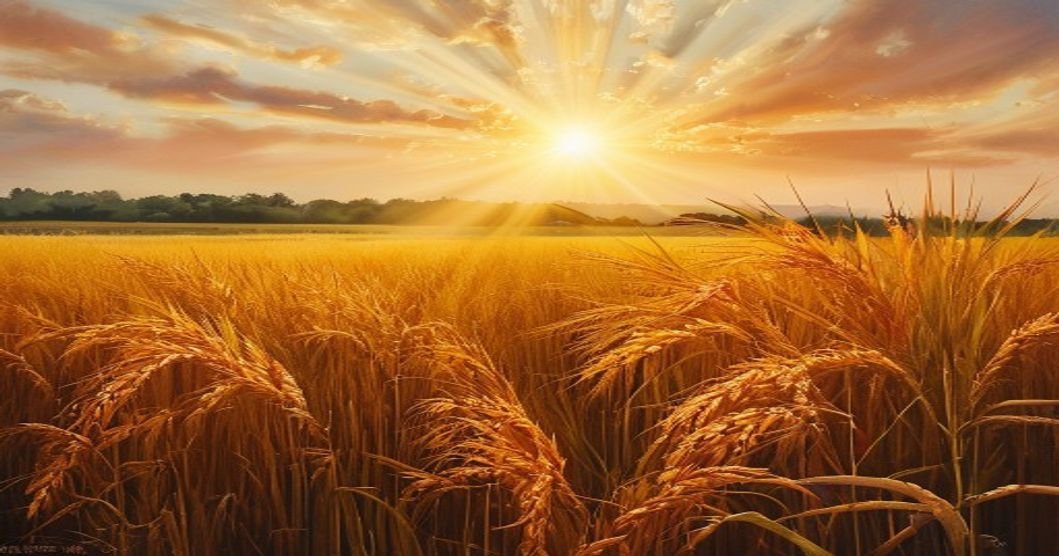
Saljong’s gift was the harvest. The harvest’s gift is this cup. Wangala says: we receive it. We are grateful. We do not pretend it was only our effort.

November is Wangala season in the Garo hills. It is also the season to stock your best teas — the ones that carry the year’s light in them.

The hills where this story lives are the same hills where our tea grows. Explore teas from West Garo Hills →
Posted on Leave a comment

Muni and the First Cup: A Garo Creation Story About Fire, Water, and Warmth

Achik Tale Muni First Cup — The Garo creation story of Muni — fire, water, and warmth — and its connection to the cup of tea that comes from the same West Garo Hills today.

Achik Tale Muni First Cup: What You Need to Know

For further research, see the Garo people of Meghalaya.

From A’Chik Golporang (Garo Folklore) Part III, Story 1 (Muniko Manchengani — The Story of Muni), collected by Dhoronsing K. Sangma.

The first story in the third and final book of A’Chik Golporang is the creation story — Muniko Manchengani, the story of Muni, the primordial creator in Garo cosmology.

In the story, Muni establishes the first great things: the first rules of the forest, the first understanding between the living world and the spirit world, the first agreements that make the hills habitable. Niba Jonja, who is to Garo cosmology what Arjuna is to the Mahabharata — the figure who carries the living world’s case before the great powers — undertakes the first journey to Salgra to receive Muni’s guidance.

The journey requires fire. Not fire as destruction — fire as the thing that makes the cold habitable, that turns raw into nourishing, that marks the boundary between the sheltered and the unsheltered. Before Muni’s establishment of the fire rules, the Garo hills were habitable in body but not in spirit. After: the changy had a hearth in the middle of the floor. The nokpante had a fire around which the young men gathered. The jhum clearing had fires lit at the right moment in March that returned the cut bamboo to ash and the ash to soil.

Fire was the technology that made the Garo hills home.

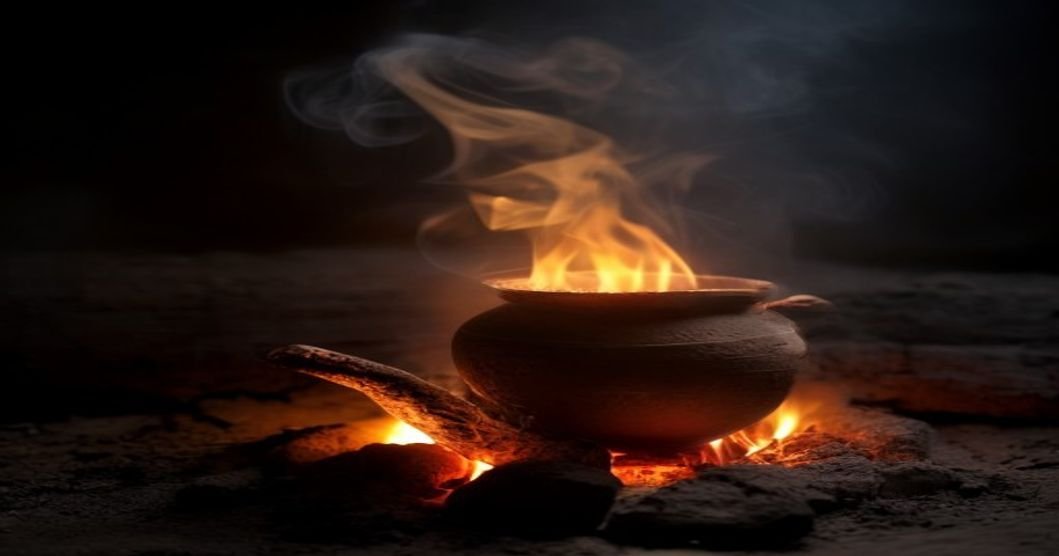
But fire alone was not the gift. The gift was the combination — fire and water together. The cooking pot over the flame. The steam that rose from the water as it heated. The specific chemistry that happens when the two meet at the right temperature and in the right vessel.


Tea is Muni’s logic in a cup. Fire and water, combined in the right proportion, at the right temperature, for the right amount of time, produce something that neither can produce alone.

The Garo changy had its fire in the middle of the floor, and the first thing that happened around it each morning was the heating of water. Not for cooking yet — cooking came later. The first use was warmth in a liquid form. Something that moved from the pot to the body, from the cold morning to the working day.

Muni’s first gift to the Garo hills was the means to make things habitable. The means to turn cold into warmth. The means to take what the forest provides and transform it, through fire, into something the body can receive.

This is still happening, every morning, in every kitchen, everywhere. The fire goes under the kettle. The water heats. The leaves — from the West Garo Hills, where the Muni story lives — release into the water what the season put into them.

The cup in your hand is a very old creation. Older than the hills, said Muni. Older than the fire, said the water. They have been working on it together since before your name.

The hills where this story lives are the same hills where our tea grows. Explore teas from West Garo Hills →

Posted on Leave a comment

Nawang: The Garo Wind Spirit Who Shapes the Hills That Grow Your Tea

Achik Tale Nawang Wind Spirit — The story of Nawang — the Garo wind spirit who moves through the hills where our tea grows. An A'Chik tale about weather, nature, and the forces that shape everything.

Achik Tale Nawang Wind Spirit: What You Need to Know

For further research, see the Garo people of Meghalaya.

From A’Chik Golporang (Garo Folklore) Part III, Story 13 (Nawang), collected by Dhoronsing K. Sangma. Nawang is the A’chik spirit of the high wind.

In the cosmology of A’Chik Golporang Part III, Nawang is not a destructive force. The wind spirit is not the hurricane or the flood. Nawang is the high, steady wind that moves through the Garo Hills from the Bay of Bengal — the wind that carries moisture up the slopes, that pushes the monsoon clouds against the hills until they have no choice but to release.

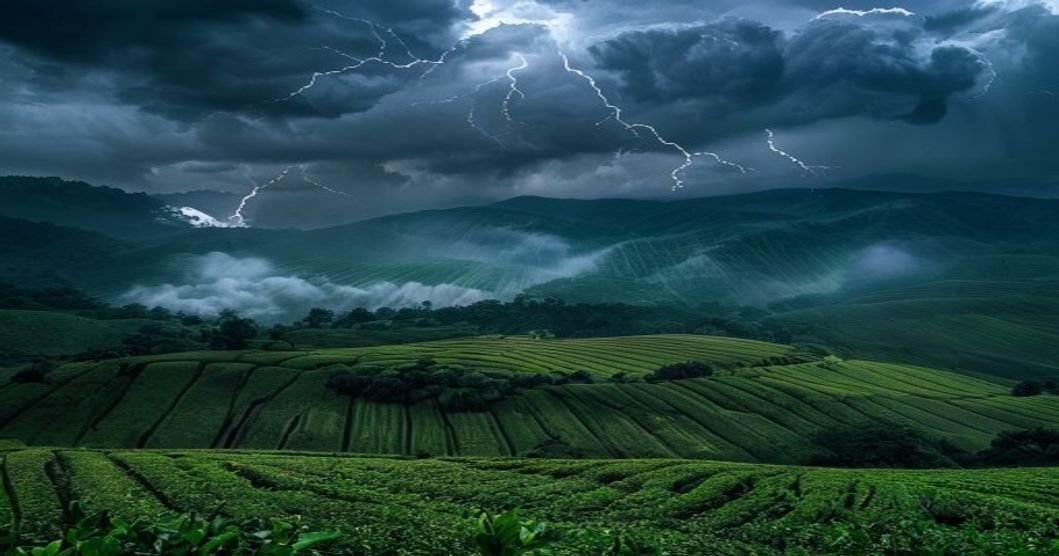
Cherrapunji and Mawsynram — the world’s wettest places — sit in the same hill system as the West Garo Hills. The reason they receive 12,000 to 15,000mm of rain annually is Nawang. The wind picks up moisture over the Bay of Bengal, carries it north and east, and finds the wall of the Meghalaya hills. The hills stop the wind. The wind cannot go further. It gives everything it carried.

In the Garo understanding, Nawang was the mechanism of abundance — the carrier between the sea’s water and the hill’s soil. Without Nawang, no rain. Without rain, no rice, no cotton, no forest, no stream. Without the stream, no village by the stream. Without the village, no changy, no nokpante, no story.

Nawang, in the cosmological structure of Part III, works alongside Susime (the wealth-giver) and Saljong (the fertility deity). Nawang brings the water. Saljong brings the light. Susime brings the abundance that results when these two work together. No single element is sufficient. The system requires all three.


When you open a packet of tea from the West Garo Hills, the smell that comes out is partly Nawang. It is the smell of leaves that grew in 12,000mm of annual rainfall — leaves that were never dry, never stressed by shortage, leaves that had more water available than they could use and used it to produce exactly the complex, layered chemistry that makes this tea taste like this and nothing else.

Tea from rain-saturated land is different from tea grown under irrigation. The rain that falls from the sky carries chemistry from the atmosphere — minerals, organic compounds, the specific mix that this particular Nawang-driven rainfall delivers to this particular hill. Irrigation water is neutral. Nawang’s water is not.

The Garo hills morning begins in the dark, before sunrise, when the mist from the previous night’s rain is still sitting in the valley below the borang. In that hour, between Nawang’s night work and the morning, the leaves are at their most saturated, most alive, most ready. The plucking that happens in that hour carries Nawang’s work in every leaf.

The rain that fills your cup began over the Bay of Bengal. Nawang carried it. The hills received it. You are drinking a transaction between the sea and the sky.

The hills where this story lives are the same hills where our tea grows. Explore teas from West Garo Hills →