Garo Healer Folk Medicine Wellness — The Garo healer worked with what the forest provided. The supplement industry works with what the market will bear. A comparison of two approaches to wellness.
For further research, see the Garo people of Meghalaya.
In the Garo hills, illness had two treatments. The first was the priest, who identified which demon was causing the problem and offered an appropriate sacrifice — a chicken, a goat, a set of rituals. If the chicken’s entrails fell apart cleanly, the demon had been appeased and recovery would follow.
The second was the old-country doctor. A few of these existed in each region, people who had acquired knowledge of specific plant preparations for specific ailments. Some of these preparations were, by all accounts, genuinely effective. One 19th-century observer noted that a village that had been severely affected by leprosy had, by the use of these remedies, become “quite free of it” — verified by multiple witnesses.
The modern wellness industry has inherited from both traditions. The supplement section of any health store is largely the priest’s tradition in new packaging: a product sold on the basis that your particular affliction (low energy, poor focus, suboptimal sleep) is caused by a specific deficiency that this specific product will address. The mechanism is different but the psychology is the same — identify the demon, sacrifice the money, receive the relief.
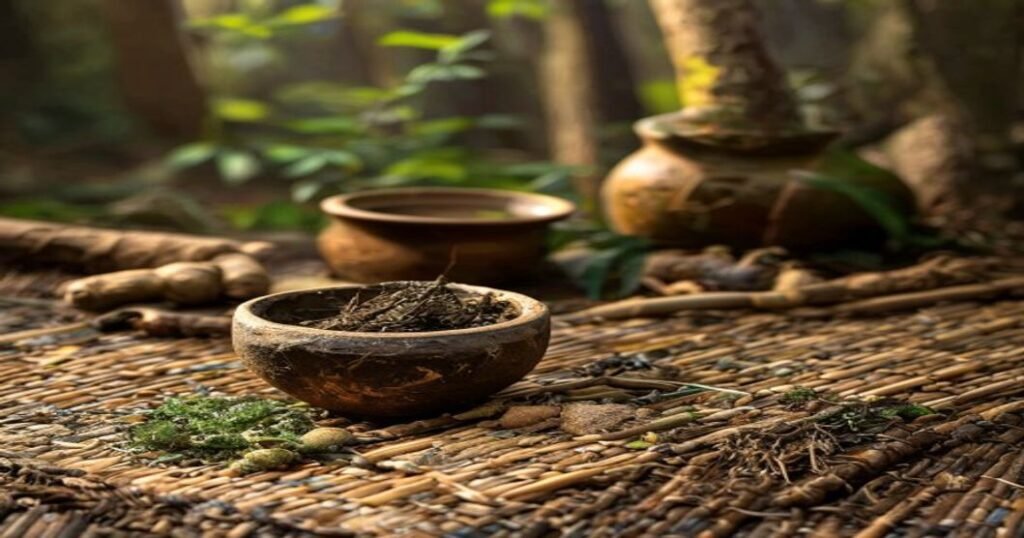
The genuine herbalist tradition — specific plant compounds with specific effects, built on accumulated empirical knowledge rather than theory — is the old-country doctor’s tradition. Green tea catechins actually do what the research says they do. Ginger actually has anti-inflammatory properties. The evidence is not the faith.
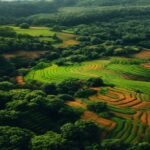
The West Garo Hills grows tea in a region where folk medicine and plant knowledge have been accumulating for centuries. The tea itself is not medicine. But it comes from land where the relationship between plants and human health has been taken seriously for a very long time. That’s not a health claim. It’s context. Context changes the flavour of things.
Tea Story tea is grown in the West Garo Hills — one of the world's rainiest, most biodiverse regions. Single-garden. No middlemen. Re-brews three times. Explore our teas →