Green Tea For Skin Health Acne Aging — How green tea and hibiscus affect skin health — acne, aging, UV protection and collagen. Evidence-based guide from The Tea Story.
Green Tea For Skin Health Acne Aging: What You Need to Know
⚠ Medical Disclaimer: This article is for informational purposes only. Tea is a complement to a healthy lifestyle — not a treatment or cure for any medical condition. Always consult a qualified doctor or healthcare provider before making changes to manage any health condition. Do not replace prescribed medication with tea or any other food supplement.
Skin health is one of the areas where tea’s benefits are supported by both strong mechanistic evidence and a growing body of clinical trials. The skin is the body’s largest organ, and it is constantly exposed to oxidative stress from UV radiation, pollution, and internal metabolic processes. Tea’s antioxidant compounds — particularly EGCG in green tea and anthocyanins in hibiscus — address multiple pathways of skin damage simultaneously.
Green tea and UV protection
A landmark 2003 study in the Journal of Nutrition found that women consuming green tea daily for 12 weeks had significantly better UV-induced skin protection as measured by minimal erythemal dose (the UV threshold for skin reddening). The green tea group also showed improved skin elasticity, roughness, scaling, and density compared to the placebo group. The mechanism is EGCG’s ability to inhibit UV-induced DNA damage in skin cells and reduce the inflammatory cascade that follows sun exposure.
Green tea and acne
Acne is primarily driven by excess sebum production and the inflammation triggered by Cutibacterium acnes bacteria. A 2012 randomised controlled trial published in the Journal of Investigative Dermatology found that EGCG directly inhibits sebum production by suppressing the androgen receptor activity in sebaceous glands — the skin cells that produce oil. A 2017 split-face trial found topical green tea application significantly reduced lesion count and sebum levels versus placebo.
For internal consumption, regular green tea drinking reduces systemic inflammation levels (including IL-6 and TNF-alpha), which is relevant because inflammatory acne (the red, cystic type rather than comedonal whiteheads/blackheads) is driven by systemic rather than purely local inflammation.
Hibiscus and collagen synthesis
Collagen is the structural protein that gives skin its firmness and elasticity. Collagen synthesis requires Vitamin C as a cofactor — without Vitamin C, collagen fibres cannot form properly. Hibiscus (Roselle) contains a remarkable concentration of Vitamin C — studies have measured between 12mg and 40mg per 100g of dried hibiscus, with concentrations varying by growing conditions. More significantly, hibiscus contains anthocyanins that directly inhibit collagenase and elastase — the enzymes that break down existing collagen and elastin in the skin. This dual action (supporting synthesis + inhibiting breakdown) makes hibiscus unusually effective for skin integrity.
Anti-aging: the oxidative stress pathway
Skin aging is fundamentally an oxidative stress process — reactive oxygen species (from UV, pollution, and normal metabolism) damage cellular DNA, lipid membranes, and structural proteins. Green tea catechins have ORAC (oxygen radical absorbance capacity) values among the highest measured for any food compound. Regular consumption significantly reduces systemic oxidative stress markers, protecting skin cells along with every other cell in the body.
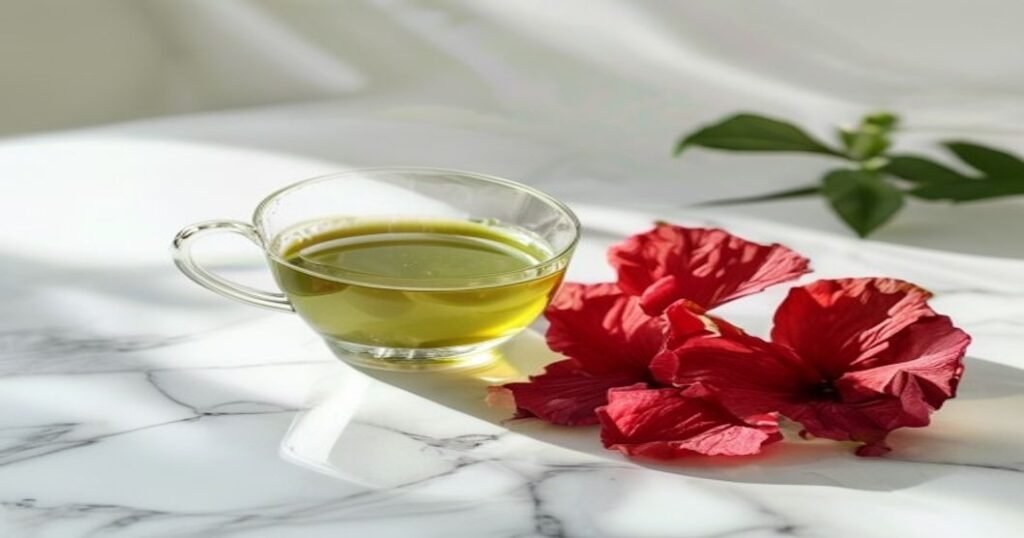
Teas to try from Tea Story: Premium Green Tea for EGCG (UV protection, acne, anti-aging antioxidants) and Hibiscus Roselle Tea for collagenase inhibition and Vitamin C. Both best consumed without sugar.
All Tea Story teas are single-garden whole-leaf teas from West Garo Hills, Meghalaya — no additives, no blending, no middlemen. Re-brews 3 times. Shop Tea Story teas →