
Why Clouds And Altitude — Why Clouds Make Better Tea: The Altitude and Atmosphere of West Garo Hills — is one of the topics we explore on The Tea Story blog, drawing on our direct experience growing, processing, and tasting tea from our own garden in West Garo Hills, Meghalaya.
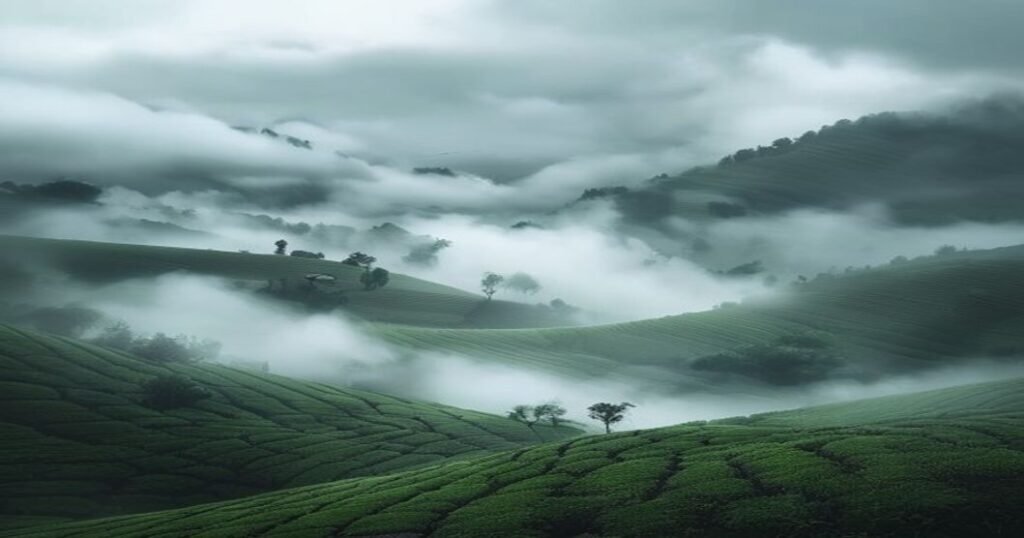
You can recognise a photograph of a good tea garden by its weather. Not because good tea photographs come out well in certain light — though they do — but because the conditions that produce great tea and the conditions that produce moody, cloud-wreathed, visually striking hill landscapes are the same conditions. This is not aesthetic coincidence. It is cause and effect working on the same variables simultaneously.
Cloud, altitude, diffuse light, cool temperature, consistent moisture. These are the ingredients for a beautiful photograph of a hillside. They are also the ingredients for tea that tastes genuinely different from tea grown in full sun on a flat plain.
What Clouds Do to a Tea Leaf
Tea plants, like all plants, produce energy through photosynthesis — the conversion of sunlight into sugars. In high sunlight conditions, this process runs fast, and the plant uses the resulting energy for rapid growth: larger leaves, longer stems, more biomass. In diffuse light conditions — overcast days, cloud cover, filtered sun through canopy — photosynthesis slows, and the plant shifts its energy allocation.
Under diffuse light, tea plants produce significantly more L-theanine — the amino acid that creates the smooth, somewhat sweet, mildly calming quality in good tea — and less of the simple sugars that fuel rapid growth. The leaves develop more slowly and accumulate more complex chemical compounds than leaves grown in full sun at high speed.
This is why shade-grown Japanese matcha, deliberately cultivated under shade cloth for the final weeks before harvest, has a pronounced sweetness and richness that regular green tea does not. Shading changes the leaf’s chemistry in the direction of quality rather than quantity.
West Garo Hills does not need shade cloth. The clouds arrive on their own schedule and stay as long as they like. The tea grows under them, developing slowly and chemically richly, without any human intervention required.
The Temperature Effect
Altitude and cloud cover also regulate temperature. Tea grown in hot lowland conditions — constant 35-degree days with full sun — grows quickly and produces leaves with high simple sugar content and elevated tannins. Tea grown in cooler, cloudier conditions grows more slowly and produces leaves with a more restrained flavour profile: less aggressive in the first steep, more rewarding in the second and third.
West Garo Hills sits at moderate altitude — not as high as Darjeeling, but elevated enough that the temperature is measurably cooler than the Brahmaputra plains to the north. Combined with the almost permanent cloud cover during the monsoon months, the temperature during the main growing season is consistently in the range that tea plants find comfortable rather than challenging. They are not in a hurry. The flavour shows it.
The Thing About Looking at Clouds
There is a secondary effect of cloud-country that is not biochemical at all: it makes you want to stop and look. A flat, sunny landscape does not invite contemplation the same way that a hillside wrapped in low cloud does. The visual complexity of mist in a forest, the way a cloud moves through a valley below you while you stand above it, the strange quality of light in Meghalaya at the end of the monsoon — all of it creates a specific mental state that the rest of the world tends to associate with tea drinking.
Slow down. Be warm. Pay attention to the small particular thing in front of you. This is what the landscape of West Garo Hills produces in the people who live there, and this is what a cup of tea grown in its clouds produces in anyone who takes the time to brew it properly and notice what they are drinking.