Posted on Leave a comment

Northeast India Tea: Why This Region Is Becoming India’s Most Exciting Tea Country

Northeast India Tea — Northeast India Tea: Why This Region Is Becoming India’s Most Exciting Tea Country — is one of the topics we explore on The Tea Story blog, drawing on our direct experience growing, processing, and tasting tea from our own garden in West Garo Hills, Meghalaya.

The story of great tea from the Northeast of India has, until recently, been primarily the story of Assam — the vast plains of the Brahmaputra valley that supply much of the world’s black CTC tea and a significant portion of its premium orthodox grades. Darjeeling, technically in West Bengal but considered part of the northeastern tea belt, covers the premium end of the Indian black tea market with its first-flush muscatel grades. These two regions have dominated the narrative for a century and a half.

What has changed is visibility. Direct-to-consumer selling, enabled by e-commerce, has made it possible for small single-garden operations in Meghalaya, in the Manipur hills, in Arunachal Pradesh’s subtropical valleys, to reach buyers without going through the Guwahati or Kolkata auction systems that historically controlled market access. The result is that tea from these regions — previously available only to those who went looking very hard — is now findable by anyone with a shipping address and a preference for something other than the standard market offer.

What Makes the Broader Northeast Different

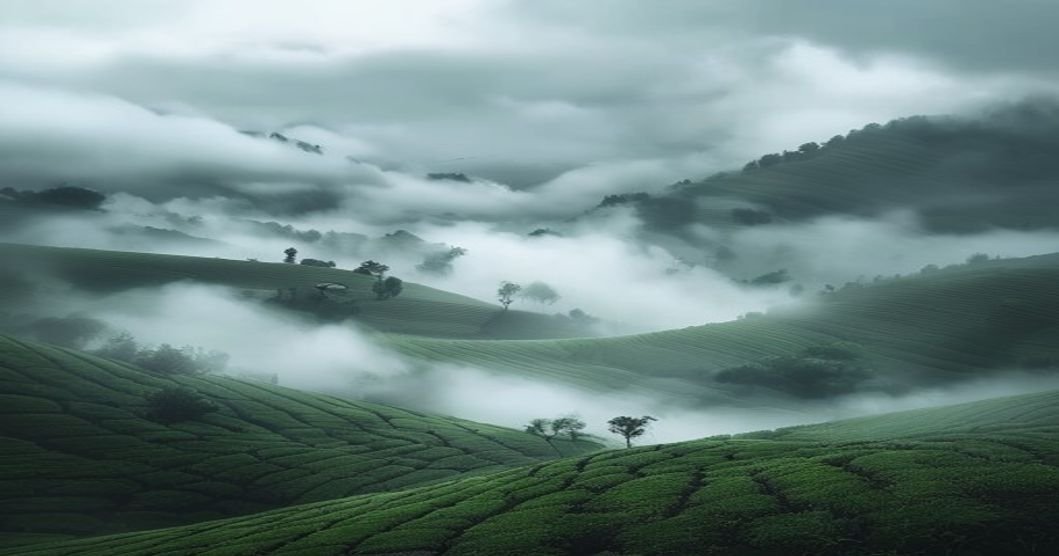
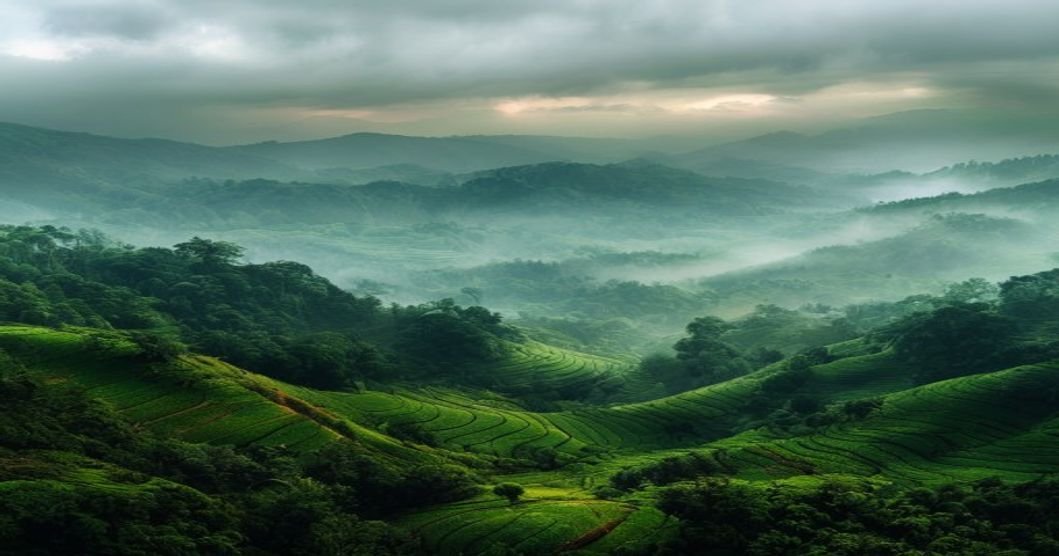
The Northeast is not one tea country. It is a mosaic of microclimates, each producing tea with a distinct character shaped by its specific altitude, rainfall, and soil. Assam plains tea — bold, malty, high tannin — is genuinely different from Meghalaya plateau tea, which tends toward a naturally sweeter, lower-tannin profile. Arunachal Pradesh produces teas at higher altitudes with Darjeeling-adjacent delicacy. The Manipur hills contribute yet another flavour profile influenced by different soil geology.

The common thread is quality of raw material: the entire northeastern region benefits from excellent monsoon moisture, high biodiversity that supports natural pest management, and soils that have not been industrially exhausted in the way that some longer-cultivated regions have.

The Northeast is not one terroir trying to produce one tea. It is a collection of distinct terroirs whose diversity has simply not been visible to buyers who could only access the commodity auction market.

Why Meghalaya Specifically

West Garo Hills in Meghalaya represents one of the most distinctive environments for tea cultivation in the entire Northeast. The combination of extraordinary rainfall (which reduces tannin and increases flavour complexity), deep organically-active topsoil (a function of intact forest cover), moderate altitude (which slows growth and concentrates flavour compounds), and the absence of industrial agricultural inputs produces a tea that does not fit neatly into any established category.

It is not Assam. It is not Darjeeling. It is not Chinese or Japanese green tea. It is a specific thing, from a specific place, with a specific flavour that direct-to-consumer purchasing is, for the first time, making widely accessible.

The story of Northeast Indian tea over the next decade is likely to be the story of many more such gardens finding their buyers directly. The infrastructure for it now exists. The quality, in most cases, already did.
Posted on Leave a comment

The Wild Orange of Nokrek: How an Ancient Citrus from West Garo Hills Ended Up in Your Tea

The Wild Orange Of — The Wild Orange of Nokrek: How an Ancient Citrus from West Garo Hills Ended Up in Your Tea — is one of the topics we explore on The Tea Story blog, drawing on our direct experience growing, processing, and tasting tea from our own garden in West Garo Hills, Meghalaya.

In 2009, UNESCO designated the Nokrek National Park in West Garo Hills as a Biosphere Reserve. One of the primary reasons for this designation was the presence of something that botanists and citrus researchers have called one of the most significant plants in the world for agricultural history: Citrus indica, the Garo wild orange.

Citrus indica is believed by many researchers to be the wild ancestor — or one of the earliest wild ancestors — of all cultivated citrus fruits on earth. Not just oranges: the entire citrus family that now includes mandarins, lemons, limes, grapefruits, and their hundreds of cultivated descendants may have its origins in the forests of the Garo Hills. The Nokrek reserve was created, in part, to protect this ancestral plant in its native habitat.

What the Garo Wild Orange Looks Like

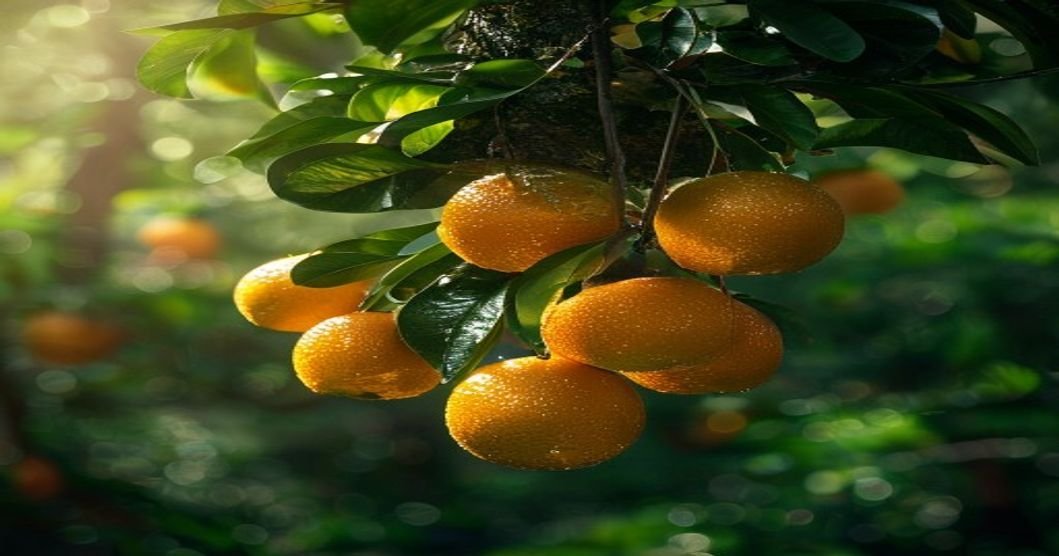
Do not expect a supermarket Valencia or a Nagpur mandarin. Citrus indica is small, knobby, intensely aromatic, and not particularly sweet by modern cultivated orange standards. It grows in the understorey of the subtropical moist broadleaf forest, in the same ecological zone as the tea plants that thrive on the hillsides of West Garo Hills. The skin is thick and deeply fragrant — an aromatics profile that experienced citrus growers describe as more complex and more volatile than anything in the cultivated orange family.

The Garo people have known this tree for as long as they have lived in these forests. It appears in traditional medicine, in cooking, and in the kind of informal ethnobotanical knowledge that rarely gets written down but persists across generations of people who know their landscape intimately.

The orange peel in your cup of tea may be the most ancient citrus on earth. The botanists are still arguing about the exact phylogeny. The Garo Hills are not waiting for the argument to conclude.

From Forest to Tea Cup

Our Orange Dew Tea uses dried orange peel — a natural, aromatic ingredient that complements the delicate sweetness of West Garo Hills green tea in a way that feels appropriate to the landscape. The orange peel adds a bright citrus top note to the natural vegetal base of the green tea, and when combined with the gentle warmth of ginger (also used in this blend), produces a cup that is simultaneously light and warming, floral and grounded.

The specific variety of orange we use is a cultivated relative of the wild types found in and around the Nokrek reserve — not Citrus indica itself, which grows wild and is protected, but the citrus of this landscape, shaped by the same forest soils and monsoon patterns that shaped the ancestral species. The aromatics of the peel carry something of the forest’s chemistry — the volatile compounds that the Nokrek jungle has been producing for far longer than any tea garden has existed.

The Biosphere Reserve at Our Door

Our garden in West Garo Hills sits within the broader ecological zone of the Nokrek Biosphere Reserve. The forest that surrounds and interpenetrates the reserve — and extends into the landscape around our garden — is the same continuous moist broadleaf forest that shelters the wild orange groves. Our tea is grown in the same rainfall that waters those trees, in the same soil type, under the same cloud cover.

When we say our tea comes from West Garo Hills, we mean a landscape that includes a UNESCO Biosphere Reserve protecting the possible ancestor of all orange trees. We find this a remarkable fact about the geography of our home. We hope it adds something to your cup of Orange Dew Tea, beyond what the leaves and peel already provide.

Posted on Leave a comment

The Silence Between Conversations: Tea as the Social Language of Northeast India

Tea As The Social — The Silence Between Conversations: Tea as the Social Language of Northeast India — is one of the topics we explore on The Tea Story blog, drawing on our direct experience growing, processing, and tasting tea from our own garden in West Garo Hills, Meghalaya.

There is a particular social grammar to tea in Northeast India that is difficult to explain to someone who has not experienced it, and immediately recognisable to anyone who has. The grammar works as follows: you arrive at someone’s home or at a dhaba or at a relative’s house in a town you are passing through, you sit down, and within a few minutes — without asking, without being asked, without any transactional negotiation of the kind that governs most service interactions — tea appears.

It simply appears. Someone went to make it. You did not need to want it. Its presence is not contingent on your desire. It is contingent on your having sat down.

Tea as a Statement About People

This is not unique to Meghalaya — variants of this hospitality tradition exist across the Northeast, across parts of Assam, Bengal, and Odisha, and in different forms across South Asia. But the Northeast has preserved it with particular intensity, partly because the culture of hospitality in communities like the Garo, the Khasi, the Mizo, and the Naga has deep structural roots, and partly because the conditions of life in a hilly, often isolated landscape historically made mutual support not optional but necessary.

What you are doing when you offer tea without being asked is making a statement. You are saying: your presence here is expected and welcome. You are saying: I am not too busy or too inconvenienced to give you something. You are saying: the relationship between us is more important than whether you technically requested refreshment.

In a culture where tea is offered rather than ordered, the act of pouring says what conversation sometimes cannot.

The Dhaba at the Mountain Road

Picture a specific kind of place that exists all across the Northeast: the roadside dhaba at a mountain pass or a river crossing or at the edge of a small town. A few plastic chairs. A counter behind which an enormous aluminium vessel sits on a fire. The walls decorated with nothing particular. Rain on the roof.

At this dhaba, if you sit down for a minute, tea arrives. If you are there for half an hour and the owner has noticed your cup is empty, it is refilled. If you are visibly cold or wet — which you probably are, in Meghalaya — the refill happens faster. The tea is strong and sweet and the cup is small and the transaction, when it happens, is so low-key that it barely registers as a transaction at all.

This is not inefficiency. It is a specific social technology: a mechanism for making a stranger feel less strange, a traveller less alone, a guest less like an imposition. It costs very little and produces a disproportionate amount of warmth, which is the basic economics of good hospitality everywhere.

What This Has to Do with How We Make Tea

Our garden in West Garo Hills and the direct-to-consumer model through which we sell tea exist within this context. We are not a brand inventing a heritage. We are a garden in a district where tea has been offered to guests for generations — where the social meaning of the cup is woven into the fabric of how the community operates.

When we think about who will eventually drink our tea — sitting at a desk in Bangalore, in a kitchen in Delhi, on a balcony in Mumbai with the evening coming down — we think of the dhaba at the mountain road. We think of the cup that arrives without being asked. We think of what tea in the Northeast actually means, and we hope that something of that meaning travels with the leaf from West Garo Hills to wherever you open the packet.

Posted on Leave a comment

Why Clouds Make Better Tea: The Altitude and Atmosphere of West Garo Hills

Why Clouds And Altitude — Why Clouds Make Better Tea: The Altitude and Atmosphere of West Garo Hills — is one of the topics we explore on The Tea Story blog, drawing on our direct experience growing, processing, and tasting tea from our own garden in West Garo Hills, Meghalaya.

You can recognise a photograph of a good tea garden by its weather. Not because good tea photographs come out well in certain light — though they do — but because the conditions that produce great tea and the conditions that produce moody, cloud-wreathed, visually striking hill landscapes are the same conditions. This is not aesthetic coincidence. It is cause and effect working on the same variables simultaneously.

Cloud, altitude, diffuse light, cool temperature, consistent moisture. These are the ingredients for a beautiful photograph of a hillside. They are also the ingredients for tea that tastes genuinely different from tea grown in full sun on a flat plain.

What Clouds Do to a Tea Leaf

Tea plants, like all plants, produce energy through photosynthesis — the conversion of sunlight into sugars. In high sunlight conditions, this process runs fast, and the plant uses the resulting energy for rapid growth: larger leaves, longer stems, more biomass. In diffuse light conditions — overcast days, cloud cover, filtered sun through canopy — photosynthesis slows, and the plant shifts its energy allocation.

Under diffuse light, tea plants produce significantly more L-theanine — the amino acid that creates the smooth, somewhat sweet, mildly calming quality in good tea — and less of the simple sugars that fuel rapid growth. The leaves develop more slowly and accumulate more complex chemical compounds than leaves grown in full sun at high speed.

This is why shade-grown Japanese matcha, deliberately cultivated under shade cloth for the final weeks before harvest, has a pronounced sweetness and richness that regular green tea does not. Shading changes the leaf’s chemistry in the direction of quality rather than quantity.

West Garo Hills does not need shade cloth. The clouds arrive on their own schedule and stay as long as they like. The tea grows under them, developing slowly and chemically richly, without any human intervention required.

The Temperature Effect

Altitude and cloud cover also regulate temperature. Tea grown in hot lowland conditions — constant 35-degree days with full sun — grows quickly and produces leaves with high simple sugar content and elevated tannins. Tea grown in cooler, cloudier conditions grows more slowly and produces leaves with a more restrained flavour profile: less aggressive in the first steep, more rewarding in the second and third.

West Garo Hills sits at moderate altitude — not as high as Darjeeling, but elevated enough that the temperature is measurably cooler than the Brahmaputra plains to the north. Combined with the almost permanent cloud cover during the monsoon months, the temperature during the main growing season is consistently in the range that tea plants find comfortable rather than challenging. They are not in a hurry. The flavour shows it.

The Thing About Looking at Clouds

There is a secondary effect of cloud-country that is not biochemical at all: it makes you want to stop and look. A flat, sunny landscape does not invite contemplation the same way that a hillside wrapped in low cloud does. The visual complexity of mist in a forest, the way a cloud moves through a valley below you while you stand above it, the strange quality of light in Meghalaya at the end of the monsoon — all of it creates a specific mental state that the rest of the world tends to associate with tea drinking.

Slow down. Be warm. Pay attention to the small particular thing in front of you. This is what the landscape of West Garo Hills produces in the people who live there, and this is what a cup of tea grown in its clouds produces in anyone who takes the time to brew it properly and notice what they are drinking.

Posted on Leave a comment

Why Meghalaya Tea Never Turns Bitter: The Soil Science Behind West Garo Hills

Why Meghalaya Tea Never — Why Meghalaya Tea Never Turns Bitter: The Soil Science Behind West Garo Hills — is one of the topics we explore on The Tea Story blog, drawing on our direct experience growing, processing, and tasting tea from our own garden in West Garo Hills, Meghalaya.

If you have ever brewed a cup of tea and found it unpleasantly sharp — almost medicinal in its bitterness — the problem almost certainly started in the soil, not in your kitchen. Bitterness in tea is not a matter of bad brewing alone. It is baked into the leaf long before it reaches your teapot, shaped by the ground from which the plant draws its nourishment.

This is the story of why tea from West Garo Hills, Meghalaya never turns bitter — and why the answer begins two centimetres beneath the surface of the earth.

What Actually Makes Tea Bitter

Tea bitterness comes primarily from tannins — a group of polyphenolic compounds that the tea plant produces partly as a defence against insects and partly in response to stress. The more stressed a plant, the more tannins it produces. The more tannins in the leaf, the sharper and more astringent the cup.

There is a counterpart to tannins: L-theanine, the amino acid responsible for the smooth, sweet, almost umami quality in well-made tea. L-theanine and tannins exist in natural tension inside every tea leaf. The ratio between them determines whether a tea tastes rounded and pleasant or harsh and drying.

The soil does not just feed the plant. It decides the ratio of sweetness to bitterness in every leaf the plant grows.

Soils that are heavily depleted, over-fertilised with synthetic nitrogen, or poorly drained push the plant toward tannin production. Soils that are deep, rich in organic matter, and naturally balanced encourage L-theanine development and slower, calmer leaf growth.

The Soil Profile of West Garo Hills

West Garo Hills sits in the southwestern corner of Meghalaya, where the Garo plateau meets the foothills of the Brahmaputra plains. The soil here is classified as red lateritic — formed over millions of years from the weathering of iron-rich rock — but what makes it exceptional for tea is not its mineral content alone. It is the organic layer on top.

The forests of the Garo Hills have been accumulating leaf litter, root mass, and decomposed biomass for centuries. The topsoil is dark, spongy, and genuinely alive with microbial activity: billions of bacteria and fungi per gram of soil, breaking down organic material into plant-available nutrients at a steady, slow pace. This is not soil that gives a plant a sudden hit of soluble nitrogen and nothing else. It is a self-regulating system that feeds the plant exactly what it needs, when it needs it.

The result is tea plants that are never nitrogen-starved (which would slow growth to a standstill) and never nitrogen-flooded (which drives excess tannin production). They grow at a measured pace, building complex flavour compounds — including L-theanine — rather than rushing the biological equivalent of a stress response.

Why This Matters in Your Cup

When we say our teas can be re-brewed three times within fifteen minutes and never turn bitter, we are describing the direct consequence of this soil balance. A leaf that has developed with high L-theanine and moderate tannins releases its flavour gradually and gently. The first brew is full-bodied. The second is smoother. The third is light and almost sweet.

A leaf grown under stress — in depleted soil, with synthetic fertiliser, in a hot dry climate — releases tannins aggressively in the first pour and gives you nothing afterwards but astringency. This is why most tea bag blends taste flat after a single steep and why adding milk is almost obligatory: the milk proteins bind to the tannins and soften the sharpness.

Our tea from West Garo Hills does not need that correction. The balance was achieved before the leaf was ever plucked.

A Geography You Cannot Replicate

There is no fertiliser that recreates what centuries of forest cover have built in this soil. There is no irrigation system that replicates Meghalaya’s natural rainfall pattern. There is no processing trick that puts back the L-theanine that poor soil conditions never built in the first place.

Single-origin, single-garden tea from West Garo Hills carries the chemistry of this specific place in every leaf. That is not marketing language. It is soil science — and it is why, when you brew our tea, the bitterness simply is not there.