Top Two Centimetres — The Top Two Centimetres: Why Meghalaya’s Topsoil Grows Tea Unlike Anywhere Else — is one of the topics we explore on The Tea Story blog, drawing on our direct experience growing, processing, and tasting tea from our own garden in West Garo Hills, Meghalaya.
Farmers have a saying that has been true across every climate and every crop for ten thousand years: the topsoil is the farm. Not the subsoil, not the bedrock, not the irrigation system. The thin, dark, living layer at the very surface — rarely more than a few centimetres deep — is where almost all of a plant’s nutrition originates, and where the character of whatever it grows is ultimately decided.
In West Garo Hills, Meghalaya, the topsoil of our tea garden is something that cannot be purchased, manufactured, or replicated on a faster timeline. It has been accumulating since long before the first tea plant was put in the ground.
What Topsoil Actually Is
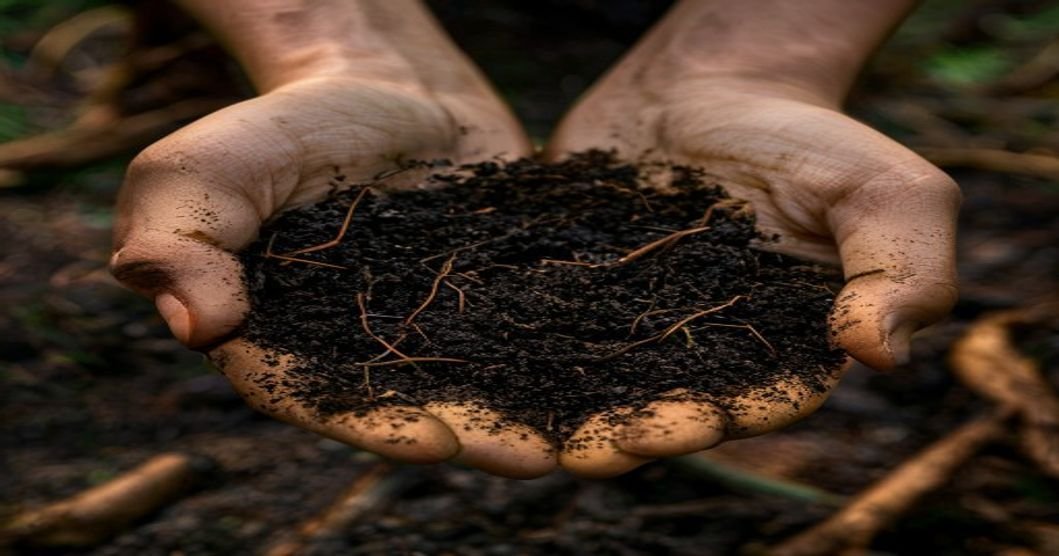
Topsoil is not just dirt. At its most active, it is a dense web of decaying organic matter — leaves, roots, insect casings, fungal mycelium, bacterial colonies — in various stages of breakdown. A single teaspoon of healthy topsoil from a well-managed forest garden contains more living organisms than there are humans on earth.
These organisms perform a service that no synthetic fertiliser can match: they convert complex organic compounds into the precise minerals and amino acids a plant can absorb through its roots. Potassium, phosphorus, calcium, magnesium, trace zinc and boron — all slowly released in plant-available form, at a rate the plant can actually use without being overwhelmed.
Synthetic fertiliser is like eating a sugar hit. Healthy topsoil is like eating a balanced meal over several hours. The plant that grows in good soil is calmer, more complex, and less reactive under stress.
Why Meghalaya’s Topsoil Is Exceptional
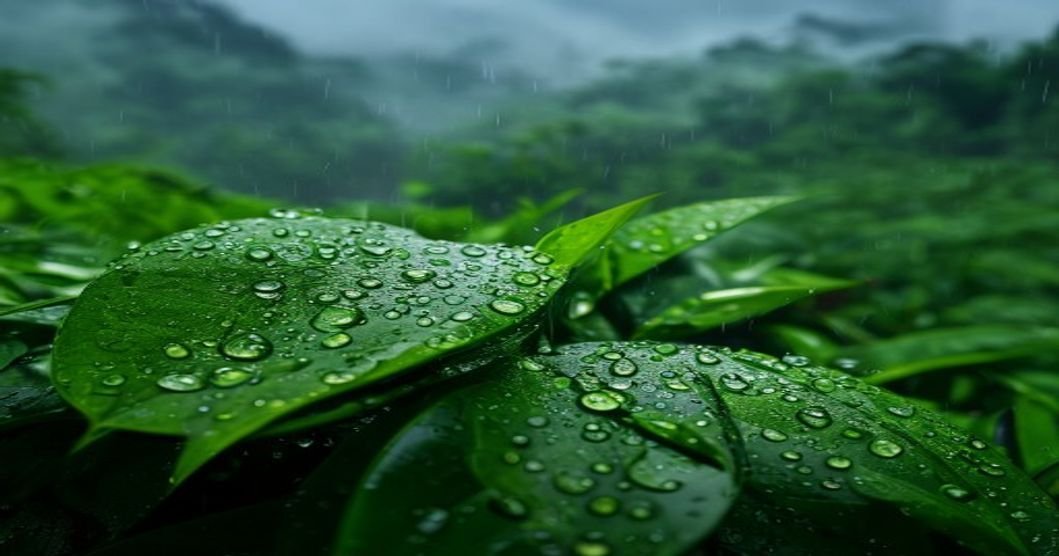
The Garo Hills receive between 2,500 and 3,500 millimetres of rainfall annually — enough to keep the forest floor constantly moist and microbially active, but not so much that it leaches all nutrients into the subsoil. The temperature range is moderate year-round, which means decomposition continues even in the cooler months rather than stopping entirely as it does in harsher climates.
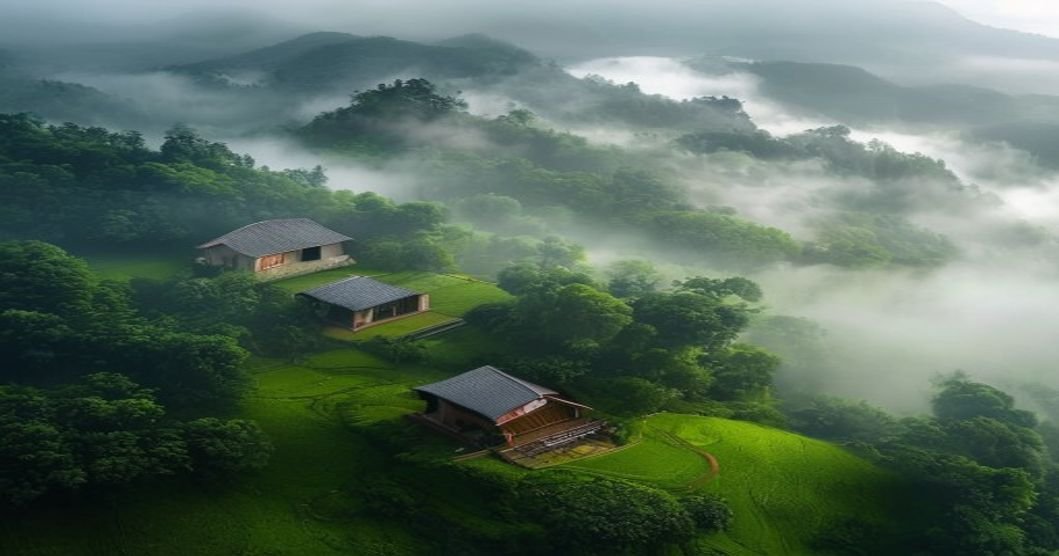
The native forest cover in this region has never been entirely cleared. Our garden sits in a landscape that has maintained continuous tree canopy for generations, meaning the cycle of leaf fall, decomposition, and microbial conversion has been running uninterrupted. The topsoil is deep — in some sections three to four centimetres of genuine humus before you reach the mineral subsoil — and it is dark, the way topsoil looks when it is genuinely rich in carbon.
This carbon richness is not incidental. Organic carbon in soil determines its water-holding capacity, its aeration, its ability to buffer pH, and critically, its ability to feed a slow, steady stream of nitrogen to plant roots without flooding them. Nitrogen floods cause rapid, sappy growth — which sounds desirable but actually dilutes the concentration of flavour compounds in the leaf and drives tannin production.
What This Means for the Tea Leaf
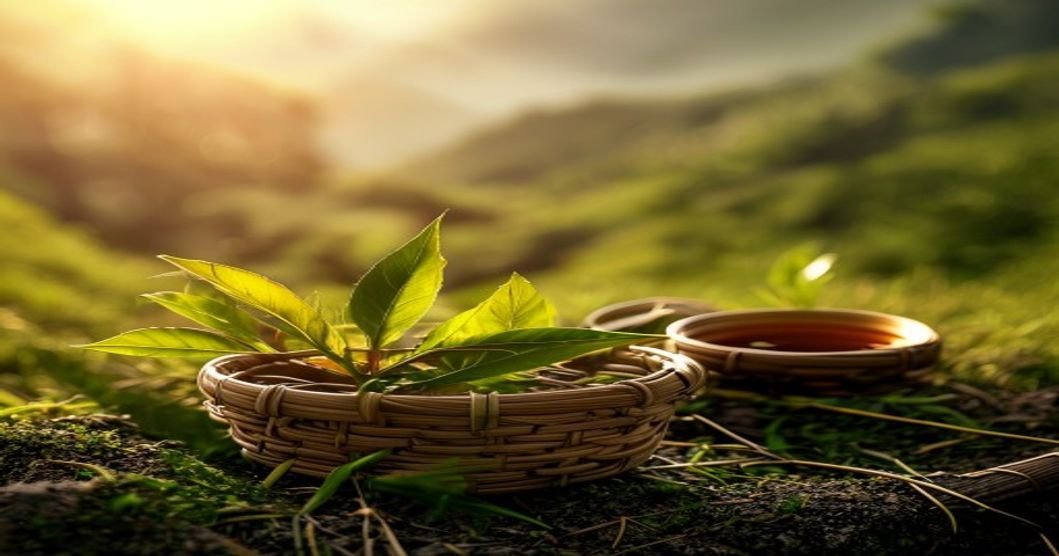
A tea plant drawing nutrients from this kind of topsoil grows at a measured pace. The two leaves and a bud that are hand-plucked from each stem during harvest are dense, compact, and loaded with the compounds that make tea worth drinking: L-theanine (the amino acid responsible for smoothness and the mild calm effect), catechins (the antioxidant group that includes EGCG), and volatile aromatic esters that give each tea its characteristic scent.
These compounds are concentration-dependent. A leaf that grows slowly and in rich soil packs more of them into a smaller volume. A leaf grown fast in depleted soil with heavy fertilisation is physically larger but chemically thinner — more water, less character, more tannin, less everything else.
No Fertiliser Required — Because None Is Needed
Our garden in West Garo Hills uses no synthetic fertilisers. This is not a statement of ideology. It is a practical decision: the topsoil already provides everything the plants need, and adding soluble nitrogen on top of an already-active biological system would destabilise the balance that makes the tea taste the way it does.
FSSAI certification number 21719011000008 covers the safety and traceability of what we produce, but the absence of chemical inputs is built into the garden’s history rather than enforced by regulation. The soil does the work. We tend it, protect it, and harvest from it — carefully.
When you brew a cup of our tea and notice that it does not bite, that it rewards a second steep as much as the first, and that it has a natural sweetness that does not need sugar — you are tasting two centimetres of soil that has been doing its job, undisturbed, for a very long time.