Posted on Leave a comment

Wangala and a Cup of Tea: Drinking the Harvest in West Garo Hills

Wangala Festival And Tea — Wangala and a Cup of Tea: Drinking the Harvest in West Garo Hills — is one of the topics we explore on The Tea Story blog, drawing on our direct experience growing, processing, and tasting tea from our own garden in West Garo Hills, Meghalaya.

If you have never heard a hundred Garo drums play together, the description is inadequate in advance. It is not loud in the way that electronic music is loud — it is loud in the way that a thunderstorm is loud, meaning: it occupies a physical space, it changes the quality of the air, and it is clearly operating on a frequency that precedes the invention of amplification by several thousand years. When the wangala drums start, in October or November, across the villages and towns of West Garo Hills, you know without being told that the harvest is over and the celebration has begun.

What Wangala Celebrates

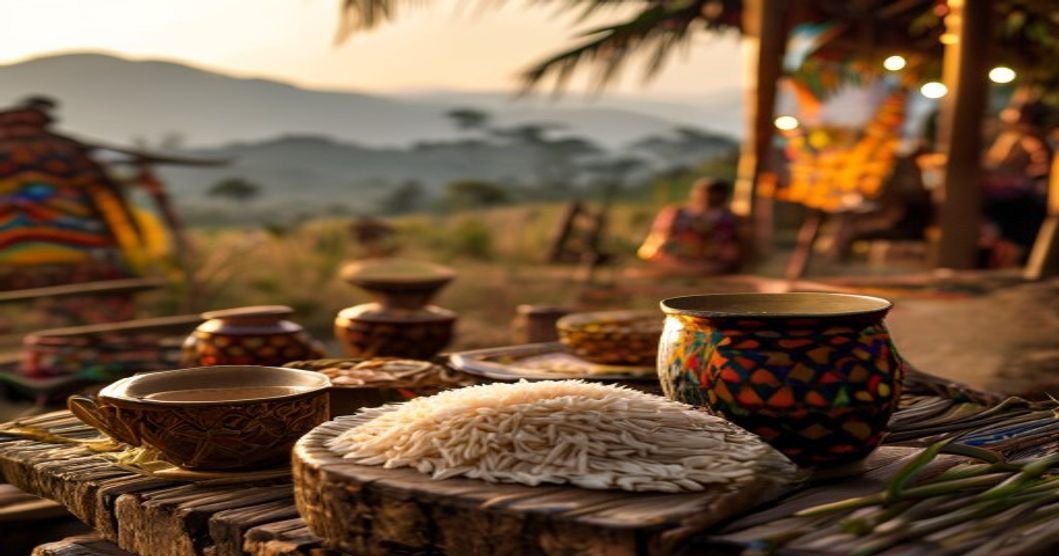
Wangala — sometimes written Wangala or Wan-gala — is the Garo harvest festival, a thanksgiving to Saljong, the god of fertility and the sun, for the season’s crops. It is the Garo year’s most significant ceremonial event: a multi-day festival of dancing, music, feasting, and communal gathering that in larger towns can draw tens of thousands of participants.

The women dance in traditional rikukol dress — wrapped cloth in rich earth colours, elaborate beadwork, brass jewellery that catches the light as they move. The men play the nagra drums: large, cylindrical instruments with skins of buffalo hide, tuned to specific pitches and played in coordinated patterns that require years of practice to master. The combination — women’s movement, men’s rhythm — is one of the most distinctive performance traditions in India, and one that has survived colonial suppression, missionary disapproval, and the general pressure of modernity with its identity largely intact.

The hundred drums of Wangala are not a performance put on for visitors. They are the community speaking to itself in a language it has used for longer than memory reaches.

The Days After the Drums

Festivals in Garo culture, as in most agricultural communities, combine the ceremonial with the practical. Wangala is not only drumming and dancing. It is the moment when families who have spent the growing season apart — working different fields, maintaining different harvest schedules — come together. Relatives travel from other districts, from Assam, from cities where work has taken them. Elders who rarely leave their villages receive visitors. The community re-forms, counts itself, and shares the season’s abundance.

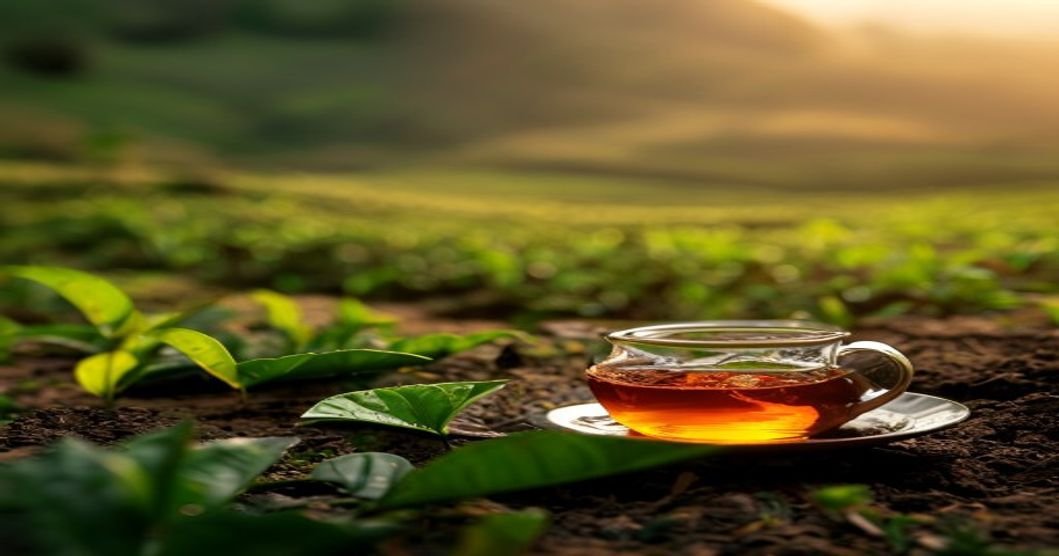
In the middle hours of these gatherings, after the formal ceremonies and before the evening meal, there is tea. There is always tea. It arrives with the reliability of a domestic fact — brought from the kitchen in large flasks, poured into mismatched cups, passed around without ceremony to whoever is sitting nearby. It is not part of the ritual. It is part of the reality.

In a cold October evening in West Garo Hills, with the drums still resonating faintly in the distance and the air carrying the particular freshness of post-monsoon hill country, a cup of tea from the local garden is not a product or a brand. It is just the warm thing in your hands while you talk to your grandmother about the harvest, while your children race between the legs of adults who have not seen each other since Wangala last year.

Tea from the Same Soil

The tea grown in our garden in West Garo Hills does not have a formal role in Wangala. But it shares the soil of the festival’s origin, the rainfall of its season, the hands of the people who have been celebrating this harvest for generations. When you drink our tea, you are not drinking a festival. You are drinking something grown by people who celebrate one, in a district where the drums still sound in October, where the harvest still matters, and where what you offer a guest still says something real about who you are.
Posted on Leave a comment

When the Rain Comes, You Make Tea: The Monsoon Ritual of Meghalaya

When The Rain Comes — When the Rain Comes, You Make Tea: The Monsoon Ritual of Meghalaya — is one of the topics we explore on The Tea Story blog, drawing on our direct experience growing, processing, and tasting tea from our own garden in West Garo Hills, Meghalaya.

Let us be precise about what Meghalaya rain is, because the word “rain” is doing a lot of work here and could lead someone who has only experienced Delhi’s monsoon or Chennai’s northeast monsoon to underestimate the phenomenon significantly.

Cherrapunji, in the East Khasi Hills, holds the record for the highest annual rainfall ever measured anywhere on earth: 26,461 millimetres in a single year, recorded in 1860. The town has held the record for highest monthly rainfall, highest annual rainfall, and highest average annual rainfall at various points in its recorded history. Mawsynram, nearby, is its consistent rival. These are not anomalies in the Meghalayan landscape. They are the most extreme expression of a regional pattern.

West Garo Hills receives rather less than this — between 2,500 and 4,000 millimetres annually, which is still several times the national average. But the character of the rain is the same: consistent, heavy, and present from May to October in a way that changes the fundamental experience of being outside.

Rain as Condition, Not Event

In most of India, rain is an event. The monsoon arrives, the city pauses, the streets flood, the sky clears, life resumes. In Meghalaya, rain is less an event and more a condition. Life does not pause for it. Markets operate under tin roofs and with rivers running between the stalls. Football continues. Farming continues. School continues. The knups — the distinctive traditional bamboo and palm-leaf umbrellas worn by Khasi and Garo farmers, shaped like a wide dome that covers both the head and the load on the back — are practical tools, not nostalgic props. You need one.

What changes when it rains in Meghalaya is not the pace of activity. It is the quality of the interior. Because rain changes what it means to be inside. Under a roof with the rain hammering overhead, in a room that smells of damp earth and wet clothing drying on a line, the case for a cup of hot tea becomes not just reasonable but urgent.

Rain in Meghalaya does not cancel plans. It changes the texture of everything done while the plans continue. Tea is the texture of being warm in a cold wet place.

The Specific Experience

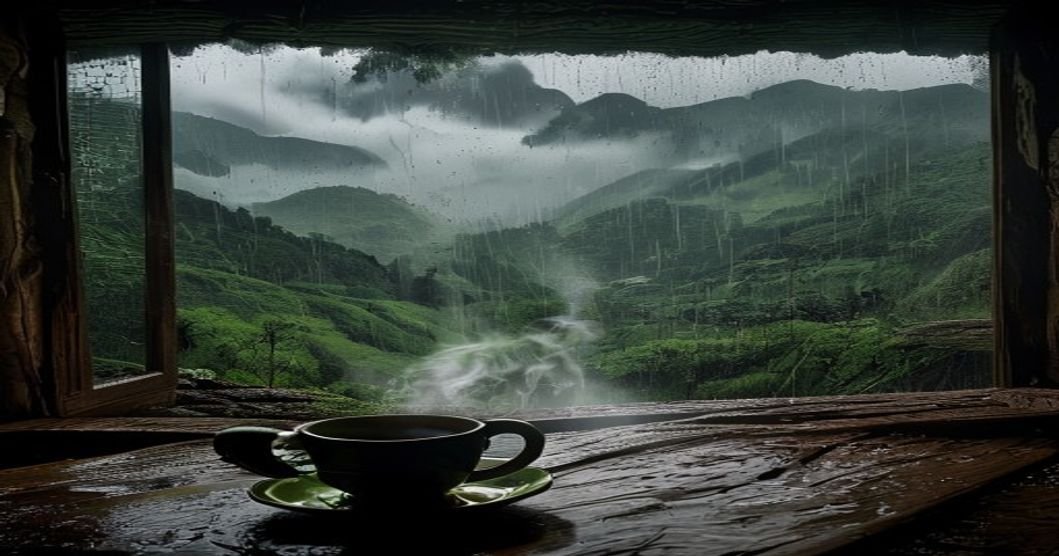
There is a particular quality to drinking tea during Meghalaya rain that is worth trying to describe. The cup is hot — genuinely hot, not politely warm — and the steam carries the smell of the tea into the air of the room. Outside the window, the rain has turned the hillside a specific shade of intensified green: the colour that vegetation takes on when it is thoroughly wet, which is somewhere between the green it is in dry sun and the green it becomes in photographs. The sound is constant and neutral in the way that white noise is neutral — present enough to fill silence without demanding attention.

Inside this condition, a cup of tea is not supplementary to the experience. It is central to it. You do not drink tea and then observe the rain. The rain and the tea are a single event, and separating them into components misses the point.

Where the Tea Comes From

The tea that West Garo Hills produces is grown in this same rain — the same monsoon, the same consistent downpour that turns the hillsides green and fills the rivers and makes tea drinking not merely pleasant but necessary. The rain that creates the experience of drinking tea in Meghalaya is the rain that created the tea being drunk. This is not a poetic statement. It is the literal water cycle of this specific place: cloud, rainfall, absorption, growth, harvest, cup.

When you drink our tea anywhere in India — in a dry city apartment, in an air-conditioned office, on a train platform where the sun is blinding — you are drinking something grown in that rain. Whether that connection is meaningful to you or not, it is there. And in Meghalaya, when the monsoon starts and someone hands you a cup without asking whether you want one, you are participating in the same ritual that has been happening on these hillsides for as long as people have lived on them.

Posted on Leave a comment

The Forest Came First: How the Garo Hills Became Tea Country

The Forest Came First — The Forest Came First: How the Garo Hills Became Tea Country — is one of the topics we explore on The Tea Story blog, drawing on our direct experience growing, processing, and tasting tea from our own garden in West Garo Hills, Meghalaya.

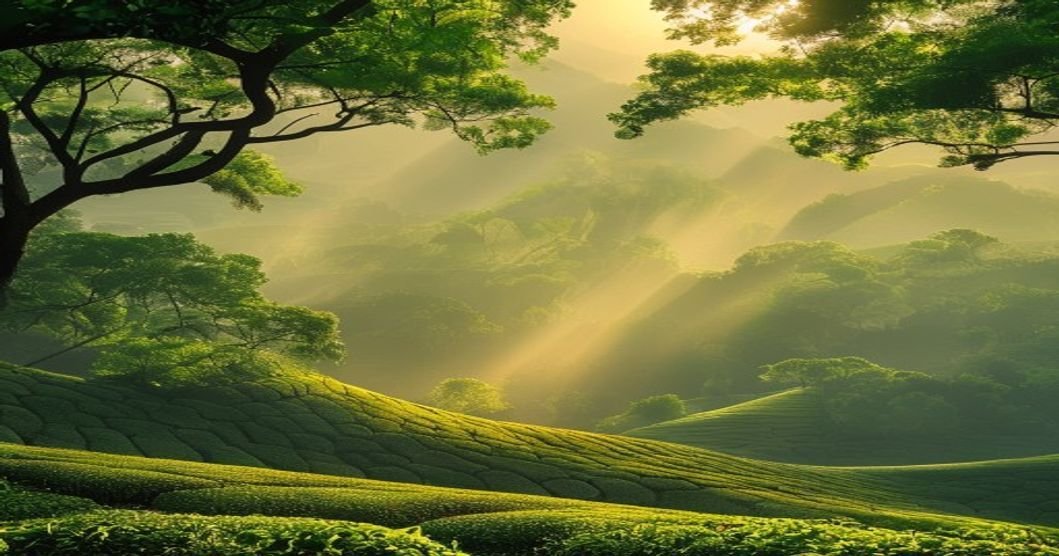
The Garo Hills are, at their core, a forest landscape. Not a landscape that used to have forest and now has other things, but a landscape where the forest is still structurally present, still governing the hydrology and the soil and the temperature and the wind, still the organising fact of the ecosystem. The tea garden in West Garo Hills where our tea grows exists within this forest structure, not as a replacement of it.

Understanding how tea came to grow here requires understanding the landscape that preceded it.

Jhum: The Agriculture of the Forest

The Garo people traditionally practised jhum cultivation — shifting agriculture, sometimes called slash-and-burn, which is a misleadingly destructive-sounding name for a system that is, when practised correctly and at appropriate density, genuinely sustainable and ecologically sophisticated.

In traditional jhum, a section of forest is cleared and burned, releasing the accumulated nutrients of the vegetation into the soil as ash. The cleared land is planted with mixed crops — rice, maize, vegetables, chillies — for one or two seasons. Then it is abandoned for ten to fifteen years, allowing the forest to regenerate. The cultivating family moves to a new section. Over decades, they rotate through a territory, always leaving more land in regeneration than under cultivation.

This system is not primitive. It is a form of landscape management that maintains biodiversity, prevents soil exhaustion, and works with the forest’s own regeneration capacity rather than against it. The forest does not disappear under traditional jhum. It shifts and recovers, carrying within it the accumulated fertility of centuries of organic matter decomposition.

The forest is not what the Garo people cleared to make their farms. The forest is the farm — rested, cycled, kept alive by the same movement that seems to disturb it.

When Permanent Crops Arrived

Colonial administration and later Indian government policy moved consistently toward sedentary, permanent agriculture and away from jhum — partly for practical administrative reasons (settled populations are easier to govern), partly from a genuine belief that permanent agriculture was more productive. Tea, as a perennial crop that requires permanent land allocation, fits the sedentary model exactly.

Tea cultivation arrived in the Garo Hills in the late colonial period and expanded gradually through the twentieth century. The soils that had been maintained by centuries of jhum rotation — deep, organically active, rich in the accumulated humus of alternating cultivation and forest recovery — turned out to be exceptionally suited to tea. The drainage characteristics of laterite hillside soil, the pH range, the mineral profile: all of it aligned with what Camellia sinensis thrives in.

What Remained

The transition from jhum to permanent cultivation was not total. Significant areas of the Garo Hills remain under forest cover, maintained by a combination of legal protection (the Balpakram National Park, the Nokrek Biosphere Reserve), community forest traditions, and the simple practical reality that the terrain is often too steep for any agriculture that involves motorised machinery.

Our garden sits in this landscape of mixed land use: tea gardens, forest patches, agricultural fields, villages, rivers. The forest around the garden is not decorative. It continues to regulate the humidity, protect the soil from erosion, shelter the predatory insects and birds that manage pest pressure without chemicals, and provide the ecological context within which the tea garden functions.

The forest came first. The tea grows now. The relationship between them is not conflict but continuity — the forest lending the garden what it needs to grow well, the garden repaying this debt by being exactly the kind of low-impact, permanent cultivation that the landscape can accommodate without losing what made it exceptional in the first place.

Posted on Leave a comment

A Tea Garden in West Garo Hills: Our Story and Why Origin Matters

West Garo Hills Tea Garden Story — The story of our tea garden in West Garo Hills, Meghalaya — why origin matters, how we grow and process our teas, and what garden-to-cup means for the quality in your cup.

West Garo Hills Tea Garden Story: What You Need to Know

West Garo Hills Tea Garden Story: What You Need to Know

West Garo Hills Tea Garden: What You Need to Know

West Garo Hills Tea Garden: What You Need to Know

West Garo Hills Tea Garden: What You Need to Know

West Garo Hills Tea Garden: What You Need to Know

West Garo Hills Tea Garden Story: What You Need to Know

West Garo Hills Tea Garden: What You Need to Know

West Garo Hills Tea Garden Story: What You Need to Know

West Garo Hills Tea Garden Story: What You Need to Know

West Garo Hills Tea Garden Story: What You Need to Know

West Garo Hills Tea Garden — The story of our tea garden in West Garo Hills, Meghalaya — why we grow, process, and pack our own tea, and what single-origin means for your cup.

For further research, see West Garo Hills, Meghalaya.

West Garo Hills isn’t a region most people associate with tea. Meghalaya as a whole produces a small fraction of India’s tea compared to Assam or Darjeeling, and within Meghalaya, West Garo Hills — centred around Tura — is even less known for it. We think that’s part of what makes our tea worth trying.

One Garden, One Factory, No Middlemen

The vast majority of tea sold in India — even tea marketed as premium or single-origin — passes through a chain of growers, brokers, blenders, and packagers before reaching a shelf. Each step adds cost, time, and an opportunity for the leaf’s actual origin and freshness to get diluted or obscured.

We do it differently: every tea we sell is grown in our own garden in West Garo Hills and processed in our own factory. There’s no broker buying leaf from multiple smallholders and blending it together, and no third-party packaging facility handling our tea alongside dozens of other brands’ products.

Why This Is Harder, and Why We Do It Anyway

Running your own garden and factory is more operationally demanding than sourcing blended leaf from established tea auctions — it means we’re directly responsible for everything from soil health to processing consistency, with no supplier to fall back on if something goes wrong. We’ve chosen this model because it’s the only way to genuinely guarantee what’s in the packet: leaf from our hills, processed by us, with nothing added or substituted along the way.

The Terrain Itself

West Garo Hills sits in the western part of Meghalaya, characterised by hill terrain, high rainfall, and the misty, humid mornings typical of the broader Meghalaya region (the same general climate pattern that makes nearby areas among the wettest places on Earth). This terrain produces slower-growing tea bushes than flat lowland estates — which, as with high-altitude tea elsewhere in the world, tends to concentrate flavour rather than dilute it.

What This Means in Practice

Because we control the whole chain, we can make specific, verifiable claims about our tea that blended-leaf brands often can’t:

  • Every product is FSSAI registered (license 21719011000008) under our own manufacturing operation, not a third-party packer
  • Our whole-leaf orthodox and green teas can be genuinely re-brewed up to 3 times — a direct result of careful, unhurried processing rather than rushed mechanical handling
  • We know exactly which garden plot, which season, and which processing batch every packet comes from

Visit Our Range

Our full catalogue — Green Tea, Black Orthodox Tea, and CTC Milk Tea — comes from this single garden and factory. Browse the full collection or read about our re-brewing approach to understand how garden-to-cup control shows up in the actual tasting experience.