
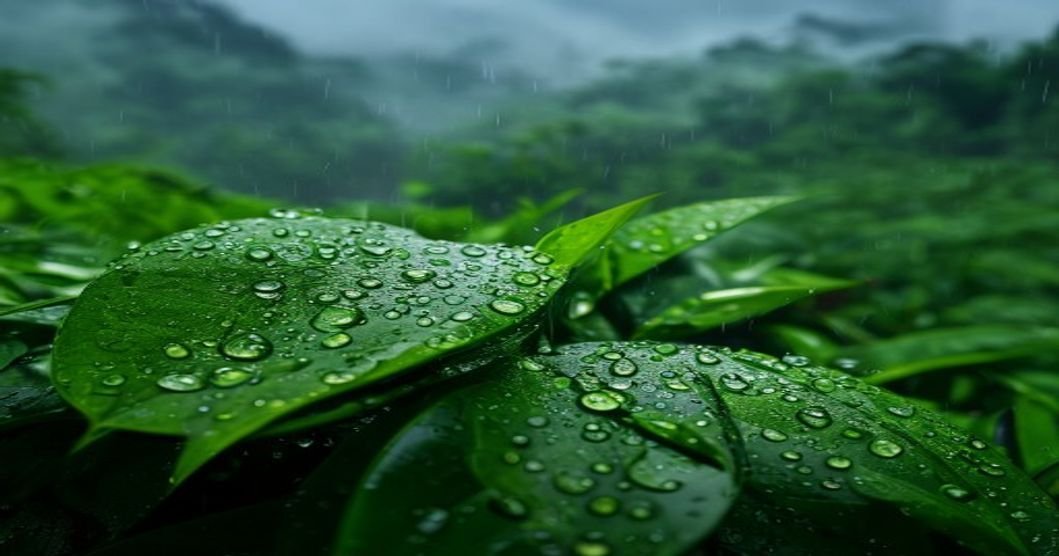
Rainfall One Perfect Cup — 12,000mm of Rainfall, One Perfect Cup: How the World’s Rainiest Region Grows Exceptional Tea — is one of the topics we explore on The Tea Story blog, drawing on our direct experience growing, processing, and tasting tea from our own garden in West Garo Hills, Meghalaya.
Meghalaya translates from Sanskrit as “abode of clouds.” It is not a metaphorical name. The state sits at the edge of the Brahmaputra plains in a configuration that forces warm, moisture-laden air from the Bay of Bengal to rise sharply as it hits the plateau — dropping extraordinary quantities of rain as it does. Mawsynram and Cherrapunji, both in Meghalaya, regularly record the highest annual rainfall figures anywhere on earth.
West Garo Hills, in the southwestern corner of the state, receives between 2,500 and 4,000 millimetres per year depending on the season — several times the rainfall of most Indian tea-growing regions. For the tea plants growing on these hillsides, this is not a hardship. It is a competitive advantage.
How Rain Affects the Chemistry of a Tea Leaf
Tea plants in well-watered conditions never experience drought stress. This matters because one of the primary triggers for excess tannin production in tea is water deficit: when a plant is stressed by lack of water, it produces more polyphenols as a kind of biochemical defence. More tannins mean a more astringent, bitter cup.
Constant, gentle rainfall keeps Meghalaya tea plants in a state of calm growth. They are never scrambling for moisture, never triggering stress-response chemistry. Their leaves develop with lower tannin concentrations and higher levels of the compounds that make tea genuinely pleasant to drink.
High rainfall does not dilute the tea. It dilutes the bitterness — while concentrating the character.
There is also a mechanical effect. Heavy rain physically washes the leaf surface, removing dust, pollen, and the natural accumulation of airborne particles that can add harshness to steeped tea. Leaves picked after good rain are cleaner at the cellular level than leaves that have sat in hot, dry air for weeks.
The Cloud Cover Effect
Regions with very high rainfall also tend to have persistent cloud cover — and this has a direct effect on how tea plants photosynthesise. In bright, direct sunlight, tea leaves grow quickly and can accumulate excess simple sugars and tannins. Under diffuse light filtered through cloud, photosynthesis slows slightly, and the leaf spends more of its energy producing L-theanine — the amino acid responsible for the smooth, calm quality in good tea — rather than rapid structural growth.
This is the same principle behind why shaded Japanese matcha (deliberately grown under shade cloth) develops such a pronounced sweetness and minimal bitterness. Meghalaya’s cloud cover provides a natural version of this effect across the entire growing season, without any human intervention required.
Why Most Teas Cannot Claim This
The vast plains of Assam receive good rainfall but far more direct sun and temperature extremes. Darjeeling is high-altitude and cool, which creates a different kind of quality — delicate and muscatel — but not the same natural moisture balance. Tea grown in parts of Tamil Nadu or parts of Sri Lanka contends with genuine dry seasons that require irrigation and create the kind of seasonal variation in quality that a premium single-origin brand cannot accommodate.
West Garo Hills has no dry season of consequence. The monsoon shifts in volume and intensity across the year, but moisture is never absent. The tea plants are never thirsty, never stressed, and never forced into the biochemical shortcuts that produce bitterness.
Tasting the Rain
We realise “you can taste the rain” sounds like the kind of thing a brand says in its marketing materials. So let us be specific about what you can actually detect: a natural lightness in the finish of the tea, no drying sensation at the back of the palate, and an ability to re-brew the same leaves two or three times without the second steep turning harsh.
These are flavour characteristics that rain — through the mechanisms described above — directly produces. The geography is not an origin story we are selling you. It is the explanation for what is actually in the cup.