
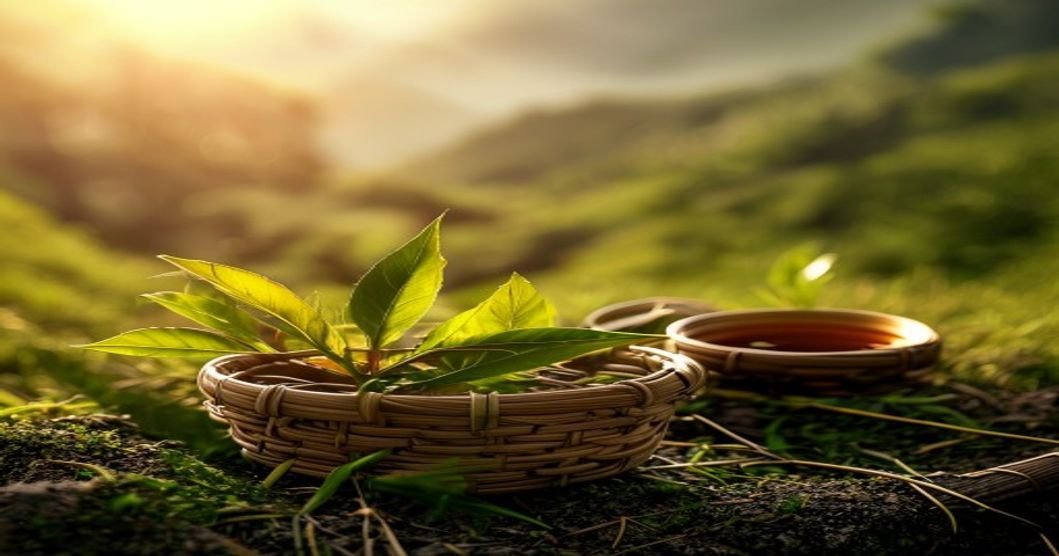
No Middlemen No Warehouses — No Middlemen, No Warehouses: Why Factory-Direct Tea Is Fresher Than Anything in a Supermarket — is one of the topics we explore on The Tea Story blog, drawing on our direct experience growing, processing, and tasting tea from our own garden in West Garo Hills, Meghalaya.
There is a question worth asking the next time you open a tin of tea from a supermarket shelf: how old is this? Not the manufacture date, which typically refers to when the tea was blended and packed — but the age of the leaf itself, from the moment it was plucked in a garden somewhere.
The honest answer, for most mass-market tea brands in India, is somewhere between twelve and twenty-four months. Sometimes more. The supply chain that moves tea from a garden in Assam or Meghalaya to a shelf in Mumbai or Delhi is long, complex, and indifferent to the question of freshness.
The Journey Most Tea Makes
Understand the steps: a garden harvests and processes its tea into bulk lots. Those lots are transported to one of India’s major tea auctions — Guwahati, Kolkata, Cochin, or Coimbatore — where they are sold to brokers or buying agents. The buying agent consolidates lots from multiple gardens, sells them on to a blending and packing company. The packing company stores the bulk tea, blends it with other lots for consistency, packages it under their brand, and releases it to distributors. Distributors deliver to regional warehouses. Regional warehouses supply retailers. Retailers shelve the product.
Each of these steps takes time. Tea can sit in bulk storage at a blending factory for months waiting to be used. It can wait in a distributor’s warehouse for weeks. It can sit on a supermarket shelf for months more.
By the time a standard supermarket tea reaches your cup, the leaf that went into it was likely plucked more than a year ago — and possibly two.
What Happens to Tea as It Ages
Tea is not wine. It does not improve with time. The compounds that make fresh tea rewarding — volatile aromatic esters, chlorophyll-derived flavour precursors, fresh L-theanine — are not stable at room temperature over long periods. They oxidise, degrade, and dissipate. What you are left with after eighteen months of storage is tea that is structurally intact but chemically diminished: flatter in flavour, lighter in aroma, and with less of the functional compounds that make quality tea worth its price.
This is why older tea requires stronger brewing times and higher temperatures to produce a drinkable cup. The good stuff has already left. You are extracting the structural compounds — primarily tannins — that remain when the subtler chemistry has gone.
What Factory-Direct Actually Means
When we describe our teas as factory-direct, we mean that the journey from our garden in West Garo Hills to your door involves exactly four steps: pluck, process, pack, ship. Our factory is on the same land as our garden. There is no auction, no broker, no blending house, no regional distributor, no retail shelf.
We pack the tea as close as possible to the processing date. We ship it directly to customers. The typical time from our factory to your address in India is five to ten days. The tea you receive was alive in our garden weeks ago, not years.
This changes what tea tastes like in ways that matter. The aromatics are present rather than dissipated. The L-theanine has not had time to degrade. The natural brightness of a freshly-processed leaf — that clean, almost grassy quality in good green tea, or the full-bodied roundness of a fresh orthodox black — is still there, intact, waiting to be released by hot water.
One More Thing the Direct Model Removes
Blending. Mass-market brands blend tea from dozens of gardens to produce a consistent flavour profile year after year. This is a legitimate business model with its own logic, but it means you have no idea which garden your tea came from, in what condition the leaves were, or what standards governed their production.
Our tea comes from one garden. FSSAI 21719011000008 certifies what we produce. You can trace every bag back to this hillside in West Garo Hills. That traceability is only possible because there are no middlemen to obscure the chain.
Freshness and traceability are not premium features we charge extra for. They are the natural result of removing the intermediaries that the conventional supply chain requires.