
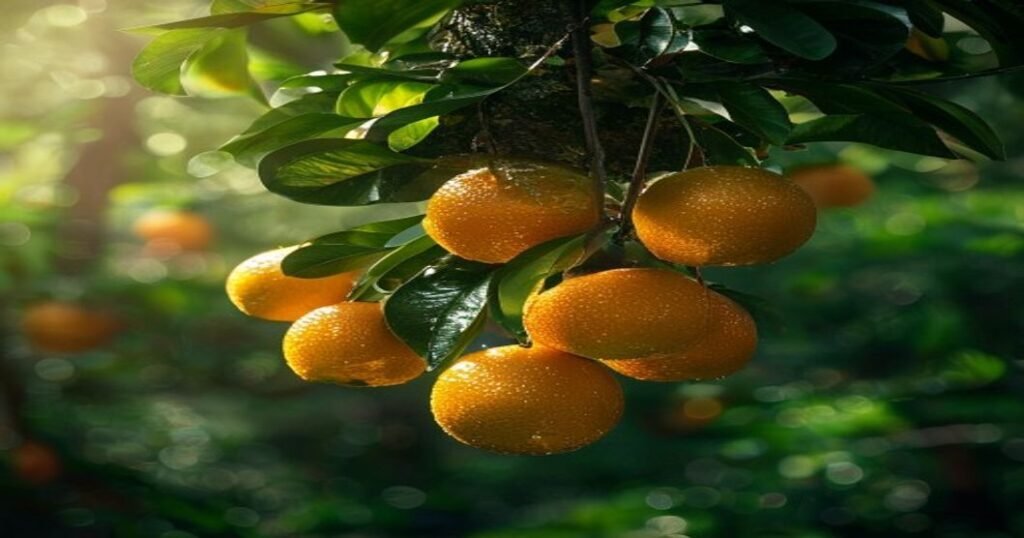
The Wild Orange Of — The Wild Orange of Nokrek: How an Ancient Citrus from West Garo Hills Ended Up in Your Tea — is one of the topics we explore on The Tea Story blog, drawing on our direct experience growing, processing, and tasting tea from our own garden in West Garo Hills, Meghalaya.
In 2009, UNESCO designated the Nokrek National Park in West Garo Hills as a Biosphere Reserve. One of the primary reasons for this designation was the presence of something that botanists and citrus researchers have called one of the most significant plants in the world for agricultural history: Citrus indica, the Garo wild orange.
Citrus indica is believed by many researchers to be the wild ancestor — or one of the earliest wild ancestors — of all cultivated citrus fruits on earth. Not just oranges: the entire citrus family that now includes mandarins, lemons, limes, grapefruits, and their hundreds of cultivated descendants may have its origins in the forests of the Garo Hills. The Nokrek reserve was created, in part, to protect this ancestral plant in its native habitat.
What the Garo Wild Orange Looks Like
Do not expect a supermarket Valencia or a Nagpur mandarin. Citrus indica is small, knobby, intensely aromatic, and not particularly sweet by modern cultivated orange standards. It grows in the understorey of the subtropical moist broadleaf forest, in the same ecological zone as the tea plants that thrive on the hillsides of West Garo Hills. The skin is thick and deeply fragrant — an aromatics profile that experienced citrus growers describe as more complex and more volatile than anything in the cultivated orange family.
The Garo people have known this tree for as long as they have lived in these forests. It appears in traditional medicine, in cooking, and in the kind of informal ethnobotanical knowledge that rarely gets written down but persists across generations of people who know their landscape intimately.
The orange peel in your cup of tea may be the most ancient citrus on earth. The botanists are still arguing about the exact phylogeny. The Garo Hills are not waiting for the argument to conclude.
From Forest to Tea Cup
Our Orange Dew Tea uses dried orange peel — a natural, aromatic ingredient that complements the delicate sweetness of West Garo Hills green tea in a way that feels appropriate to the landscape. The orange peel adds a bright citrus top note to the natural vegetal base of the green tea, and when combined with the gentle warmth of ginger (also used in this blend), produces a cup that is simultaneously light and warming, floral and grounded.
The specific variety of orange we use is a cultivated relative of the wild types found in and around the Nokrek reserve — not Citrus indica itself, which grows wild and is protected, but the citrus of this landscape, shaped by the same forest soils and monsoon patterns that shaped the ancestral species. The aromatics of the peel carry something of the forest’s chemistry — the volatile compounds that the Nokrek jungle has been producing for far longer than any tea garden has existed.
The Biosphere Reserve at Our Door
Our garden in West Garo Hills sits within the broader ecological zone of the Nokrek Biosphere Reserve. The forest that surrounds and interpenetrates the reserve — and extends into the landscape around our garden — is the same continuous moist broadleaf forest that shelters the wild orange groves. Our tea is grown in the same rainfall that waters those trees, in the same soil type, under the same cloud cover.
When we say our tea comes from West Garo Hills, we mean a landscape that includes a UNESCO Biosphere Reserve protecting the possible ancestor of all orange trees. We find this a remarkable fact about the geography of our home. We hope it adds something to your cup of Orange Dew Tea, beyond what the leaves and peel already provide.