Why Meghalaya Tea Never — Why Meghalaya Tea Never Turns Bitter: The Soil Science Behind West Garo Hills — is one of the topics we explore on The Tea Story blog, drawing on our direct experience growing, processing, and tasting tea from our own garden in West Garo Hills, Meghalaya.
If you have ever brewed a cup of tea and found it unpleasantly sharp — almost medicinal in its bitterness — the problem almost certainly started in the soil, not in your kitchen. Bitterness in tea is not a matter of bad brewing alone. It is baked into the leaf long before it reaches your teapot, shaped by the ground from which the plant draws its nourishment.
This is the story of why tea from West Garo Hills, Meghalaya never turns bitter — and why the answer begins two centimetres beneath the surface of the earth.
What Actually Makes Tea Bitter
Tea bitterness comes primarily from tannins — a group of polyphenolic compounds that the tea plant produces partly as a defence against insects and partly in response to stress. The more stressed a plant, the more tannins it produces. The more tannins in the leaf, the sharper and more astringent the cup.
There is a counterpart to tannins: L-theanine, the amino acid responsible for the smooth, sweet, almost umami quality in well-made tea. L-theanine and tannins exist in natural tension inside every tea leaf. The ratio between them determines whether a tea tastes rounded and pleasant or harsh and drying.
The soil does not just feed the plant. It decides the ratio of sweetness to bitterness in every leaf the plant grows.
Soils that are heavily depleted, over-fertilised with synthetic nitrogen, or poorly drained push the plant toward tannin production. Soils that are deep, rich in organic matter, and naturally balanced encourage L-theanine development and slower, calmer leaf growth.
The Soil Profile of West Garo Hills
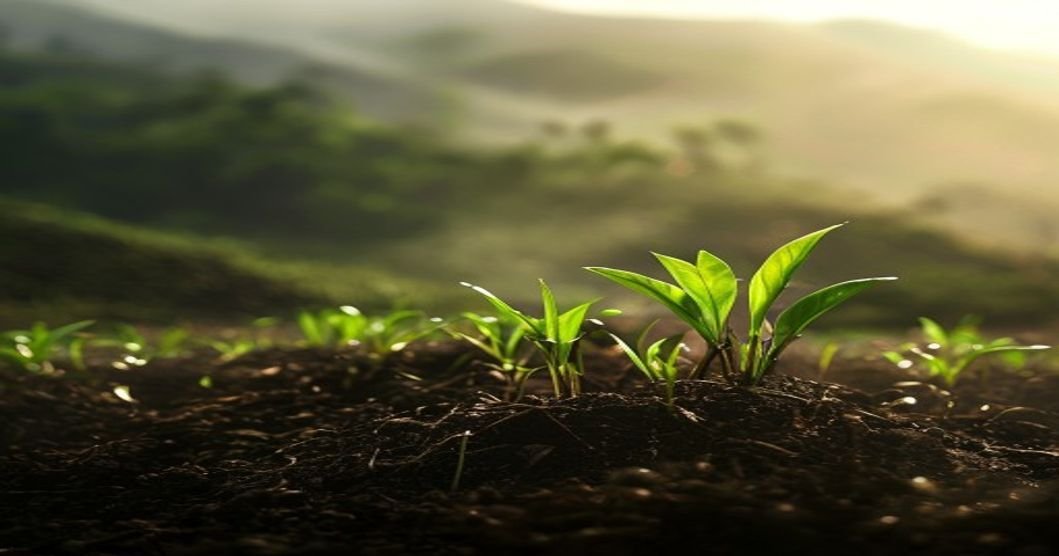
West Garo Hills sits in the southwestern corner of Meghalaya, where the Garo plateau meets the foothills of the Brahmaputra plains. The soil here is classified as red lateritic — formed over millions of years from the weathering of iron-rich rock — but what makes it exceptional for tea is not its mineral content alone. It is the organic layer on top.
The forests of the Garo Hills have been accumulating leaf litter, root mass, and decomposed biomass for centuries. The topsoil is dark, spongy, and genuinely alive with microbial activity: billions of bacteria and fungi per gram of soil, breaking down organic material into plant-available nutrients at a steady, slow pace. This is not soil that gives a plant a sudden hit of soluble nitrogen and nothing else. It is a self-regulating system that feeds the plant exactly what it needs, when it needs it.
The result is tea plants that are never nitrogen-starved (which would slow growth to a standstill) and never nitrogen-flooded (which drives excess tannin production). They grow at a measured pace, building complex flavour compounds — including L-theanine — rather than rushing the biological equivalent of a stress response.
Why This Matters in Your Cup
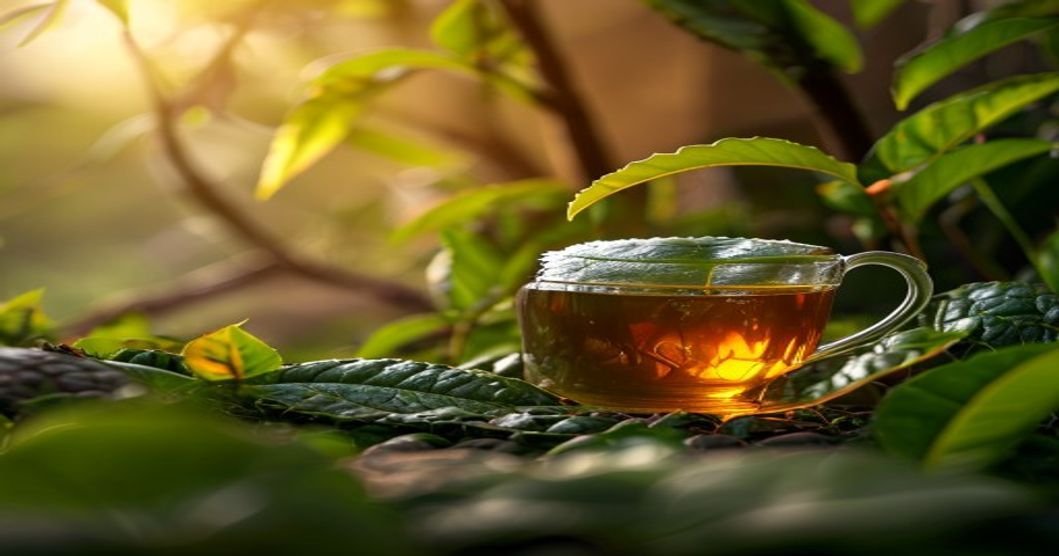
When we say our teas can be re-brewed three times within fifteen minutes and never turn bitter, we are describing the direct consequence of this soil balance. A leaf that has developed with high L-theanine and moderate tannins releases its flavour gradually and gently. The first brew is full-bodied. The second is smoother. The third is light and almost sweet.
A leaf grown under stress — in depleted soil, with synthetic fertiliser, in a hot dry climate — releases tannins aggressively in the first pour and gives you nothing afterwards but astringency. This is why most tea bag blends taste flat after a single steep and why adding milk is almost obligatory: the milk proteins bind to the tannins and soften the sharpness.
Our tea from West Garo Hills does not need that correction. The balance was achieved before the leaf was ever plucked.
A Geography You Cannot Replicate
There is no fertiliser that recreates what centuries of forest cover have built in this soil. There is no irrigation system that replicates Meghalaya’s natural rainfall pattern. There is no processing trick that puts back the L-theanine that poor soil conditions never built in the first place.
Single-origin, single-garden tea from West Garo Hills carries the chemistry of this specific place in every leaf. That is not marketing language. It is soil science — and it is why, when you brew our tea, the bitterness simply is not there.