Posted on Leave a comment

Why Whole Leaf Tea Is Better for the Environment Than Tea Bags

Whole-Leaf Tea and the Environment — Why It Beats Tea Bags on Every Sustainability Measure

The environmental case for whole leaf tea and the environment versus commercial tea bags is straightforward once you understand what tea bags are physically made of and what happens to them after use. This is a comparison of concrete materials and their end-of-life outcomes — not an abstract sustainability claim.

The microplastic problem in tea bags

Most commercial tea bags are sealed with polypropylene — a thermoplastic used because it bonds under heat and keeps the bag from opening during brewing. When you pour boiling water over a polypropylene-sealed teabag, the plastic contacts your brew directly for 3–5 minutes at near-boiling temperature. A 2019 study from McGill University, published in Environmental Science and Technology, found a single plastic tea bag at brewing temperature releases approximately 11.6 billion microplastic particles and 3.1 billion nanoplastic particles into the cup. These particles are ingested with every cup of teabag tea. Beyond the cup, used tea bags are not compostable. Synthetic fibres do not break down in a standard home composting system. A person drinking two cups of teabag tea per day generates approximately 730 non-compostable teabags per year. For environmental impact context, see Wikipedia on tea production in India.

Whole leaf tea has no single-use packaging waste per cup

Whole leaf tea comes in a single jar or pouch. You measure your portion, steep it, and compost the used leaves. The leaves are 100 percent organic plant matter — they decompose completely in a home compost bin within weeks, returning nutrients to soil. Our Organic Green Tea uses kraft paper outer packaging and a resealable foil-lined inner pouch. Compared to the per-cup packaging footprint of individually-wrapped teabags — paper tag, string, staple, paper wrapper, plastic-sealed bag per cup — a single pouch producing 50 cups represents a dramatically lower packaging volume per cup consumed, and zero plastic-in-cup contamination.

Single origin supply chain and composting advantage

Commercial blended teabag tea is typically sourced from multiple origins — Assam, Nilgiris, Kenya, Sri Lanka — blended in a central facility and distributed nationally. Each step adds transport emissions. Our single-origin teas from West Garo Hills travel directly from our garden to our packaging facility to you. No auction, no blending intermediary, no multi-origin logistics chain. Used whole leaf green tea is also an excellent compost addition — high in nitrogen and tannic acid, it accelerates decomposition of other organic matter and improves soil structure. The contrast with teabags is direct: teabag content will compost, but the bag itself will not. You either pick the leaves out before composting or send the entire bag to landfill.

Frequently asked questions

Are all tea bags made with plastic? Most conventional tea bags are heat-sealed with polypropylene. Some premium brands use unbleached paper bags without plastic sealing — these are genuinely compostable. Nylon pyramid bags contain significantly more plastic than flat bags.

Can used tea leaves go in the compost? Yes. Whole leaf tea is 100 percent organic plant matter and composts completely within weeks. Tea leaves add nitrogen and tannic acid, accelerating decomposition of other organic materials.

Is loose leaf tea really better for the environment? Per cup, whole leaf tea produces less packaging waste, zero microplastic contamination, and 100 percent compostable used material. A person drinking 2 cups daily switches from 730 non-compostable teabags per year to zero.

Why Whole-leaf Tea Is — Why Whole-Leaf Tea Is Better for the Environment Than Tea Bags — is one of the topics we explore on The Tea Story blog, drawing on our direct experience growing, processing, and tasting tea from our own garden in West Garo Hills, Meghalaya.

The microplastic problem in tea bags is not a new discovery. Research published in several peer-reviewed journals, including a notable 2019 study from McGill University, found that a single nylon or polypropylene tea bag releases billions of microplastic particles into the cup when brewed at 95°C. The numbers — 11.6 billion microplastic and 3.1 billion nano-plastic particles per cup in that study — are large enough to cause genuine concern among researchers studying microplastic exposure, even though the long-term health effects of microplastic ingestion are not yet fully characterised.

The environmental dimension is a separate but related issue: tea bags, including those marketed as “biodegradable,” often contain enough plastic in the heat-seal or the mesh construction to prevent true composting, meaning that the convenience of a paper-adjacent tea bag actually contributes to non-biodegradable waste in home compost and garden soil.

The Scale of the Problem

India consumes approximately a billion cups of tea per day. The fraction of those cups made from tea bags is smaller than in the UK or US, but growing — particularly in urban middle-class households, in offices, and in the horeca (hotel, restaurant, café) sector where individual portion convenience drives purchasing decisions. If even 10% of Indian tea consumption were in tea bag format, the microplastic and packaging waste numbers would be substantial.

The convenience of a tea bag is real. Its environmental and health cost per cup is also real. The honest assessment acknowledges both, and then asks whether the convenience is worth it at that cost.

What Whole-Leaf Tea Actually Requires

The barrier to switching from tea bags to whole-leaf tea is mainly habit and the initial investment in a brewing method. The options range from a simple stainless steel infuser basket (a one-time cost of a few hundred rupees) to a glass teapot with a built-in strainer, to the traditional method of brewing in a vessel and pouring through a small strainer. None of these require significant effort or expense. The learning curve is approximately two or three brews.

The used tea leaves are 100% compostable organic matter with no plastic components. They can go directly into compost, into potted plants as a soil amendment, or into the regular organic waste stream. The packaging for whole-leaf tea — typically a sealed foil or kraft pouch — creates far less waste per cup of tea than the cumulative individual wrapping of equivalent tea bag portions.

The Quality Argument Makes the Same Point

The environmental case and the quality case for whole-leaf tea point in the same direction, which is unusual in consumer decisions where environmental benefit typically requires a quality or convenience sacrifice. Whole-leaf tea produces a better cup. It generates less problematic waste. It costs less per cup when re-brewed three times from the same leaves. The case against it is mainly the force of habit — which is a solvable problem with two or three experimental brews.
Posted on Leave a comment

What Makes Meghalaya Green Tea Different from Darjeeling Green Tea

Meghalaya Green Tea Vs Darjeeling — What Makes Meghalaya Green Tea Different from Darjeeling Green Tea — is one of the topics we explore on The Tea Story blog, drawing on our direct experience growing, processing, and tasting tea from our own garden in West Garo Hills, Meghalaya.

India produces excellent green tea in two very different geographical contexts: the high-altitude Himalayan conditions of Darjeeling, and the plateau-and-valley conditions of Meghalaya in the northeast. Both produce premium orthodox green teas. Both are single-origin, small-production items available directly from gardens. They do not taste the same, and understanding why helps you choose between them for the cup you actually want.

Darjeeling Green Tea

Darjeeling green teas — grown at altitudes between 1,000 and 2,000 metres in the Himalayan foothills — are characterised by delicacy. The high altitude and cool temperatures produce a slow-growing leaf with a very refined flavour profile: light, slightly muscatel (the characteristic Darjeeling note of grape and dried apricot), with a floral quality in the best first-flush greens that is genuinely distinctive. The body is light, the colour in the cup is very pale gold, and the finish is clean and brief.

Darjeeling green is best brewed at low temperatures — 70 to 75°C — and for short steep times. It does not respond well to over-brewing or high temperatures. It is a tea for careful attention and a clean palate.

Meghalaya Green Tea

Meghalaya green tea — grown at moderate altitude (generally 200 to 600 metres in West Garo Hills) under extraordinary cloud cover and rainfall — has a different character entirely. It is fuller in body than Darjeeling green, naturally sweeter (a product of the soil chemistry and growing conditions described elsewhere on this site), and with less of the delicate floral complexity that characterises high-altitude Himalayan teas.

What Meghalaya green tea has instead is approachability and depth. It brews at 80 to 85°C without penalty — the lower tannin content means it does not punish slightly higher temperatures the way Darjeeling green does. It rewards re-brewing at least two times. The body is medium rather than light. The natural sweetness means it works well without any addition, but it also works with honey or as a base for cold brew.

Darjeeling green is a tea for a specific moment of careful attention. Meghalaya green is a tea for every morning, every afternoon, every occasion where you want something genuinely pleasant without the care and precision that Darjeeling demands.

Which to Choose

For a daily green tea with consistent, forgiving performance across different brewing conditions: Meghalaya. For a special-occasion, delicate, high-attention experience that rewards patience with extraordinary complexity: Darjeeling. For a gift to someone new to Indian green tea who might not yet have the confidence to handle a temperamental high-altitude tea: Meghalaya. For an experienced green tea drinker who wants to explore what Indian terroir can do at its most refined: Darjeeling alongside Meghalaya as a comparison.

The correct answer is not one or the other. It is both, at different moments, for different reasons.

Posted on Leave a comment

Best Green Tea in India: A Buyer’s Guide to What Is Actually Worth Drinking

Best Green Tea In — Best Green Tea in India: A Buyer’s Guide to What Is Actually Worth Drinking — is one of the topics we explore on The Tea Story blog, drawing on our direct experience growing, processing, and tasting tea from our own garden in West Garo Hills, Meghalaya.

The green tea market in India has expanded dramatically over the past fifteen years, driven by growing awareness of health benefits and a shift away from exclusively CTC chai toward a wider vocabulary of hot drinks. With expansion has come the predictable problem: a large market with variable quality and very little standardised information to help buyers distinguish between them.

This guide is practical. It covers what to look for, what to ignore, and why single-origin whole-leaf green tea from the Northeast is worth your attention if you are serious about the cup.

The Single Most Important Variable: The Leaf

Premium green tea is whole leaf. Not “premium whole leaf blend” — whole leaf, meaning the intact two-leaves-and-a-bud standard of hand-plucked tea, processed without the cutting, tearing, and curling that produces CTC grades. Everything else — packaging, brand name, country of origin, certifications — matters far less than whether the leaf itself is whole.

Whole-leaf green tea brews differently from fannings or broken-leaf grades. It releases its flavour gradually, can be steeped multiple times, and does not punish over-brewing with the immediate, aggressive bitterness that broken-leaf material produces. If you have tried green tea and found it unpleasant, the variable most likely responsible is leaf grade, not green tea itself.

India vs China vs Japan: The Honest Comparison

Japanese green teas — matcha, sencha, gyokuro — are benchmarks of a specific style: grassy, umami-rich, very low bitterness, processed with steam rather than pan-fire. They are excellent and expensive, and the best of them are genuinely distinctive. Chinese green teas cover a wider range, from the delicate Long Jing (Dragon Well) to the more robust Gunpowder grades, processed with varying combinations of pan-firing and drying.

Indian green teas from the Northeast — specifically from Meghalaya and Assam — occupy a different flavour profile: naturally sweet, light to medium body, with a clean finish that has very little of the vegetal or seaweedy quality that some drinkers find challenging in Japanese greens. They are not imitations of Chinese or Japanese styles. They are a distinct category, shaped by different soil chemistry, different altitude, and different rainfall patterns.

The best Indian green tea from the Northeast does not taste like a cheaper version of Japanese or Chinese tea. It tastes like itself — which, if you are used to either of those styles, will be a genuinely different experience.

What to Ignore on the Label

“Organic” is a certification that requires verification. On its own, as a label claim without a certifying body listed, it means nothing. “Natural” is not a regulated term in India. “Premium” is marketing language with no standardised definition. “High altitude” is meaningful if you can verify the actual altitude; otherwise it is often decoration.

What to look for instead: the source garden or district, the processing method (orthodox whole-leaf), the harvest season if listed, and the FSSAI number that confirms the product comes from a registered, traceable production facility. These are specific, verifiable facts rather than aspirational claims.

Our Green Tea Range from West Garo Hills

Our green teas are grown in our single garden in West Garo Hills, Meghalaya, processed orthodox whole-leaf in our on-site factory, and shipped directly to customers without going through auction or blending. The flavour is consistently clean, naturally sweet, and re-brewable up to three times from the same leaves. We grow Premium Green Tea, Orange Dew Tea (with natural orange peel and ginger), Jasmine Green Tea, and Mint Burst Tea from the same garden under the same standards. If you are beginning to explore genuine Indian green tea, any of these is a reasonable starting point.

Posted on Leave a comment

Organic Tea in India: What ‘Organic’ Actually Means — and When It Matters

Organic Tea In India — Organic Tea in India: What ‘Organic’ Actually Means — and When It Matters — is one of the topics we explore on The Tea Story blog, drawing on our direct experience growing, processing, and tasting tea from our own garden in West Garo Hills, Meghalaya.

In Indian food retail, “organic” has become one of the most useful and most abused words in the packaging vocabulary simultaneously. Useful because it signals something real and valuable when accurately applied: the absence of synthetic pesticides, herbicides, and fertilisers in the production of food. Abused because it is applied liberally by brands who have neither the certification nor the practices to justify it, in the knowledge that most consumers cannot easily verify the claim.

Tea is a category where this matters more than usual, because tea leaves are not washed before brewing. Whatever is on the leaf when it is packed is still on the leaf when you add hot water.

What Certified Organic Actually Requires

A legitimately certified organic tea must meet the standards of a recognised certifying body — in India, this means APEDA’s National Programme for Organic Production (NPOP), or international equivalents like USDA Organic or EU Organic for export markets. Certification requires an on-site audit of the farm, documentation of inputs used over a minimum transition period (usually three years), and ongoing annual inspection.

The cost and administrative burden of certification is significant — particularly for small gardens. A small family-run estate in Meghalaya with no pesticide inputs, excellent soil management, and genuinely clean production might not have organic certification simply because the paperwork and audit fees represent a disproportionate expense for their scale of operation. The absence of the certification label does not necessarily mean the absence of the practice.

The honest question to ask is not “is this certified organic?” but “what inputs does this garden use, and how can I verify that?” Certification is one answer to that question. Direct traceability to a named, registered garden is another.

When Organic Certification Matters Most

For tea sourced from regions with high conventional pesticide use — some parts of South India, some export-oriented Darjeeling estates under commercial pressure — the organic certification provides genuine assurance. The certification verifies that despite the surrounding conventional agriculture, this specific garden is not using those inputs.

For tea grown in landscapes where the surrounding ecosystem is intact forest, where pest pressure is naturally managed by biodiversity, and where the garden has a documented history of non-use of synthetic inputs, the certification may be less critical. The underlying reality it is trying to verify already exists without the paperwork.

Our Approach

Our garden in West Garo Hills does not use synthetic pesticides or fertilisers — not as a marketing position, but as a practical decision grounded in the ecology of the landscape. The biodiversity of the Garo Hills provides natural pest management. The soil provides nutrition without supplementation. We are registered under FSSAI (21719011000008), which requires documented, traceable production standards. We do not claim third-party organic certification because we have not completed the audit process; we do claim that nothing goes into our garden that should not be there, and that the soil and leaf chemistry bear this out in the cup.

Posted on Leave a comment

Jasmine in Tea: The Ancient Art of Scenting a Leaf

Jasmine In Tea — Jasmine in Tea: The Ancient Art of Scenting a Leaf — is one of the topics we explore on The Tea Story blog, drawing on our direct experience growing, processing, and tasting tea from our own garden in West Garo Hills, Meghalaya.

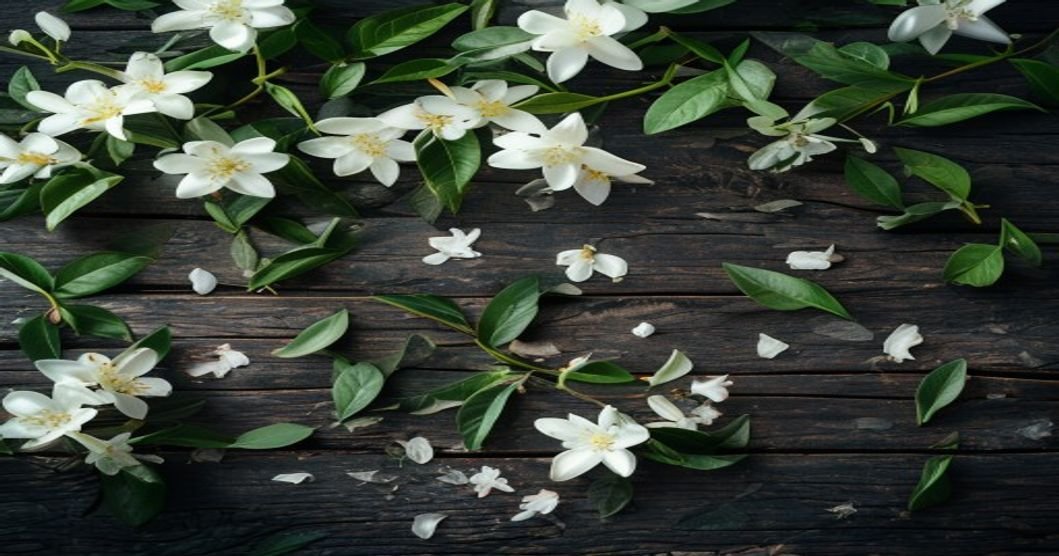
The jasmine used in tea is almost universally Jasminum sambac — Arabian jasmine — a small, white-flowered vine with a fragrance that concentrates into something approaching a physical presence when it is in full bloom. The flowers are harvested at night, when their scent is at its peak, because jasmine aroma compounds are volatile and begin to dissipate quickly after the flower opens in the heat of the day.

The technique of scenting tea with jasmine flowers is documented in Chinese texts from the Song dynasty (960–1279 CE) and has remained essentially unchanged since: fresh flowers are layered with partially-dried tea leaves and left together for several hours. The tea absorbs the floral aromatics through what is partly physical adsorption and partly a gentle moisture exchange between the fresh flowers and the dry leaf. The flowers are then removed, the tea is re-dried to remove the moisture they introduced, and the process may be repeated several times for higher grades.

Why the Process Works

Tea leaves are exceptional at absorbing aromatic compounds. This is the same property that makes it essential to store tea away from other strongly-scented foods — a bag of green tea near coffee beans will not taste like green tea for long. In jasmine scenting, this property is used intentionally and precisely: the leaf picks up the jasmine’s aromatic profile without the flower itself entering the final product.

The result is a tea that carries jasmine’s fragrance in a form that is different from, and often more nuanced than, adding jasmine to hot water directly. The volatiles that the tea leaf has absorbed are released when hot water is added, flooding the air above the cup with the scent before you have even raised it. This anticipatory aroma — the steam carrying the fragrance before the first sip — is a significant part of what makes jasmine tea a distinctive experience.

The scent of jasmine tea is not fragrance applied to tea. It is fragrance absorbed by tea — a one-way transfer that cannot be undone and that cannot be mimicked by artificial flavouring without the result smelling like soap rather than flowers.

Jasmine on Different Tea Bases

Jasmine can be used to scent green tea, white tea, or orthodox black tea, and the base changes the character of the final cup significantly. On green tea — the most common pairing — the jasmine adds floral complexity to the naturally vegetal, slightly grassy base, creating a cup where neither element dominates and the combination is more interesting than either component alone. On white tea, the jasmine reads as lighter and more ethereal. On black tea, the jasmine has to work harder to be perceived above the robustness of the base but can produce a genuinely beautiful result in skilled hands.

Our Jasmine Green Tea

Our Jasmine Green Tea is built on the same West Garo Hills green tea base as our other green varieties, with jasmine scenting applied to the dried leaf. The Meghalaya base has a natural sweetness and low tannin content that allows the jasmine to express itself more clearly than it would on a more assertive tea. The result is a cup where the floral note is present but not overwhelming — jasmine as a top note on a smooth, rounded base, in the proportion that makes the tea worth drinking rather than merely worth smelling.