
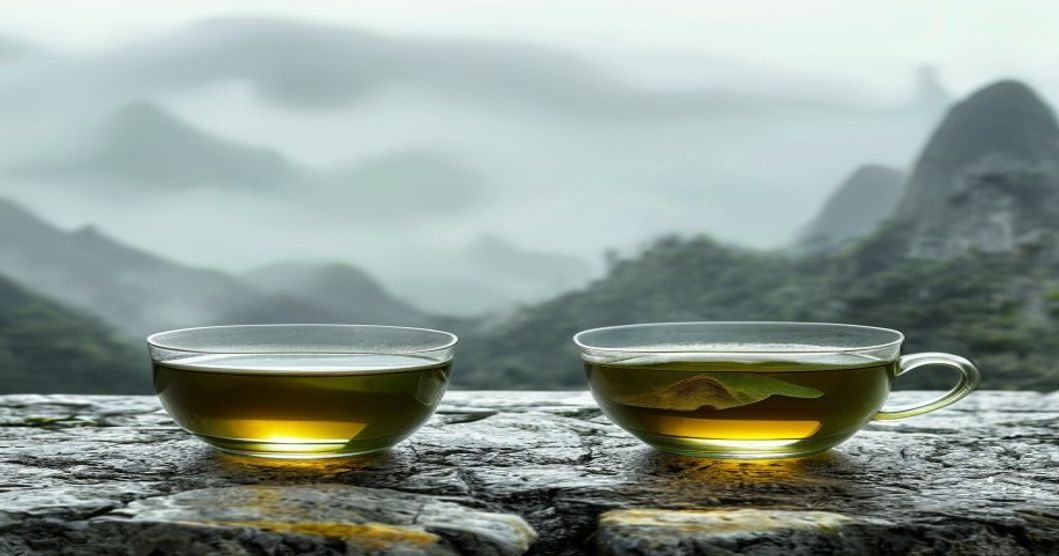
Meghalaya Green Tea Vs Darjeeling — What Makes Meghalaya Green Tea Different from Darjeeling Green Tea — is one of the topics we explore on The Tea Story blog, drawing on our direct experience growing, processing, and tasting tea from our own garden in West Garo Hills, Meghalaya.
India produces excellent green tea in two very different geographical contexts: the high-altitude Himalayan conditions of Darjeeling, and the plateau-and-valley conditions of Meghalaya in the northeast. Both produce premium orthodox green teas. Both are single-origin, small-production items available directly from gardens. They do not taste the same, and understanding why helps you choose between them for the cup you actually want.
Darjeeling Green Tea
Darjeeling green teas — grown at altitudes between 1,000 and 2,000 metres in the Himalayan foothills — are characterised by delicacy. The high altitude and cool temperatures produce a slow-growing leaf with a very refined flavour profile: light, slightly muscatel (the characteristic Darjeeling note of grape and dried apricot), with a floral quality in the best first-flush greens that is genuinely distinctive. The body is light, the colour in the cup is very pale gold, and the finish is clean and brief.
Darjeeling green is best brewed at low temperatures — 70 to 75°C — and for short steep times. It does not respond well to over-brewing or high temperatures. It is a tea for careful attention and a clean palate.
Meghalaya Green Tea
Meghalaya green tea — grown at moderate altitude (generally 200 to 600 metres in West Garo Hills) under extraordinary cloud cover and rainfall — has a different character entirely. It is fuller in body than Darjeeling green, naturally sweeter (a product of the soil chemistry and growing conditions described elsewhere on this site), and with less of the delicate floral complexity that characterises high-altitude Himalayan teas.
What Meghalaya green tea has instead is approachability and depth. It brews at 80 to 85°C without penalty — the lower tannin content means it does not punish slightly higher temperatures the way Darjeeling green does. It rewards re-brewing at least two times. The body is medium rather than light. The natural sweetness means it works well without any addition, but it also works with honey or as a base for cold brew.
Darjeeling green is a tea for a specific moment of careful attention. Meghalaya green is a tea for every morning, every afternoon, every occasion where you want something genuinely pleasant without the care and precision that Darjeeling demands.
Which to Choose
For a daily green tea with consistent, forgiving performance across different brewing conditions: Meghalaya. For a special-occasion, delicate, high-attention experience that rewards patience with extraordinary complexity: Darjeeling. For a gift to someone new to Indian green tea who might not yet have the confidence to handle a temperamental high-altitude tea: Meghalaya. For an experienced green tea drinker who wants to explore what Indian terroir can do at its most refined: Darjeeling alongside Meghalaya as a comparison.
The correct answer is not one or the other. It is both, at different moments, for different reasons.