Posted on Leave a comment

Butterfly Pea Flower: The Blue Tea That Changes Colour When You Add Lemon

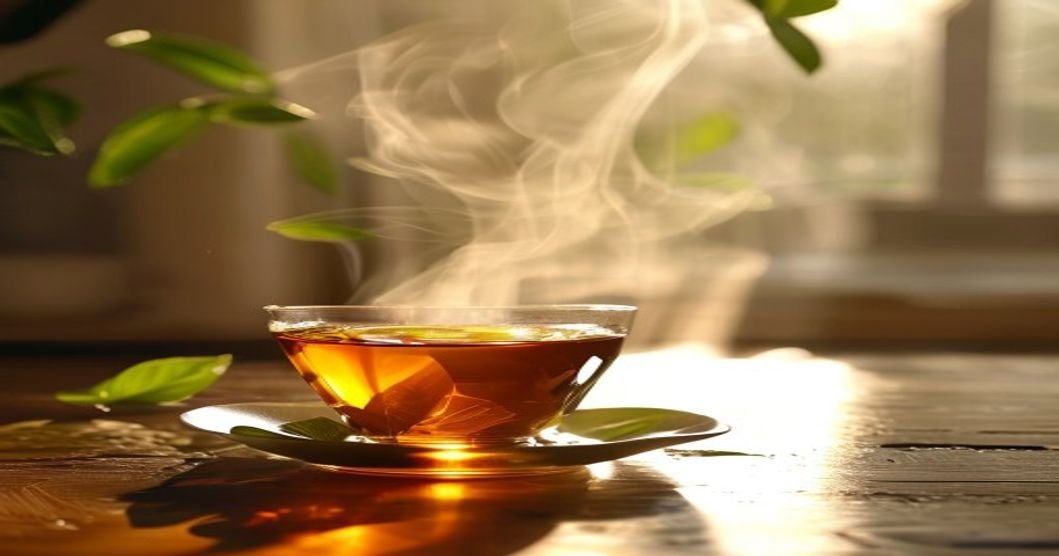
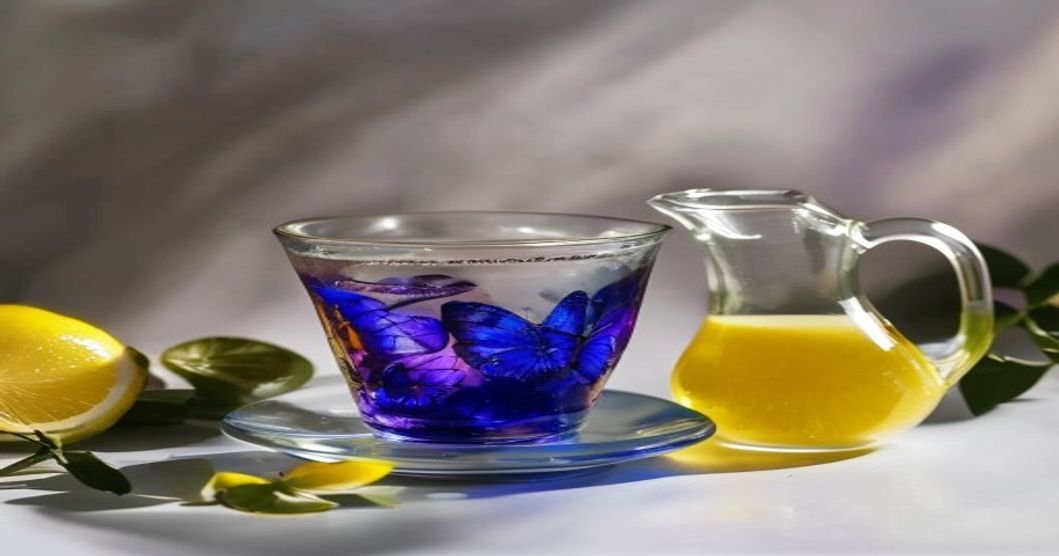
There is a moment when making butterfly pea flower tea that produces a reliable response in anyone watching it for the first time: the moment when you squeeze a few drops of lemon into the indigo-blue cup and watch it turn pink. Not faintly pink. Actively, clearly, unambiguously pink — almost magenta — in a few seconds, with no chemistry beyond the juice of a lemon and hot water.

This is not a gimmick. It is a natural pH indicator reaction of the same type that makes litmus paper change colour in chemistry class. The butterfly pea flower contains anthocyanin pigments — the same class of compounds that colour blueberries, red cabbage, and purple sweet potato — that are blue in neutral water and pink-red in acidic water. Lemon juice is acidic. The colour change is instantaneous and dramatic.

The Plant and Where It Grows

Clitoria ternatea — butterfly pea — is a climbing vine native to tropical Asia, widely distributed across South and Southeast Asia. It is not related to the tea plant (Camellia sinensis); it is a legume, a member of the pea family. The blue flowers are used fresh or dried to make a naturally caffeine-free herbal infusion. They grow prolifically in warm, humid climates and are cultivated across India, Thailand, and Indonesia for both their visual appeal and their traditional medicinal applications.

The flowers are intensely pigmented — a single dried flower releases enough colour to turn a cup of water bright blue. At scale, a small handful of dried flowers makes a visually striking batch that can be stored in the refrigerator for days and used as both a beverage and a culinary colourant for rice, desserts, and cocktails.

The colour change from blue to pink is a pH reaction. But the poetry of it — adding the sourness of lemon and watching something transform — is not a chemistry lesson. It is just a beautiful and surprising thing that happens in your kitchen.

Is It Actually Good for You?

Butterfly pea flower has been used in traditional Ayurvedic and Thai medicine for cognitive function, anxiety, and eye health. The anthocyanins it contains are well-studied for antioxidant effects. Research specifically on Clitoria ternatea extracts suggests potential nootropic (cognitive-enhancing) and anxiolytic effects in animal models, and the antioxidant capacity of the dried flower is measurably high.

The honest caveat is the same as for most herbal teas: the evidence from human clinical trials is limited, and drinking butterfly pea flower tea will not replicate the results of laboratory studies using concentrated extracts. What it will give you is a caffeine-free, visually extraordinary, mildly pleasant drink with a real antioxidant content and no identifiable negative effects.

How to Brew and Use

Three to five dried flowers per cup, water at full boil, steep for five minutes. The colour will be deep indigo-blue. Drink as is for the blue version. Add lemon, lime, or any acid for the pink. Combine with honey and ice for an iced version that impresses anyone watching. Mix with coconut milk for a blue latte that photographs beautifully.

Our Blue Tea blend uses dried butterfly pea flowers that we source for quality and colour consistency. The flowers are fragile and should be stored in a cool, dry place away from light; they will hold their colour for over a year in good storage conditions.

Posted on Leave a comment

Whole Leaf Tea vs Tea Bags: What Your Teabag Is Actually Hiding

Whole Leaf Tea vs Tea Bags — What Your Teabag Is Actually Made Of

The difference between whole leaf tea and tea bags is not a matter of taste preference — it is a difference in what is physically inside the packaging. Most commercial tea bags contain what the industry calls fannings and dust: the broken fragments and powder left over after whole leaves have been sorted and graded. These are the lowest-grade material by industry classification.

What is inside a standard tea bag?

When a whole leaf is processed, intact leaves go to premium grades. What falls through sorting screens becomes teabag-grade material. Broken leaf surfaces expose far more of the tea to oxygen during storage. The antioxidants — particularly EGCG (epigallocatechin gallate), the primary catechin in green tea — oxidise rapidly when the protective cell structure of the leaf is broken. By the time a standard teabag reaches your cup, a significant proportion of the health-active compounds have already degraded.

The bag itself is a separate concern. Conventional teabags are sealed with polypropylene — a thermoplastic that contacts your brew directly at near-boiling temperature for 3–5 minutes. A 2019 study from McGill University, published in Environmental Science and Technology, found a single plastic tea bag releases approximately 11.6 billion microplastic particles into the cup. This finding has been replicated and is now a standard reference in food-contact plastic safety research. For further context on tea bag composition see the Wikipedia entry on tea bags.

What whole leaf tea actually contains

Whole leaf tea is the intact, unbroken leaf. Our teas from West Garo Hills go from garden to processing factory to your jar without being broken, cut, or crushed. The cell structure remains intact through to your cup. Polyphenols, catechins, and volatile aromatic compounds are still locked inside the leaf when it reaches you. When you add hot water at the correct temperature — 75–85°C for green tea, never boiling — the leaf gradually unfurls and releases compounds slowly over 2–3 minutes. Our Premium Green Tea and Organic Green Tea can both be brewed three times from the same leaves with distinct, enjoyable cups at each steep. A teabag gives you one steep and then falls apart.

The re-brewing advantage and environmental difference

Because an intact leaf releases its compounds gradually, the second and third infusions still contain meaningful catechin content. A 25g pouch brewed three times provides approximately 75 cups, compared to 25 cups from equivalent teabag material — at lower cost per cup, higher health compounds, and no plastic in your brew. Used teabags go to landfill. Used whole leaf tea is 100% organic plant matter that composts completely within weeks.

Frequently asked questions

Do tea bags contain plastic? Most conventional tea bags are heat-sealed with polypropylene, releasing approximately 11.6 billion microplastic particles per bag at brewing temperature. Paper-only bags without heat sealing exist but are not the standard.

Is whole leaf tea more expensive than tea bags? Per cup, whole leaf tea is typically cheaper once you account for re-brewing. A 25g pouch brewed three times produces approximately 75 cups versus 25 cups from equivalent teabag material.

Does whole leaf tea have more antioxidants than tea bags? Yes. Intact leaves preserve EGCG through to the brew. Broken fannings oxidise significantly during storage, reducing active compounds before the bag is even opened.

Whole Leaf Tea Vs Tea Bags — The real difference between whole leaf tea and tea bags — what teabags contain, how it affects flavour and health, and why the whole leaf wins on every measure.

For further research, see what tea bags are made of.

The tea bag was invented in the early 1900s as a sampling device — a way to send small portions of different teas to buyers without them having to handle loose leaf. It was never designed to be the primary format for drinking premium tea. Somewhere along the way, the format became dominant in most Western and Indian markets, and with it, an assumption developed that tea bags and loose leaf are essentially the same product in different packaging.

They are not. The difference starts at the processing stage and ends in your cup.

What ‘Fannings’ and ‘Dust’ Actually Are

When a tea garden processes a harvest of whole leaves through its sorting machinery, the leaves are separated by grade. The largest, most intact pieces — Orange Pekoe, Flowery Orange Pekoe, and their variants — command the highest prices and go to premium loose-leaf buyers. The smallest broken pieces, the fragments, the powder that remains after the whole leaves are sorted out: this is what the tea trade calls “fannings” and “dust.”

Fannings and dust are not a different tea. They are the remnants of sorting the same tea. They are, by definition, what is left after the better grades have been removed.

If whole-leaf tea is a steak, the material in most tea bags is more accurately described as the trimmings. Same animal. Very different experience.

This material is used in tea bags because its small particle size allows it to be packed densely and because it infuses very quickly through the fine mesh or paper of a bag. Speed of infusion is the design requirement. Quality of the resulting cup is a secondary consideration at best.

Why Small Particle Size Means More Bitterness

The smaller the tea particle, the larger its surface area relative to its mass. High surface area means faster and more complete extraction of everything in the leaf — including tannins. When you steep a tea bag, you are exposing a very high surface area of broken leaf to hot water, and tannins are released almost immediately.

This is why tea bags can taste unpleasant if left in the cup too long, and why the standard instruction is to steep for only two or three minutes. You are racing against the tannin clock. The extraction window is narrow.

Whole-leaf tea behaves completely differently. The intact cell structure of a whole leaf releases its compounds gradually — first the aromatics and L-theanine in the first sixty seconds, then the more complex flavour compounds over the next few minutes, and tannins only in significant quantities after extended steeping. This is why a whole-leaf tea can be re-brewed three or four times: there is still material to extract in the second and third steepings. A tea bag is almost entirely spent after one brew.

What Premium Loose Leaf Actually Contains

Premium whole-leaf tea is graded by the completeness and condition of the leaf. The top grades include the bud (the youngest, most tender growth point of the plant), the first leaf immediately below it, and sometimes the second leaf. These are the parts of the plant with the highest concentration of flavour compounds, antioxidants, and L-theanine.

When we describe our teas as whole-leaf, we mean the two leaves and a bud standard of hand-plucking — the same standard used in premium tea production worldwide. The leaves are processed with the cell structure intact, graded for quality, and packed without the additional sorting and breaking that produces fannings.

The result is tea that can be brewed multiple times, that does not punish you for leaving it in the pot an extra minute, and that has a natural sweetness and body that no amount of tea bag engineering can replicate. The format is less convenient. The cup is substantially better. Most people who switch do not go back.

Posted on Leave a comment

What Is Orthodox Tea? The Ancient Processing Method That Creates Complex Flavour

What Is Orthodox Tea — What Is Orthodox Tea? The Ancient Processing Method That Creates Complex Flavour — is one of the topics we explore on The Tea Story blog, drawing on our direct experience growing, processing, and tasting tea from our own garden in West Garo Hills, Meghalaya.

Walk into any tea shop or premium grocer and you will often see the word “orthodox” on labels for higher-end teas. It is used as a quality signal — which is accurate — but what it actually refers to is a specific set of manufacturing steps, each of which has a direct and traceable effect on what the finished tea tastes like.

Understanding orthodox processing is understanding how the best tea in the world is made.

The Orthodox Process, Step by Step

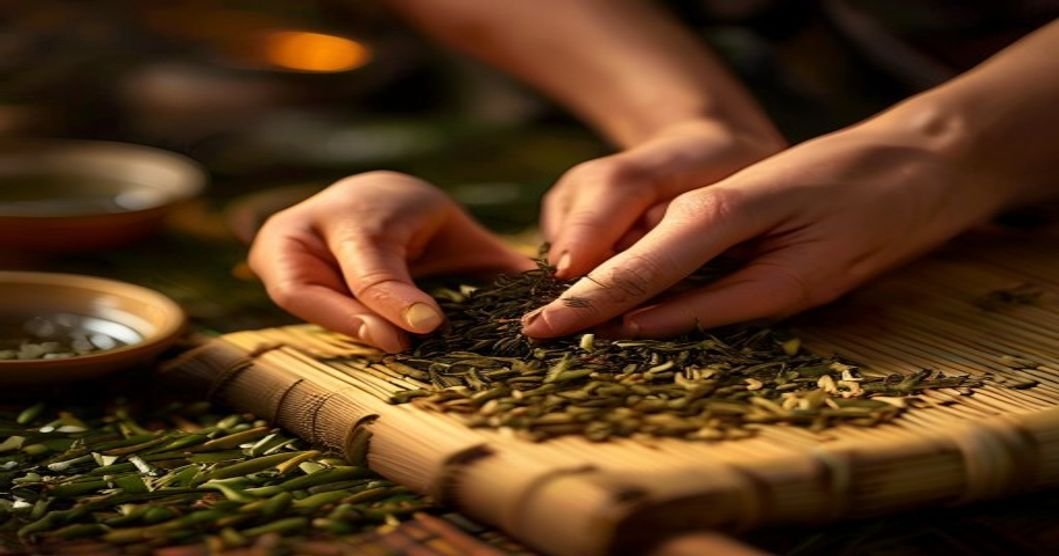
Withering. After plucking, fresh tea leaves are spread in thin layers on wire mesh beds or troughs and left for twelve to twenty hours. During this time, the leaf loses 60–70% of its moisture content and the cell walls begin to break down slightly. This is not drying — it is controlled softening, and it is the foundation for everything that follows. Withered leaves are pliable and have a characteristic grassy, slightly floral smell.

Rolling. Withered leaves are passed through a rolling machine — a flat table and a circular top plate that move in a specific pattern, pressing and twisting the leaves against each other. This breaks the remaining cell walls and expresses the leaf’s own enzymes and juices. The leaves emerge as twisted, tightly-coiled pieces that look quite unlike the flat leaf that went in. Rolling is where the tea’s character begins to be set.

Oxidation. Rolled tea is spread on cool, humid tables and left to oxidise. The enzymes released during rolling react with oxygen in the air. For black tea, this continues for two to four hours until the leaves turn a rich copper-brown and develop the complex aromatics that characterise a well-made cup. For oolong, the process is stopped partway through. For green tea, oxidation is prevented entirely by immediately applying heat after rolling.

CTC takes the same fresh leaf and turns it into uniform pellets in under five minutes using industrial machinery. Orthodox takes the same leaf on an eight-to-twelve-hour journey that preserves and develops its complexity. Both produce tea. The similarity ends there.

Firing. The oxidised leaf is passed through a drying machine at temperatures between 90 and 120 degrees Celsius, reducing the remaining moisture to 3–4%. This stops oxidation, stabilises the leaf, and creates the final roasted notes in the aroma. The result is the finished dry tea leaf — twisted, complex, whole.

Why the Process Creates Better Flavour

Orthodox processing works at the speed of chemistry rather than the speed of industrial production. Each step creates conditions for specific flavour compounds to develop: the withering builds amino acid concentration; the rolling creates the enzymatic reactions that produce aromatic compounds; the oxidation develops hundreds of volatile molecules responsible for the nuanced flavour of a good black tea.

CTC (Cut-Tear-Curl) machinery does in minutes what orthodox machinery does in hours: it shreds the leaf, breaks every cell simultaneously, and produces a uniform, fast-infusing pellet. CTC tea is strong and consistent — ideal for the masala chai market — but it does not have the layers of flavour that develop through slow, stepwise orthodox processing. You extract everything from a CTC leaf immediately. Orthodox tea holds back compounds for second and third steepings.

Our Orthodox Teas

Both our black teas and green teas from West Garo Hills use orthodox processing in our on-site factory. The factory is in the garden, which means there is no gap between plucking and withering — the leaf goes directly from the field to the wither beds within hours of being picked. This freshness at the start of the process is reflected in the quality at the end of it.

If you have only ever drunk CTC tea, the first time you brew a well-made orthodox black tea from a single garden will be a noticeable experience. The complexity, the re-brewability, and the absence of the sharp bitterness that CTC can produce — all of it comes from this process, applied to the right leaf, grown in the right soil.

Posted on Leave a comment

The Re-Brew Test: Why Premium Tea Gets Better on the Second Steep

There is a straightforward test for the quality of any tea you buy: brew it, drink the first cup, pour hot water over the same leaves again, and taste the result. If the second cup is close in quality to the first — perhaps lighter in colour but not harsher, not flat, not empty — you have good tea. If the second cup is either completely spent or inexplicably more bitter than the first, you have found the limits of what you bought.

This test, which we call the re-brew test, reveals more about tea quality than the packaging ever will.

Why Tea Can Be Re-Brewed at All

Tea leaves, like all biological material, have a structure. The flavour compounds inside a tea leaf — L-theanine, catechins, aromatic esters, the complex volatile molecules that give each variety its characteristic scent — are distributed throughout the cell walls and cell contents of the leaf. Hot water is the solvent that extracts them.

In a whole leaf, the surface area exposed to water is relatively small compared to the total volume of material. The first steep extracts the most accessible compounds: surface aromatics, some L-theanine, a portion of the catechins. The interior of the leaf still holds a significant reserve. This is the second steep. Often it is the third as well.

In a tea bag filled with fannings and dust, there is essentially no interior. The particles are so small that every cell is either surface-exposed or one cell wall away from it. The first steep extracts nearly everything available. There is little left for a second pour, and what remains is disproportionately tannin — the compound that is most tightly bound to the leaf structure and that creates bitterness.

A second steep that tastes like a weaker version of the first is the sign of good tea. A second steep that tastes bitter or of nothing is the sign of a leaf that had nowhere to hide its quality in the first place.

What Each Steep Tastes Like

With our whole-leaf teas from West Garo Hills, the three steeps behave like three distinct but related experiences. The first is the fullest — the deepest colour, the most pronounced flavour profile, the full aromatic impact of a freshly-opened leaf. It is the tea at its most assertive.

The second steep, brewed with slightly hotter water or for thirty seconds longer, is typically smoother. The surface tannins have been washed out in the first pour, and the compounds that remain are more mellow. The L-theanine that was in the leaf’s interior comes through more cleanly. Many people find the second steep actually preferable to the first — softer, with a more complex background note.

The third steep is lighter still — a delicate, almost sweet version of the tea, with very little bitterness even if brewed longer than recommended. This is not thin or disappointing. It is what a leaf with good chemistry tastes like when most of its intensity has already been given to the previous cups.

The Simple Method

No special equipment is required. After your first cup, leave the used leaves in your pot or infuser. When you want a second cup, reheat the water to just below boiling (for green tea) or full boil (for black), pour over the same leaves, and steep for twenty to thirty seconds longer than your first brew. For green tea: first steep at 80°C for two minutes, second steep at 85°C for two and a half minutes. For black orthodox: both steeps at full boil, the second for three minutes instead of two.

The third steep follows the same logic: a little hotter, a little longer. The total time across all three steeps is fifteen minutes or less — which is why we describe our teas as re-brewable three times within fifteen minutes. It is not a marketing claim. It is the practical experience of anyone who uses the leaves properly.

The Value Calculation

Premium whole-leaf tea from a single garden costs more per gram than mass-market tea bag blends. This is the visible comparison that makes the price seem high. The less visible comparison: one serving of whole-leaf tea, re-brewed three times, produces three cups of good tea from the same material. The effective cost per cup is a third of the per-gram price. On that basis, the economics of quality tea are very different from how they appear at first glance.

Posted on Leave a comment

Tea Plucking Season in Meghalaya: When to Buy and Why the Timing Matters

Tea Plucking Season In — Tea Plucking Season in Meghalaya: When to Buy and Why the Timing Matters — is one of the topics we explore on The Tea Story blog, drawing on our direct experience growing, processing, and tasting tea from our own garden in West Garo Hills, Meghalaya.

Tea is a crop. This is a fact that gets obscured when tea is sold in a tin on a supermarket shelf with no harvest date anywhere on the packaging. But like any other agricultural product — wine, olive oil, fresh produce — tea has seasons, and the season in which it was grown and harvested has a direct bearing on what it tastes like.

In Meghalaya, the tea year follows a pattern shaped by the monsoon, the temperature cycle, and the growth rhythm of the Camellia sinensis plant itself.

First Flush: March to April

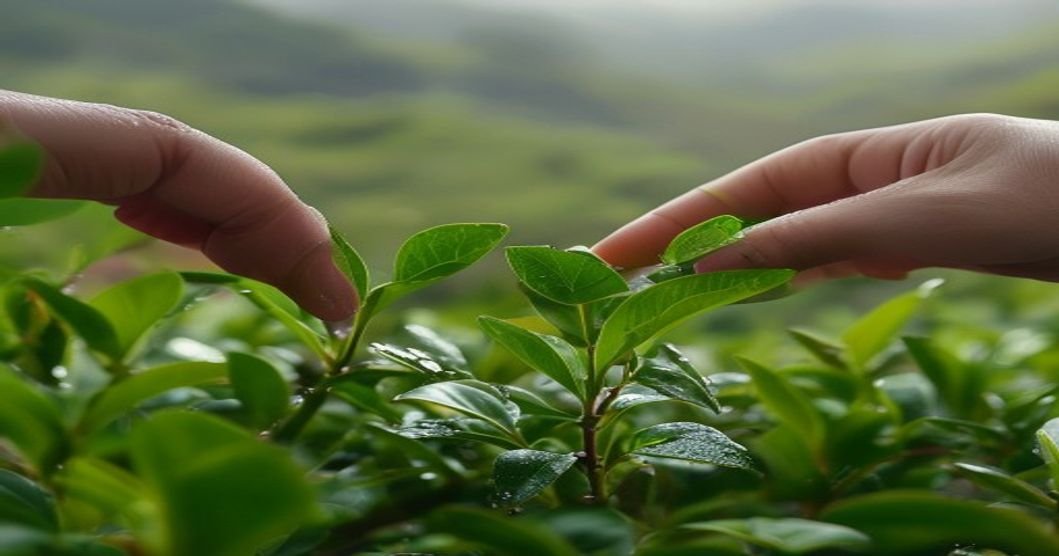
The first plucking of the year, after the winter dormancy period, produces what the tea trade calls the “first flush.” In Meghalaya, this typically begins in late February or early March, when temperatures rise and new growth appears on the pruned bushes.

First flush tea is characterised by lightness. The new growth — the bud and the first one or two young leaves — is tender, low in chlorophyll, and high in amino acids including L-theanine. The flavour is delicate and floral, with a fresh quality that experienced drinkers recognise immediately. The colour in the cup is lighter. The aroma is more pronounced. This is the most prized tea of the year in many single-origin gardens.

First flush is what a tea plant has been saving since it stopped growing in winter. The energy and chemistry concentrated during dormancy is released in this first growth — and you can taste it.

Main Flush: May to June

As the monsoon approaches and temperatures stabilise, the tea plant enters its most productive growth phase. The leaves are larger, darker, more developed. The flavour is fuller-bodied, more robust, with greater depth and a longer finish in the cup. This is the period that produces the bulk of our harvest and the most versatile teas — varieties that work well both as plain tea and as the base for chai.

Main flush teas have a rounder, more assertive character than first flush. They brew to a deeper colour. They hold up well to a second steep. This is the season that produces our black orthodox and most of our green tea range.

Monsoon Flush: July to September

During the heaviest monsoon months, growth accelerates sharply. The leaves are produced quickly — sometimes too quickly for the most delicate qualities to develop. Monsoon flush tea is typically bold and strong, with less complexity than either the first or main flush but considerable strength. It forms the backbone of robust everyday blends. Our CTC teas, designed for chai, come primarily from the monsoon and post-monsoon harvest.

Autumn Flush: October to November

As the monsoon withdraws and temperatures begin to cool, growth slows again. Autumn flush tea shares some qualities with the first flush — a lightness and clarity of flavour — but with a slightly more developed body than the earliest spring tea. Some of our most interesting green teas come from this final harvest of the year.

Why This Matters When You Buy

When you purchase tea from us directly, you are buying from a specific season’s harvest rather than from an undated blend. We note the harvest season on our batches where relevant. Buying tea this way — knowing when it was plucked and from which season — is not a connoisseur’s indulgence. It is simply knowing what you are getting, the same way you know whether the mango you are buying is Alphonso from April or Langra from July. Both are mangoes. They are not the same experience.