Posted on Leave a comment

How to Drink Tea Like a Garo Elder: A Guide to Full Presence in Twelve Minutes

How To Drink Tea Garo Elder — A practical guide to the Garo elder's approach to tea — slow, present, deliberate. Twelve minutes and a different relationship to time.

How To Drink Tea Garo Elder: What You Need to Know

For further research, see the Garo people of Meghalaya.

The Garo elder in the hills above Tura in 1898 had a particular quality that the traveller who wrote about him could not quite name. He had seen hardship — fever, jungle, the grinding difficulty of the jhum cycle. He had walked five days to market and five days back. He had lived with elephants in the near distance and leopards on the path. He was not naive about difficulty.

And yet he was unhurried. The traveller noted this repeatedly, with something approaching envy. The Garo moved through their days at a pace that was efficient without being rushed — the work was hard, but the relationship to the work was not frantic. At the end of the day, they sat on the platform of the borang or the veranda of the changy and were still. The chu came out. The stars appeared. The hills went dark.

This is not achievable in full in modern life, and we should not pretend otherwise. But it is partially achievable, in small windows, if you design them deliberately. The twelve-minute cup of tea is one such window.

How to do it:

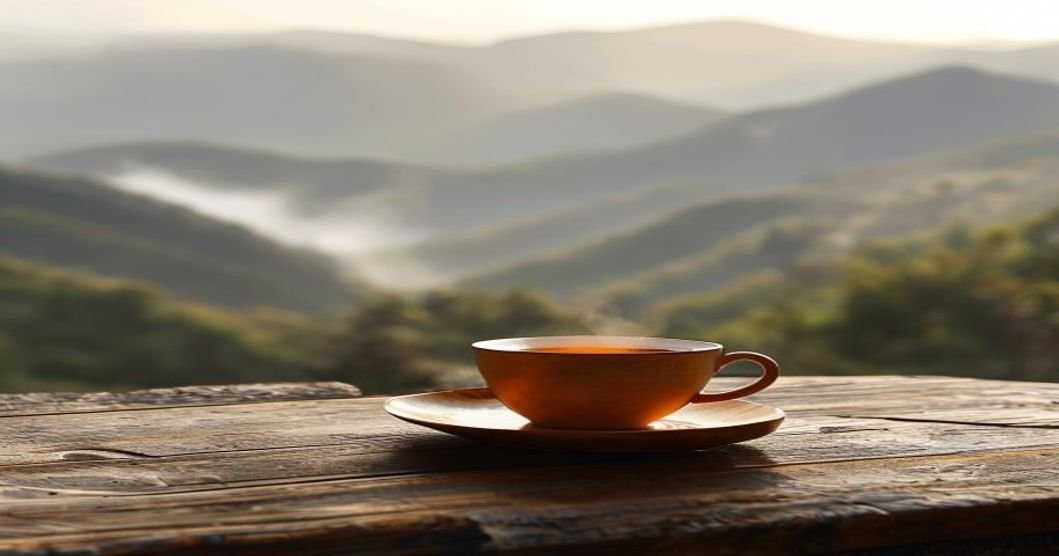
Heat water to the right temperature — 80°C for green tea, full boil for black. This takes about three minutes. Use them to put the phone face-down. Not silent — face-down. There is a difference.

Measure the tea properly. Whole-leaf tea from the West Garo Hills needs one teaspoon per cup, no more. This is not a ceremony. It is precision, which is a different thing.

Steep for the right time. Three minutes for green. Four for black. Set an actual timer and do not guess. While it steeps, do not reach for the phone. Look at something that is not a screen. The window. Your hands. The steam from the cup.

Drink it before it’s cold, which is to say: drink it now. Not in a minute. Not after checking one more thing. The Garo elder on the changy veranda did not defer the end of the day. He was on the veranda because the day was ending and that was where you were when the day ended.

You have twelve minutes. The squirrel is chewing the strings, but they have been holding since before you were born. The buffaloes are still running across the sky. The four strings are still intact. The tea is ready.

Drink it like someone who knows where they are.

The hills where this story lives are the same hills where our tea grows. Explore teas from West Garo Hills →
Posted on Leave a comment

The Squirrel and the Deadline: A Garo Story for the Overworked

Garo Story Squirrel Deadline Modern Anxiety — A Garo story about a squirrel and a deadline — for anyone working too hard on too many things at once. What the Garo hills understand about modern anxiety and the wrong kind of busy.

Garo Squirrel Deadline Anxiety: What You Need to Know

Garo Story Squirrel Deadline Modern Anxiety: What You Need to Know

Garo Squirrel Deadline Anxiety — A Garo folktale about a squirrel with a deadline — and what it says about modern work anxiety, urgency, and the cost of always being in a hurry.

For further research, see the Garo people of Meghalaya.

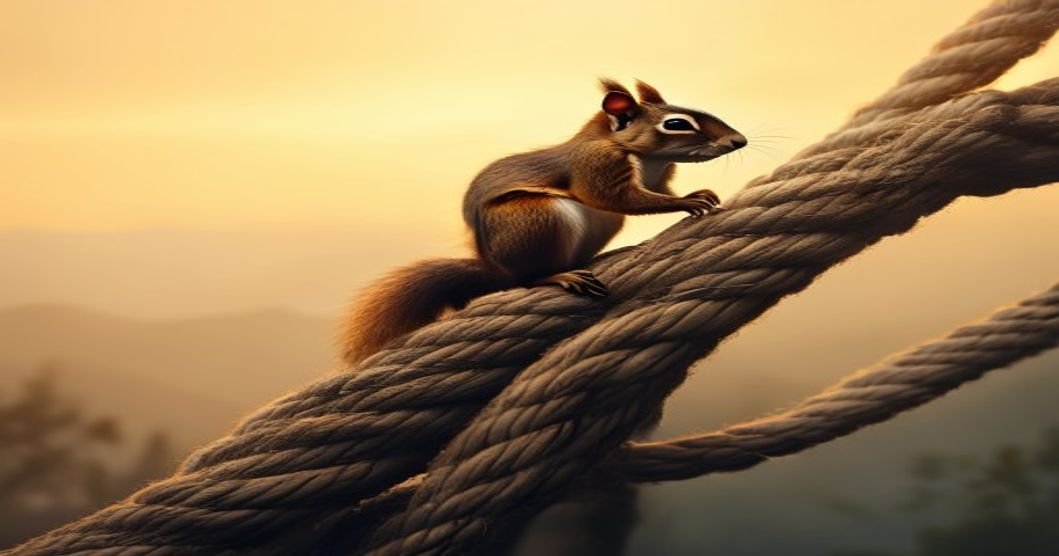
In the Garo hills of Meghalaya, the elders had a theory about earthquakes. The earth, they believed, was a flat square suspended at four corners by great strings. Somewhere up where the strings were tied, a squirrel lived. This squirrel had one defining characteristic: it liked to chew.

A spirit was appointed to watch the squirrel. But one afternoon, the spirit’s attention wandered — a beautiful cloud, a distant song, something. Just for a moment. The squirrel chewed. The earth shook. And since then, the squirrel has never stopped chewing, and the strings are a little thinner every year.

The Garo elders weren’t worried about this. They told the story, shrugged, and went back to tending their jhum clearings. The strings were still there. The earth was still up. Thin strings were enough.

Now consider the modern professional. There is always a squirrel. Sometimes it’s a pending deadline, sometimes a client email unanswered since Tuesday, sometimes a career decision that must be made before — when exactly? Before it’s too late, which is a deadline with no date attached, which is the worst kind.

The difference between the Garo elder and the modern professional is not intelligence or capacity. It’s the relationship to the squirrel. The elder knew the squirrel was there. Accepted it. Poured a cup of chu (rice beer, their equivalent of an evening wind-down) and watched the stars.

There is a specific kind of tiredness that comes not from doing too much, but from watching the squirrel too closely. From narrating your own anxiety in real time. From treating every thin string as if it were already broken.

Brew yourself a cup of something quiet. Look away from the squirrel for twelve minutes. The strings have been holding longer than you think.

From the Garo hills of West Meghalaya, where Tea Story tea is grown on land the Garo people have tended for centuries.

Posted on Leave a comment

The Nokpante Principle: What the Garo Bachelors’ Hall Knew About Loneliness

Garo Nokpante Community Loneliness Epidemic — The nokpante — the Garo bachelors' hall — as an antidote to loneliness. What Garo community design knew about human connection that the loneliness epidemic is only now learning.

Garo Nokpante Community Loneliness Epidemic: What You Need to Know

Garo Nokpante Community Loneliness — The Garo nokpante — the bachelors' hall — was a community institution for shared ritual and belonging. What it teaches about the modern loneliness epidemic.

For further research, see the Garo people of Meghalaya.

At the centre of every Garo village stood the nokpante — a large communal hall, its posts and beams fantastically carved, set in an open clearing. Here the nokma (village headman) held court. Bulls were brought to be baited before festivals. And the village’s young men slept, every night, together.

Not out of necessity. Not for warmth. The nokpante was architecture with a social purpose: a designed space for the unmarried men of the village to be in proximity, to talk until late, to learn the village’s knowledge from those slightly older, to be witnessed and to witness others. It was a communal bedroom that was also a school, a council chamber, and a gathering place.

The Garo did not have a word for the loneliness epidemic, because they had the nokpante.

Modern cities are full of people living in individual units with individual screens and individual deliveries arriving at individual doors. We have never been more connected by infrastructure and more isolated by design. The average urban professional can go three days without speaking to another person face-to-face, and the architecture of their building is organised specifically so that this is easy.

The nokpante principle is not nostalgia. It is the recognition that belonging requires a physical space where you show up regularly and are expected. Not an app. Not a group chat. A room. Chairs. People you will see again tomorrow.

The Garo villages knew something that urban planners are only now beginning to rediscover: community does not self-assemble. It requires a building in the middle of the village, with the lights on, where someone will be.

Tea works a little like this. A kettle is an invitation. The sound of it boiling in a shared kitchen is a signal: someone is making something, you might be offered some, you could talk for a few minutes. The nokpante began with smaller gestures than we think.

Posted on Leave a comment

The Changy and the Open-Plan Office: What Garo Longhouse Architecture Got Right

Garo Changy Longhouse Design — The Garo changy — the longhouse — solved the same problem as the open-plan office, but better. What traditional Garo architecture knows about community space.

Garo Changy Longhouse Design: What You Need to Know

For further research, see the Garo people of Meghalaya.

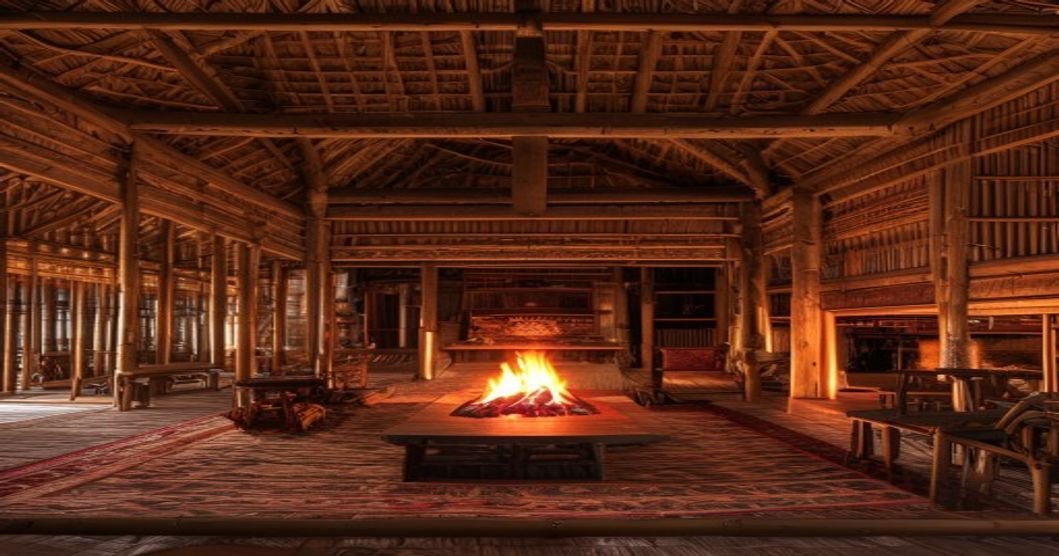
The Garo changy was a remarkable structure — bamboo-walled, bamboo-floored, raised on piles above the hillside, anywhere from thirty to one hundred and fifty feet long. Inside: one large room. Living space, cooking space, storage, and sleeping space, with only a screened corner for the married couple’s privacy. Everything happened in the same room.

The changy was not a compromise. It was a design philosophy. The open interior meant that the daily life of the family was shared — children heard adult conversation, adults were aware of children’s needs, knowledge moved through proximity rather than through instruction. The cooking fire in the middle of the floor was both heat source and social centre. You gathered around it because that was where the warmth was.

Silicon Valley, several thousand years later, invented the open-plan office. One large room. No walls between desks. Serendipitous collaboration. Knowledge moving through proximity. They called it innovation.

The difference is that the changy worked. The open-plan office, study after study has confirmed, does not. Noise levels increase. Concentration decreases. Actual collaboration drops while the appearance of collaboration goes up. People put in headphones to recreate the walls that were removed.

Why did the changy work and the office not? Partly because the changy’s inhabitants were actually a unit — people who shared a life, not just a floor. Partly because the changy had a fire in the middle, which is a reason to gather, and the office has a perimeter of desks, which is a reason to face outward. Partly because the Garo changy was built around the specific rhythms of specific people, while the open-plan office is designed around an imaginary employee who is simultaneously focused and available.

And partly because after the changy, you could step out onto the platform and sit quietly in the hills with your chu. The modern office does not have a platform. It has a ping-pong table. These are not the same thing.

Posted on Leave a comment

Saljong and the Attention Economy: The Garo Sun God vs the Algorithm

Garo Saljong Attention Economy Distraction — Saljong — the Garo sun god — as a lens for the attention economy. What a Garo myth about the sun and distraction has to say about algorithms, focus, and what deserves your light.

Garo Saljong Attention Economy Distraction: What You Need to Know

Garo Saljong Attention Economy — The Garo sun god Saljong gave warmth and direction. The algorithm takes both. A Garo myth reread for the attention economy.

For further research, see the Garo people of Meghalaya.

Saljong was the supreme spirit in the Garo cosmological order — god of fertility and the sun, to whom Wangala, the harvest festival, was dedicated as an act of thanksgiving. A Garo farmer approaching a new jhum site would sacrifice a small pig to Susunzi, the wealth-giver, and a fowl to Saljong, the fertility god. Each deity was represented by a few branches stuck in the ground. The sacrifice was simple, unhurried, and specific.

The Garo relationship to Saljong was not anxious. They did not propitiate him constantly or build elaborate temples that required professional staff. They acknowledged him at the moments that mattered — the beginning of a new clearing, the end of a harvest — and then got on with the work.

The attention economy works on a different principle. It says: your attention is a resource that can be extracted continuously, in small increments, by whoever holds the best algorithm. It does not ask for your attention at the moments that matter. It asks for it constantly, so that no moment is clearly the one that matters more than the others.

The result is a peculiar kind of poverty: people who are technically available every moment are actually present in very few of them. The Garo farmer who took thirty minutes at the edge of a new jhum to build a small shrine and offer a sacrifice to Saljong was more present in those thirty minutes than most of us are in an entire Tuesday.

Presence requires a sense of occasion. The Garo agricultural calendar was built entirely of occasions — planting time, harvest time, Wangala, the market journey. Each had its rituals, which were really just methods of saying: this moment is different from the others. Pay attention.

The morning cup of tea can work this way. Not scrolling and sipping. Just the cup. The steam. The taste of the West Garo Hills in your kitchen in the morning. Saljong does not require a sacrifice. He requires, at minimum, that you notice the sun.