Posted on Leave a comment

Saljong and the Attention Economy: The Garo Sun God vs the Algorithm

Garo Saljong Attention Economy Distraction — Saljong — the Garo sun god — as a lens for the attention economy. What a Garo myth about the sun and distraction has to say about algorithms, focus, and what deserves your light.

Garo Saljong Attention Economy Distraction: What You Need to Know

Garo Saljong Attention Economy — The Garo sun god Saljong gave warmth and direction. The algorithm takes both. A Garo myth reread for the attention economy.

For further research, see the Garo people of Meghalaya.

Saljong was the supreme spirit in the Garo cosmological order — god of fertility and the sun, to whom Wangala, the harvest festival, was dedicated as an act of thanksgiving. A Garo farmer approaching a new jhum site would sacrifice a small pig to Susunzi, the wealth-giver, and a fowl to Saljong, the fertility god. Each deity was represented by a few branches stuck in the ground. The sacrifice was simple, unhurried, and specific.

The Garo relationship to Saljong was not anxious. They did not propitiate him constantly or build elaborate temples that required professional staff. They acknowledged him at the moments that mattered — the beginning of a new clearing, the end of a harvest — and then got on with the work.

The attention economy works on a different principle. It says: your attention is a resource that can be extracted continuously, in small increments, by whoever holds the best algorithm. It does not ask for your attention at the moments that matter. It asks for it constantly, so that no moment is clearly the one that matters more than the others.

The result is a peculiar kind of poverty: people who are technically available every moment are actually present in very few of them. The Garo farmer who took thirty minutes at the edge of a new jhum to build a small shrine and offer a sacrifice to Saljong was more present in those thirty minutes than most of us are in an entire Tuesday.

Presence requires a sense of occasion. The Garo agricultural calendar was built entirely of occasions — planting time, harvest time, Wangala, the market journey. Each had its rituals, which were really just methods of saying: this moment is different from the others. Pay attention.

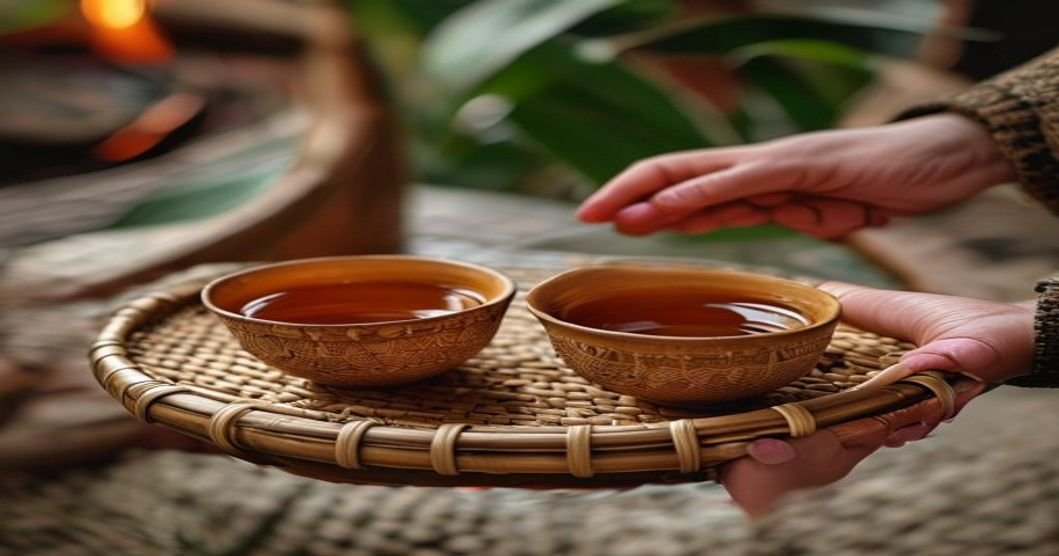
The morning cup of tea can work this way. Not scrolling and sipping. Just the cup. The steam. The taste of the West Garo Hills in your kitchen in the morning. Saljong does not require a sacrifice. He requires, at minimum, that you notice the sun.

Posted on Leave a comment

All Property Descends Through the Women: The Garo Matrilineal System and What We’re Still Arguing About

Garo Matrilineal Women Authority Property — The Garo matrilineal system — where property, land, and clan identity descend through women — and what it shows about gender, authority, and inheritance.

Garo Matrilineal Women Authority Property: What You Need to Know

For further research, see the Garo people of Meghalaya.

In the Garo social system, all property belonged to and descended through women. Not theoretically — actually. The youngest daughter was the heiress of the house. A man who married into a Garo family did so on the understanding that the land was not his. The clan was divided into “motherhoods,” each tracing its line through the female side. The nokma’s wife held as much authority in council debates as the nokma himself — “possibly a little more,” noted an early observer, with what reads as grudging admiration.

The Garo system was not matriarchal in the sense of women holding all social power. It was matrilineal in the sense that the economic basis of the family — the land, the house, the inheritance — moved through the female line. Men held political and ceremonial roles. Women held the property. The system worked because both were considered necessary.

We are, in 2024, still discussing whether women should hold equal positions in corporate governance, whether the gender pay gap reflects structural bias or individual choice, whether maternal leave policies disadvantage careers. These are not new questions. They are ancient questions that the Garo hills had a working answer to several centuries before the modern corporation existed.

The Garo answer was not utopian. No system is. But it was functional, durable, and organised around a simple principle: the person who sustains the home has the claim to the home. The person who is most likely to be there across generations holds the thing that persists across generations.

The Garo woman who gave away her bark-cloth blanket — just pulled it off the roof and handed it to a stranger, smiling — did so from a position of security. She owned the house. She owned the land. She could afford to be generous. Generosity is easier when you are not afraid of losing the thing you give from.

Posted on Leave a comment

The Milky Way Is Stampeding Buffaloes: The Garo Story We Need Right Now

Garo Milky Way Buffaloes Wonder — The Garo see the Milky Way as stampeding buffaloes — a cosmology of wonder and scale. What this way of seeing says about our relationship to the modern world.

Garo Milky Way Buffaloes Wonder: What You Need to Know

For further research, see the Garo people of Meghalaya.

In the Garo hills, there was a story about the Milky Way. A great spirit had died. The other spirits were holding a ceremony — the drums were beating, the wailing had begun. Buffaloes were being brought for sacrifice, many of them, moving in a great herd. And then the drums frightened them. All at once, the herd panicked, turned, and ran — straight off the edge of the earth and into the sky. Their hooves left a dusty track across the darkness.

That track is the Milky Way. It has never faded because the buffaloes are still running.

This is the kind of story that takes ten seconds to hear and stays with you for the rest of the evening. You look up at the sky and you see something different from what you saw before. The pale band of light is no longer just light — it’s a herd in motion, frightened by the sound of grief, running across infinity.

Wonder is not a luxury. It is a cognitive function. The part of the brain that registers surprise and awe — that pauses and reconfigures its model of the world — is the same part that generates creative insight, flexible thinking, and the capacity to see problems from new angles. People who regularly experience wonder are measurably more cognitively flexible than people who don’t.

The Garo elders were not trying to teach cognitive flexibility. They were telling their children a story about the sky. But the effect was the same: every child who grew up knowing that the Milky Way was buffaloes looked up with slightly wider eyes than a child who had been told it was a distant galaxy cluster. Both facts are true. One of them is also alive.

Your next conference call can wait four minutes. Go outside. Look up. The buffaloes are still running.

Posted on Leave a comment

The Garo Oath: When Words Had Weight (And What We’ve Done to Commitment)

Garo Oath Integrity Words — In Garo tradition, an oath carried consequence. What the Garo oath system teaches about integrity, commitment, and why words have lost their weight.

Garo Oath Integrity Words: What You Need to Know

For further research, see the Garo people of Meghalaya.

A British official in the late 18th century described witnessing a Garo oath-taking with an honesty that is remarkable for its time. “The awe and reverence with which the man swore,” he wrote, “forcibly struck me. My assistant could hardly write, so much was he affected.”

The Garo ceremony of oath-taking was this: the person raised their hands to heaven, bowed their head to a stone, and looked steadfastly toward the hills while giving their evidence. Some placed a tiger’s bone between their teeth. Others grasped their weapons. A few took a handful of earth.

The hills were the witnesses. The stone was the witness. The earth in your hand was the witness. The oath was not addressed to a court or a contract or a counterparty — it was addressed to the landscape itself, which could not be bribed, which had no interest in the outcome, which would simply continue to exist after you were gone and your word was either kept or not.

Modern commitment has been productised. Terms and Conditions. End User License Agreements. Non-Disclosure Agreements. Contracts that require a solicitor to interpret and a decade to enforce. We have added so many layers of legal architecture to the problem of trust that the original thing — one person’s word given to another — has been almost entirely replaced by its documentation.

The Garo oath worked partly because breaking it carried consequences that could not be negotiated away. If you looked at the hills and lied, the hills knew. This is not literally true. But the Garo system of consequences was social rather than legal — it operated through reputation, through the knowledge that the village would remember, through the understanding that the hills had witnessed what you said.

We have traded this for systems that can be gamed more precisely and with better documentation. We have not obviously come out ahead.

There is a version of daily life that takes its small commitments as seriously as the Garo took theirs — that speaks as if the hills are listening, because something is always listening. It is not a popular discipline. But it makes the words you say mean something, which is the beginning of everything that is actually good.

Posted on Leave a comment

What the Garo Hills Know About Hospitality That Your Favourite Café Doesn’t

Garo Hospitality Gift Culture Tea — Garo hospitality is built on the gift — tea offered without transaction. What this cultural practice teaches about welcome, generosity, and what cafés have got wrong.

Garo Hospitality Gift Culture Tea: What You Need to Know

For further research, see the Garo people of Meghalaya.

There is a scene in the 1898 accounts of a journey through the Garo hills: a researcher stops at a village in the hills, admires a woman’s simpak cloth — a bark-cloth blanket drying on the roof. The woman, without hesitation, pulls it off the thatch and presents it. With a smile.

He hadn’t asked. She didn’t haggle. The offer was simply made because he had noticed it, and noticing a thing in a Garo context was understood as a kind of wanting, and wanting a thing that someone had was a social occasion for giving. The exchange was not transactional. It was relational. She gave; he was now in a relationship with her that carried its own obligations, which would play out through the social fabric of the village in ways he didn’t fully understand.

The Garo concept of hospitality was built on this principle: the gift precedes the request. You offer before you are asked. The feast is prepared before the guests arrive. The chu is poured before the news is shared. The social contract begins with generosity and works backward to need.

Modern hospitality — the café, the hotel, the concierge economy — begins with the menu. You tell us what you want; we provide it; you pay; the relationship ends. It is efficient and entirely pleasant and contains almost no human exchange whatsoever.

Tea sits at an interesting point in this. In most cultures that have a serious tea tradition, the offering of tea precedes everything — conversation, business, disclosure, need. You are given the cup before you are asked what you want. The cup is the statement that you are welcome, that your presence is noticed, that something is being made for you before you have explained yourself.

This is old. The Garo hills knew it. The Japanese tea ceremony knows it. The Bengali adda knows it. The Irish farmhouse cup-before-question knows it. The moment you give someone a cup of tea before they ask for it, you have done something small and genuinely human. It costs almost nothing. It is not nothing.