Posted on Leave a comment

Five Days from Tura: The Garo Market Journey and the Problem With Hustle Culture

Garo Market Journey Hustle Culture — Five days to reach the market — each step intentional. What the Garo market journey teaches about hustle culture, effort, and the difference between busy and purposeful.

Garo Market Journey Hustle Culture: What You Need to Know

For further research, see the Garo people of Meghalaya.

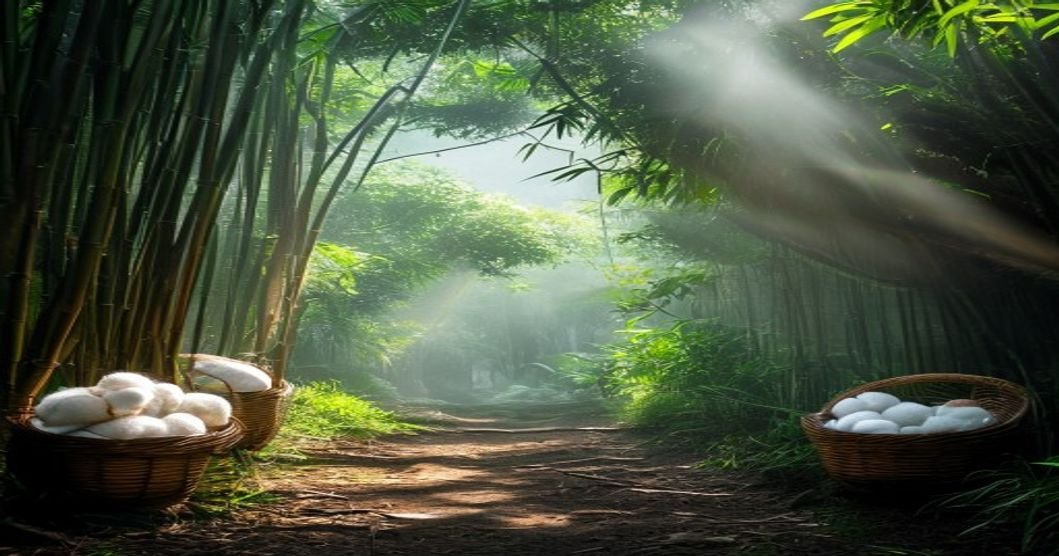
In the 18th and 19th centuries, a Garo trader going to the plains market at Goalpara or Tura would walk four to five days through jungle-covered hills. The path was steep, slippery, and shared with leopards and wild elephants. They carried cotton, lac, peppers, and dried fish in bamboo baskets held by bark straps across their foreheads. They went in groups of twelve or more, single file, each with a dao (bill-hook) and sword at hand.

When they reached the market, they sold their goods. They bargained hard and precisely. And then — this is the important part — they left. They would not stay at the plains market beyond the second night. If the cotton was not sold by then, the market official was required to take it off their hands at the agreed price. The Garos turned around and walked five days back into the hills.

The Bengali merchants who ran the frontier markets had to bribe Garo leaders with liquor and cloth just to get them to come down in the first place. They had to feast and flatter them continuously or they would leave. The Garos were completely indifferent to the social pressure of the marketplace.

Hustle culture has a different relationship to markets. It says: always be available. Always be performing. Optimise your presence for maximum deal flow. Be the person who stays longest and answers fastest and is never, ever offline.

The Garo model says: bring the best thing you have. Know its value. Name your terms. Then go home.

This is not laziness. The Garo traders walked ten days round-trip through tiger country to sell their cotton. They were not avoiding effort — they were defining it on their own terms. The five-day walk was entirely theirs. The second night was the limit.

There is a version of professional life that knows its own limits the way the Garo traders knew theirs. That delivers something worth the journey, sets a price, and does not negotiate the second-night rule. It is not popular in the current market. But it has been working in the hills for several centuries.
Posted on Leave a comment

Chikmang: The Garo Mountain You Don’t Come Back From, and Why Knowing That Matters

Garo Chikmang Mortality Slow Living — Chikmang is the Garo mountain you do not come back from. What this Garo myth about mortality teaches about slow living, presence, and the cup of tea you drink while you can.

Garo Chikmang Mortality Slow Living: What You Need to Know

Garo Chikmang Mortality — The Garo story of Chikmang — the mountain from which no one returns — and what this says about mortality, meaning, and why slow living matters.

For further research, see the Garo people of Meghalaya.

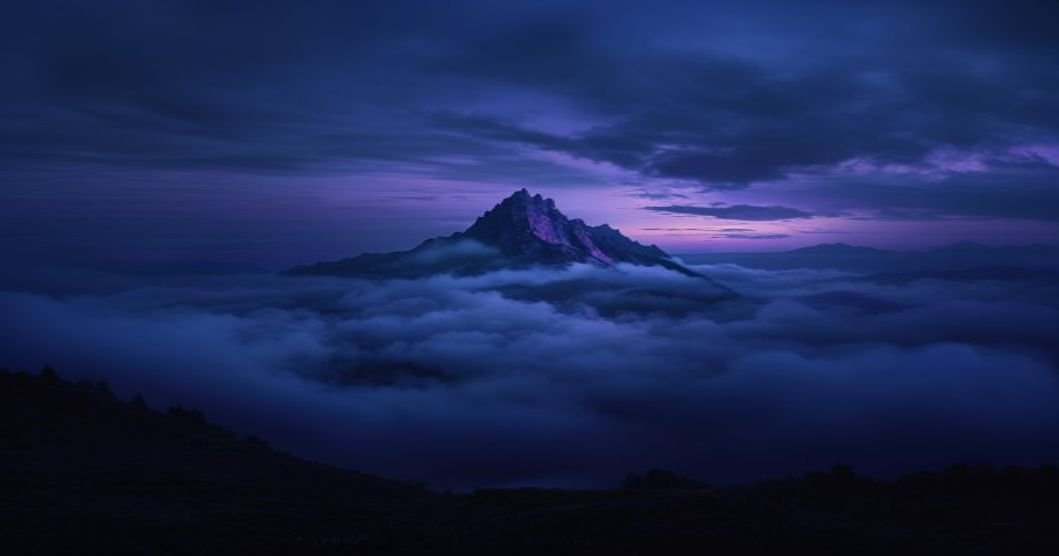
The Garo people of Meghalaya placed their afterlife in geography. The mountain called Chikmang, on the south side of the Garo Hills, was the bourne from which no traveller returns. When a Garo died, a dog was sacrificed to serve as their guide on the long journey to Chikmang. It was not a metaphor. It was a destination, mapped into the same hills where they lived and farmed and had their feuds and their festivals.

Living in the shadow of a visible mountain that represents your own ending changes things. It is harder to be vague about time when Chikmang is on the horizon. Harder to defer the important thing until conditions improve when the mountain is already there, already waiting, already at the edge of the visible world.

Modern life has pushed death well out of the landscape. It happens in hospitals, behind closed doors, in other people’s lives that we encounter on news feeds and then scroll past. We have made it invisible partly out of kindness and partly because the economy runs better when people do not think too carefully about the fact that the meeting on Thursday morning does not matter very much in the long run.

The Garo did not worship Chikmang or build temples to it. They simply knew it was there. They told their children: that mountain, over there. That is where we go. This was the equivalent of good information, calmly delivered.

The Garo concept of the supreme Spirit — the one benevolent force in their cosmology — was distinguished from all the small demons of field and stream by one quality: there was no need to propitiate it. It was already on your side. The demons required constant sacrifice. The great Spirit required nothing. It was just — there. Like the mountain, but hospitable.

Living with awareness of Chikmang and the benevolent Spirit in the same consciousness produces a particular quality: you do the work that matters, you rest when you need to, you don’t spend much time on the things that are neither good work nor genuine rest. The Garos were not sages. But they had fewer decisions to defer than we do, and the mountain to remind them why.

Posted on Leave a comment

Wangala: The Garo Harvest Festival That Knew How to Stop (And Why We’ve Forgotten)

Garo Wangala Festival Gratitude — The Garo wangala — the harvest festival of gratitude and rest — and what it teaches about celebration, stopping, and the modern inability to mark completion.

Garo Wangala Festival Gratitude: What You Need to Know

For further research, see the Wangala harvest festival of the Garo.

Every year, after the rice was in and the cotton picked, the Garo people of Meghalaya held Wangala — a festival of thanksgiving to Misi Saljong, the Sun God and deity of fertility. The drums began, the Docksiagipa dance moved through the village, the community feasted together on the harvest they had made collectively.

Wangala was not a market fair. Nothing was sold. Nothing was launched. There were no performances for an audience of strangers or metrics of attendance. The festival was a settling of accounts with the year — an acknowledgement that the rain had come, the crops had grown, the harvest was in, and this was worth stopping for.

And then it ended. The drums stopped. The dancers went home. The next season began.

We have lost the art of the festival that knows how to end. Modern celebrations have become performances of celebration — content for the story, the reel, the highlight archive. We document instead of experience, because the documented version is what we use to show that we were, in fact, there and it was, in fact, good.

The Garo harvest festival worked because it was directed at something real: the actual food that was actually harvested by actual people who were standing right there. The gratitude was not abstract. It was addressed to the specific sun that had shone on the specific rice in the specific jhum clearing on the hillside above the village.

Gratitude for the specific is very different from gratitude as a wellness practice. The first is a relationship between a person and a place and a season. The second is a cognitive exercise with general applicability.

Tea made from leaves grown in the West Garo Hills carries something of this specificity. A particular altitude. A particular rainfall. A particular October harvest. When you drink it, you are drinking a specific thing from a specific place in a specific year. That is worth pausing on. Even without drums.

Posted on Leave a comment

The Changy and the Open-Plan Office: What Garo Longhouse Architecture Got Right

Garo Changy Longhouse Design — The Garo changy — the longhouse — solved the same problem as the open-plan office, but better. What traditional Garo architecture knows about community space.

Garo Changy Longhouse Design: What You Need to Know

For further research, see the Garo people of Meghalaya.

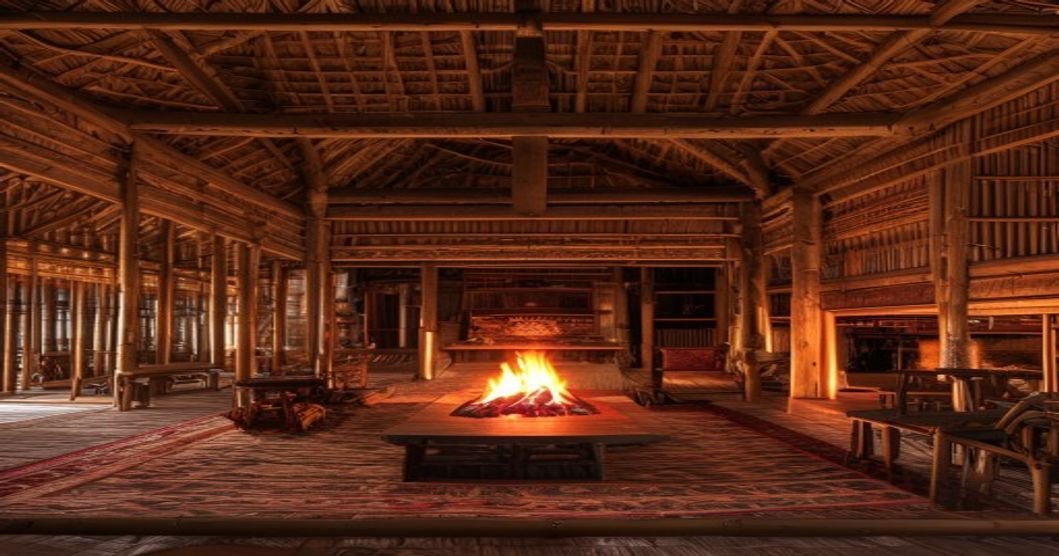
The Garo changy was a remarkable structure — bamboo-walled, bamboo-floored, raised on piles above the hillside, anywhere from thirty to one hundred and fifty feet long. Inside: one large room. Living space, cooking space, storage, and sleeping space, with only a screened corner for the married couple’s privacy. Everything happened in the same room.

The changy was not a compromise. It was a design philosophy. The open interior meant that the daily life of the family was shared — children heard adult conversation, adults were aware of children’s needs, knowledge moved through proximity rather than through instruction. The cooking fire in the middle of the floor was both heat source and social centre. You gathered around it because that was where the warmth was.

Silicon Valley, several thousand years later, invented the open-plan office. One large room. No walls between desks. Serendipitous collaboration. Knowledge moving through proximity. They called it innovation.

The difference is that the changy worked. The open-plan office, study after study has confirmed, does not. Noise levels increase. Concentration decreases. Actual collaboration drops while the appearance of collaboration goes up. People put in headphones to recreate the walls that were removed.

Why did the changy work and the office not? Partly because the changy’s inhabitants were actually a unit — people who shared a life, not just a floor. Partly because the changy had a fire in the middle, which is a reason to gather, and the office has a perimeter of desks, which is a reason to face outward. Partly because the Garo changy was built around the specific rhythms of specific people, while the open-plan office is designed around an imaginary employee who is simultaneously focused and available.

And partly because after the changy, you could step out onto the platform and sit quietly in the hills with your chu. The modern office does not have a platform. It has a ping-pong table. These are not the same thing.

Posted on Leave a comment

The Nokma’s Authority: What Garo Leadership Knew About Power That Modern Management Has Forgotten

Garo Nokma Leadership Earned Authority — The Garo nokma earned authority through responsibility, not appointment. What this leadership model teaches about management, power, and earning the right to lead.

Garo Nokma Leadership Earned Authority: What You Need to Know

For further research, see the Garo people of Meghalaya.

The Garo nokma was the village headman. He held the lion’s share of land, and the villagers obeyed him. But here is the thing an early British administrator noted with some bafflement: the nokma had no legal authority. None. He could not compel anyone. He issued no orders that carried official weight.

And yet the village followed him.

The nokma’s position was one of honour, not of pay. He was comparatively wealthy, because wealth in the Garo system was redistributed through feasting and festival rather than hoarded — the rich man in a Garo village was the one who fed the most people, not the one with the largest granary. The nokma’s authority was the product of this relationship: he gave, the village recognised, the village followed.

Modern management theory has a word for what the nokma had: psychological safety. Trust. Earned credibility. It has several frameworks, each with a diagram, explaining how to achieve this. The frameworks are largely unnecessary. The nokma’s village didn’t need a diagram. They needed a leader who showed up, distributed fairly, and didn’t mistake the title for the thing.

The adjacent figure in the Garo system was the luskar — a Government officer who collected taxes and could impress labour for road-making. The luskar had legal authority. He could compel. He received a jacket, a turban, and a shawl from the Government each year to mark his office.

Every village had both a nokma and a luskar. Every workplace has both too. The manager who can compel and the colleague whose opinion actually shapes what people do. They are usually not the same person. In the Garo hills, everyone knew which was which. In modern workplaces, people often pretend not to notice.

The nokma’s system lasted several centuries. We will see about the org chart.