
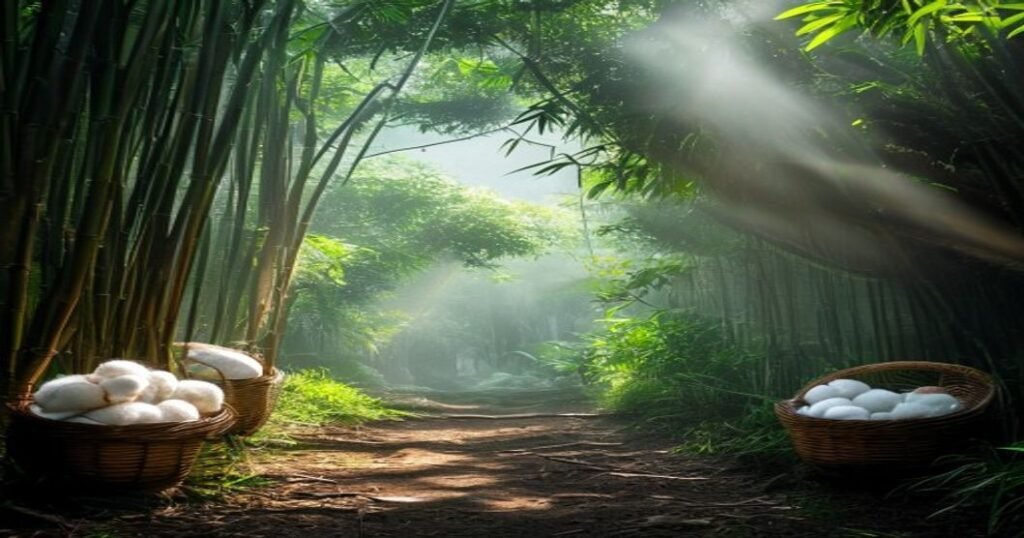
Garo Market Journey Hustle Culture — Five days to reach the market — each step intentional. What the Garo market journey teaches about hustle culture, effort, and the difference between busy and purposeful.
For further research, see the Garo people of Meghalaya.
In the 18th and 19th centuries, a Garo trader going to the plains market at Goalpara or Tura would walk four to five days through jungle-covered hills. The path was steep, slippery, and shared with leopards and wild elephants. They carried cotton, lac, peppers, and dried fish in bamboo baskets held by bark straps across their foreheads. They went in groups of twelve or more, single file, each with a dao (bill-hook) and sword at hand.
When they reached the market, they sold their goods. They bargained hard and precisely. And then — this is the important part — they left. They would not stay at the plains market beyond the second night. If the cotton was not sold by then, the market official was required to take it off their hands at the agreed price. The Garos turned around and walked five days back into the hills.
The Bengali merchants who ran the frontier markets had to bribe Garo leaders with liquor and cloth just to get them to come down in the first place. They had to feast and flatter them continuously or they would leave. The Garos were completely indifferent to the social pressure of the marketplace.
Hustle culture has a different relationship to markets. It says: always be available. Always be performing. Optimise your presence for maximum deal flow. Be the person who stays longest and answers fastest and is never, ever offline.
The Garo model says: bring the best thing you have. Know its value. Name your terms. Then go home.
This is not laziness. The Garo traders walked ten days round-trip through tiger country to sell their cotton. They were not avoiding effort — they were defining it on their own terms. The five-day walk was entirely theirs. The second night was the limit.
There is a version of professional life that knows its own limits the way the Garo traders knew theirs. That delivers something worth the journey, sets a price, and does not negotiate the second-night rule. It is not popular in the current market. But it has been working in the hills for several centuries.
Tea Story tea is grown in the West Garo Hills — one of the world's rainiest, most biodiverse regions. Single-garden. No middlemen. Re-brews three times. Explore our teas →