Posted on Leave a comment

All Property Descends Through the Women: The Garo Matrilineal System and What We’re Still Arguing About

Garo Matrilineal Women Authority Property — The Garo matrilineal system — where property, land, and clan identity descend through women — and what it shows about gender, authority, and inheritance.

Garo Matrilineal Women Authority Property: What You Need to Know

For further research, see the Garo people of Meghalaya.

In the Garo social system, all property belonged to and descended through women. Not theoretically — actually. The youngest daughter was the heiress of the house. A man who married into a Garo family did so on the understanding that the land was not his. The clan was divided into “motherhoods,” each tracing its line through the female side. The nokma’s wife held as much authority in council debates as the nokma himself — “possibly a little more,” noted an early observer, with what reads as grudging admiration.

The Garo system was not matriarchal in the sense of women holding all social power. It was matrilineal in the sense that the economic basis of the family — the land, the house, the inheritance — moved through the female line. Men held political and ceremonial roles. Women held the property. The system worked because both were considered necessary.

We are, in 2024, still discussing whether women should hold equal positions in corporate governance, whether the gender pay gap reflects structural bias or individual choice, whether maternal leave policies disadvantage careers. These are not new questions. They are ancient questions that the Garo hills had a working answer to several centuries before the modern corporation existed.

The Garo answer was not utopian. No system is. But it was functional, durable, and organised around a simple principle: the person who sustains the home has the claim to the home. The person who is most likely to be there across generations holds the thing that persists across generations.

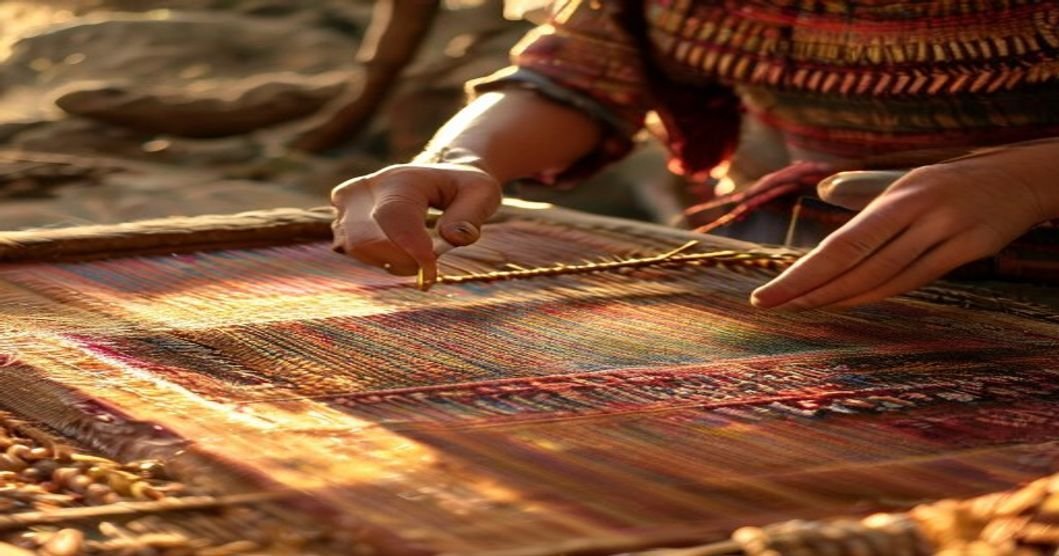
The Garo woman who gave away her bark-cloth blanket — just pulled it off the roof and handed it to a stranger, smiling — did so from a position of security. She owned the house. She owned the land. She could afford to be generous. Generosity is easier when you are not afraid of losing the thing you give from.


Posted on Leave a comment

The Milky Way Is Stampeding Buffaloes: The Garo Story We Need Right Now

Garo Milky Way Buffaloes Wonder — The Garo see the Milky Way as stampeding buffaloes — a cosmology of wonder and scale. What this way of seeing says about our relationship to the modern world.

Garo Milky Way Buffaloes Wonder: What You Need to Know

For further research, see the Garo people of Meghalaya.

In the Garo hills, there was a story about the Milky Way. A great spirit had died. The other spirits were holding a ceremony — the drums were beating, the wailing had begun. Buffaloes were being brought for sacrifice, many of them, moving in a great herd. And then the drums frightened them. All at once, the herd panicked, turned, and ran — straight off the edge of the earth and into the sky. Their hooves left a dusty track across the darkness.

That track is the Milky Way. It has never faded because the buffaloes are still running.

This is the kind of story that takes ten seconds to hear and stays with you for the rest of the evening. You look up at the sky and you see something different from what you saw before. The pale band of light is no longer just light — it’s a herd in motion, frightened by the sound of grief, running across infinity.

Wonder is not a luxury. It is a cognitive function. The part of the brain that registers surprise and awe — that pauses and reconfigures its model of the world — is the same part that generates creative insight, flexible thinking, and the capacity to see problems from new angles. People who regularly experience wonder are measurably more cognitively flexible than people who don’t.

The Garo elders were not trying to teach cognitive flexibility. They were telling their children a story about the sky. But the effect was the same: every child who grew up knowing that the Milky Way was buffaloes looked up with slightly wider eyes than a child who had been told it was a distant galaxy cluster. Both facts are true. One of them is also alive.

Your next conference call can wait four minutes. Go outside. Look up. The buffaloes are still running.

Posted on Leave a comment

The Garo Oath: When Words Had Weight (And What We’ve Done to Commitment)

Garo Oath Integrity Words — In Garo tradition, an oath carried consequence. What the Garo oath system teaches about integrity, commitment, and why words have lost their weight.

Garo Oath Integrity Words: What You Need to Know

For further research, see the Garo people of Meghalaya.

A British official in the late 18th century described witnessing a Garo oath-taking with an honesty that is remarkable for its time. “The awe and reverence with which the man swore,” he wrote, “forcibly struck me. My assistant could hardly write, so much was he affected.”

The Garo ceremony of oath-taking was this: the person raised their hands to heaven, bowed their head to a stone, and looked steadfastly toward the hills while giving their evidence. Some placed a tiger’s bone between their teeth. Others grasped their weapons. A few took a handful of earth.

The hills were the witnesses. The stone was the witness. The earth in your hand was the witness. The oath was not addressed to a court or a contract or a counterparty — it was addressed to the landscape itself, which could not be bribed, which had no interest in the outcome, which would simply continue to exist after you were gone and your word was either kept or not.

Modern commitment has been productised. Terms and Conditions. End User License Agreements. Non-Disclosure Agreements. Contracts that require a solicitor to interpret and a decade to enforce. We have added so many layers of legal architecture to the problem of trust that the original thing — one person’s word given to another — has been almost entirely replaced by its documentation.

The Garo oath worked partly because breaking it carried consequences that could not be negotiated away. If you looked at the hills and lied, the hills knew. This is not literally true. But the Garo system of consequences was social rather than legal — it operated through reputation, through the knowledge that the village would remember, through the understanding that the hills had witnessed what you said.

We have traded this for systems that can be gamed more precisely and with better documentation. We have not obviously come out ahead.

There is a version of daily life that takes its small commitments as seriously as the Garo took theirs — that speaks as if the hills are listening, because something is always listening. It is not a popular discipline. But it makes the words you say mean something, which is the beginning of everything that is actually good.

Posted on Leave a comment

Why the Garo Changed Their Names After a Tiger Attack (And What It Teaches About Reinvention)

Garo Name Change Tiger Identity — In Garo tradition, a person who survived a tiger attack changed their name — a complete reinvention of identity. What this teaches about transformation and starting again.

Garo Name Change Tiger Identity: What You Need to Know

For further research, see the Garo people of Meghalaya.

In the Garo hills, a name was considered to be, in some sense, an essential part of the person who carried it. Not just a label — an actual piece of you that could be found by anyone who knew it.

When a Garo person was attacked by a tiger and escaped, they changed their name. The logic was precise: the tiger now knew their name, and a tiger that knows your name can find you again. By becoming someone else — by taking a new name that the tiger did not know — the survivor placed themselves outside the reach of the thing that had almost killed them.

Even more remarkably: if a Garo was killed by a tiger, all of their relatives changed their names. The tiger might come back for the family. Better to present it with a set of strangers.

The modern self-help industry has built a substantial enterprise around the idea of reinvention. New habits. New identity. New morning routines. New self. Much of it is organised around the question: how do you become someone who does not repeat the patterns that have been damaging you?

The Garo answer is surprisingly specific: sometimes, you need to be someone the tiger doesn’t recognise. Not a better version of yourself — a genuinely different entity, with a different name, making different sounds, carrying different associations. The tiger hunts by familiarity. Make yourself unfamiliar.

This is not self-deception. The Garo person who changed their name after the tiger attack was the same person in every material sense. But they had declared, to themselves and to the village, that the chapter in which they were prey was over. The new name was the opening sentence of the next chapter.

There is a version of change that is purely internal — thoughts that shift, motivations that reconfigure. And there is a version that requires an external act: a name, a location, a commitment said out loud. The Garo system required the external act. The village witnessed it. The hills witnessed it. The tiger, somewhere in the jungle, was looking for someone who no longer existed.

The hills where this story lives are the same hills where our tea grows. Explore teas from West Garo Hills →

Posted on Leave a comment

The Forest That Belongs to Everyone: The Garo Commons and the Limits of Ownership

Forest Belongs Everyone Garo Commons — The Garo jhum system held abandoned clearings as village commons — they looked like virgin forest but were owned collectively, in time rather than space. An old answer to a very new problem.

Forest Belongs Everyone Garo Commons: What You Need to Know

Garo Commons — The Garo jhum system held abandoned clearings as village commons — they looked like virgin forest but were owned collectively, in time rather than space. An old answer to a very new problem.

Garo Commons: What You Need to Know

In the Garo jhum system, when a clearing was abandoned after two or three years of cultivation, it was given back to the jungle. Within a few seasons, it was indistinguishable from virgin forest — the trees returned, the undergrowth thickened, birds and animals came back, the topsoil rebuilt itself.

But the land was not forgotten. It still belonged to the village. It was held in the village’s common memory, recorded in social knowledge rather than paper title deeds: this section, resting now, will be available to clear in seven years. That section, dormant for twelve years, is ready when we need it.

The old site, which now looks like it has never been farmed, is the cause of frequent disputes, noted one observer — because everyone knew it was there, and because the knowledge of its availability was power. The commons was not unowned. It was owned differently: collectively, temporally, through memory rather than fences.

The tragedy of the commons — the economic theory that shared resources are inevitably overused and destroyed — assumes a particular kind of commons: one with no social enforcement, no memory, no governance. The Garo commons had all three. It was governed by the village’s collective knowledge of who had farmed where and when, enforced by social memory, and protected by the understanding that overusing your section now meant no section available later.

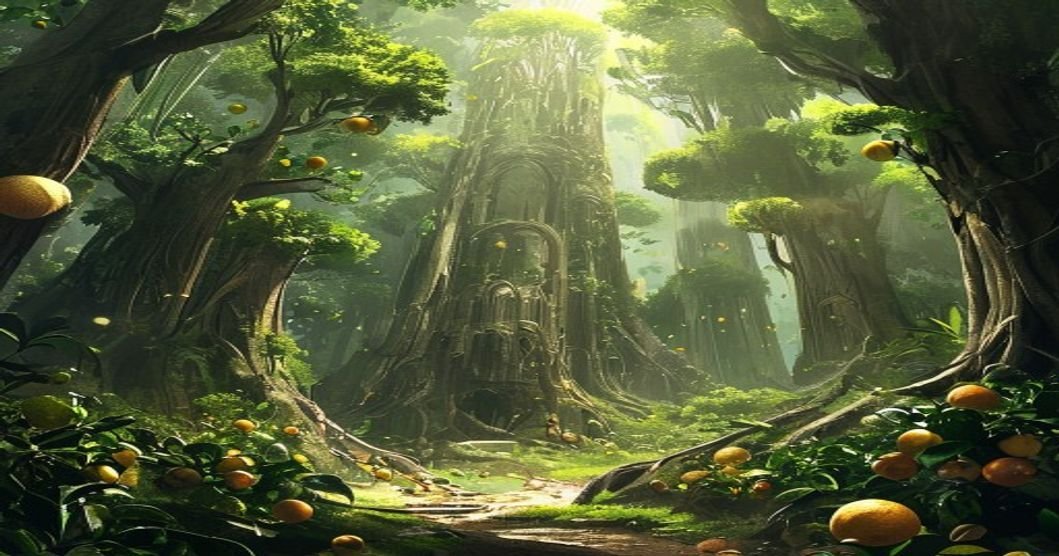
The Nokrek Biosphere Reserve — the UNESCO-designated world heritage site in the West Garo Hills — is there partly because the Garo people were custodians of its biodiversity for centuries before UNESCO existed. The wild citrus trees that grow in Nokrek, including Citrus indica, one of the wild ancestors of all cultivated citrus, are there because the Garo system of land use left space for them.

Tea grown in this region carries something of this relationship. Not grown on cleared, consolidated monoculture land. Grown on hillsides that still have the Garo hills‘ biodiversity in their soil memory. What the land remembers about rest and recovery ends up, in some small way, in the cup.