Posted on Leave a comment

Buy Tea Online India: What to Look For Before You Click Order

Buy Tea Online India — Buy Tea Online India: What to Look For Before You Click Order — is one of the topics we explore on The Tea Story blog, drawing on our direct experience growing, processing, and tasting tea from our own garden in West Garo Hills, Meghalaya.

Tea is an awkward product to buy online. You cannot smell it before purchasing. You cannot see the actual leaves inside the packet. The photography on most tea websites shows gardens and cups, not the leaf grade that determines your experience. And the price range — from ₹80 to ₹1,200 for a hundred grams — does not reliably correlate with quality in a market where branding investment often exceeds production investment.

These are the things actually worth checking.

Source Transparency: Named Garden or Anonymous Blend

The single most informative piece of information a tea seller can provide is where the tea was grown. Not a region — “from the lush gardens of Assam” — but a specific named garden, estate, or registered production facility. A named source means the seller has a traceable supply chain. An anonymous source, however elegantly described, means you are buying a blended product from an unspecified number of gardens of unspecified quality.

Source transparency also correlates with freshness. A brand that buys from named gardens typically has a more direct relationship with its supply and shorter storage times than a brand that sources from commodity auctions.

FSSAI Registration

Any legitimate food business operating in India above a minimum threshold must hold FSSAI registration or a licence. For a tea brand selling online, this is a basic compliance requirement. An FSSAI number on the packaging means you can verify the registered facility on the FSSAI public database — confirming that the production is traceable to a specific, audited location.

Absence of an FSSAI number on a tea product sold online is a red flag. It may indicate informal or unregistered production, in which case neither the source nor the safety standards are verifiable.

Leaf Grade and Format

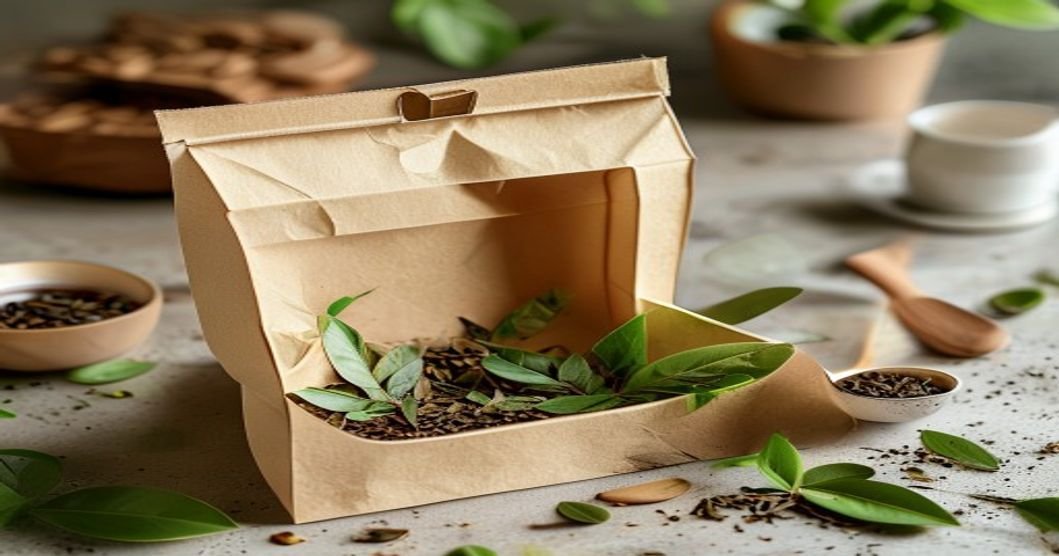
Photographs of loose-leaf tea in a well-lit bowl are standard across most premium tea websites, regardless of whether the actual product is whole-leaf or fine-broken-grade. Look for explicit description of the leaf grade: “whole leaf,” “orthodox,” “two leaves and a bud” standard. Avoid descriptions that use only vague quality language without specifying processing method.

If a website spends more words on the packaging than on the leaf, investigate the leaf harder before ordering.

Harvest Date or Batch Date

Fresh tea tastes better than old tea. A seller who provides harvest or packing dates is demonstrating either genuine freshness or genuine transparency about freshness — both good signs. A seller with no date information and no obvious reason why (some teas genuinely do not date well in the traditional way) may be obscuring the age of their stock.

Return Policy and Samples

The inability to taste before buying is a genuine problem online. Reputable tea sellers who believe in their product typically offer either a satisfaction guarantee on first orders or access to sample quantities. Willingness to let you try before committing to a large purchase is a confidence signal from the brand about the quality of what they are selling.

We sell direct from our garden in West Garo Hills, with full source transparency, FSSAI registration (21719011000008), harvest-season dating where applicable, and direct-from-factory freshness. All of these are checkable facts, not marketing claims.
Posted on Leave a comment

Assam Darjeeling and Meghalaya : India’s 3 Best Tea Terroirs Brilliantly Compared

Assam Darjeeling And Meghalaya — Assam, Darjeeling, and Meghalaya: India’s Three Tea Terroirs Compared — is one of the topics we explore on The Tea Story blog, drawing on our direct experience growing, processing, and tasting tea from our own garden in West Garo Hills, Meghalaya.

India is the world’s second-largest tea producer, and the country contains within its borders a remarkable range of tea-growing environments. The most famous regions — Assam and Darjeeling — have shaped how the world understands Indian tea for over a century. But Meghalaya, in the far northeast, produces tea with a character distinct from both.

Understanding the difference is not just academic. It changes what you buy, how you brew it, and what you expect to taste.

Assam: Bold, Malty, Built for Milk

Assam is the largest tea-growing region in the world by volume. The Brahmaputra valley is flat, hot, and seasonally very wet — conditions that produce a robust, full-bodied tea with a characteristic malt note and a rich amber-red liquor in the cup. Assam teas, especially CTC grades, are the backbone of Indian masala chai: strong enough to hold up to milk, sugar, and spice without disappearing.

The trade-off is tannin. Assam’s heat and humidity, combined with the CTC processing method used for most of its production, results in high tannin content and a pronounced astringency if brewed too long. This is a feature, not a defect — it is what makes the tea cut through milk — but it also means Assam tea punishes over-brewing quickly.

Darjeeling: Delicate, Muscatel, and Strictly Seasonal

Darjeeling sits at altitudes between 600 and 2,000 metres in the Himalayan foothills of West Bengal. The cool mountain air, mist, and thin soil produce tea that is lighter in body, golden rather than red, and famously characterised by a muscatel note — a grape-and-apricot quality in the best first-flush and second-flush harvests.

Darjeeling is the Champagne of Indian tea: genuine estate-labelled Darjeeling from a traceable garden is superb and commands high prices. It is also heavily counterfeited — far more tea is sold as “Darjeeling” than Darjeeling actually produces. Darjeeling is not built for milk (which overwhelms the delicate aromatics) and rewards careful low-temperature brewing.

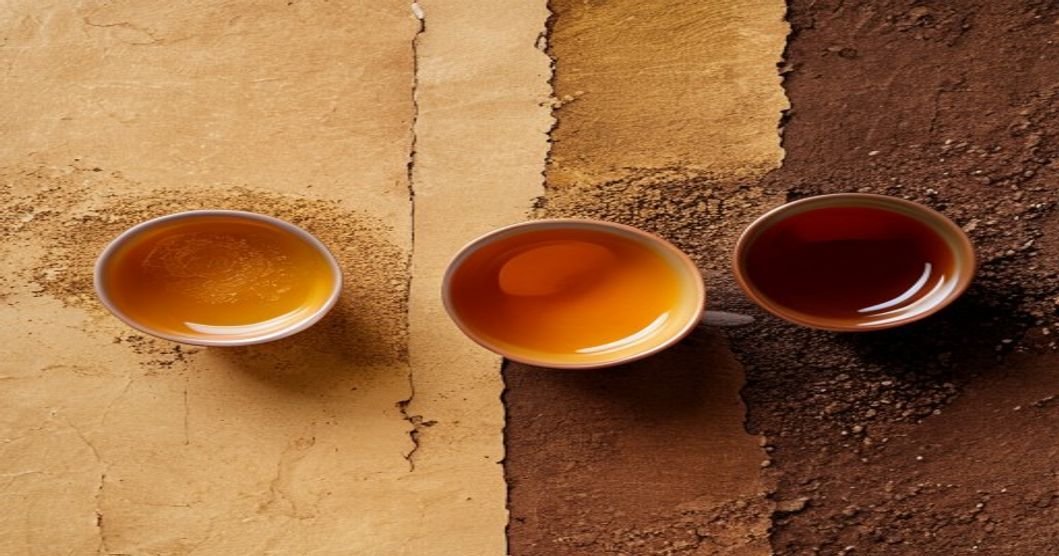
Assam: strong enough to carry milk. Darjeeling: too delicate for it. Meghalaya: a third path that is neither.

Meghalaya: Naturally Sweet, Never Bitter, Built to Re-Brew

West Garo Hills in Meghalaya sits at a moderate altitude — lower than Darjeeling, higher than the Assam plains — in a landscape that receives extraordinary rainfall and maintains deep, organically-rich soil under continuous forest cover. The tea grown here has a character that does not map neatly onto either of the established categories.

It is not as bold as Assam — it does not have that flat-valley robustness. But it is not as delicate as Darjeeling, either. The best description is: full without being heavy, naturally sweet without being weak, and completely free of the sharp, catching bitterness that you need milk to correct in strong Assam tea. It holds up to multiple steeps gracefully. It can be drunk without milk or sugar with genuine pleasure, but it also works well in masala chai because the base flavour is strong enough to carry the spices.

Why Meghalaya’s Tea Region Is Still Relatively Unknown

Assam and Darjeeling built their global reputations partly through colonial-era commodity trading — the British East India Company and then Brooke Bond and Lipton built enormous marketing infrastructure around these regions in the nineteenth and twentieth centuries. Meghalaya’s tea industry is younger, smaller-scale, and has not had the same institutional promotion behind it.

This is beginning to change. Direct-to-consumer brands — including our own operation in West Garo Hills — are making it possible for tea drinkers to access Meghalaya tea without going through the blending and bulk-trade system that historically obscured individual gardens. The terroir is exceptional. The question was always reach — and that question is now answerable.

Posted on Leave a comment

Why Premium Tea Makes a Better Corporate Gift Than Sweets, Coffee, or Wine

Why Premium Tea Makes — Why Premium Tea Makes a Better Corporate Gift Than Sweets, Coffee, or Wine — is one of the topics we explore on The Tea Story blog, drawing on our direct experience growing, processing, and tasting tea from our own garden in West Garo Hills, Meghalaya.

The corporate gifting calendar in India centres around two or three festival seasons — Diwali above all, Eid, Christmas and New Year — and a secondary market for appreciation gifts, onboarding kits, and client relationship maintenance throughout the year. The typical gift shortlist contains sweets, dry fruits, coffee, wine, and branded merchandise.

Each of these has a structural problem. Sweets are consumed and forgotten within days. Coffee divides the audience between those who drink it and those who do not. Wine and spirits exclude recipients for religious or personal reasons. Branded merchandise — diaries, bags, pens — tends to feel like something the sender ordered in bulk without much thought.

Premium single-origin tea solves several of these problems simultaneously.

Universal Appropriateness

Tea is consumed across every religion, dietary preference, and age group in India. It contains no alcohol. It is not a sweet that raises blood sugar concerns. It is not an allergen in the typical gift format. A well-curated tea gift can be sent to a senior executive at a conservative company, a younger client in a startup, a government official, or an international partner without any recipient being unable to appreciate or use it.

This universality is not a minor consideration in corporate gifting — it is one of the primary sourcing criteria for anyone who has to manage gifting for more than a hundred people across diverse contexts.

Shelf Life That Outlasts the Season

Well-packed whole-leaf tea in sealed pouches or tins has a shelf life of twelve to eighteen months. Unlike sweets that must be consumed within two weeks or fruit that needs immediate refrigeration, a tea gift can be given in October and still be at its best in March. Recipients are not obligated to consume it immediately, and they will not find themselves throwing it away because they were travelling when the gift arrived.

A gift that the recipient is still enjoying three months after they received it keeps the sender in their mind far longer than something that was consumed and forgotten by the time Diwali was over.

The Story That Travels with the Gift

Single-origin tea from West Garo Hills in Meghalaya has a genuine story: the garden, the soil, the rainfall, the no-middlemen model, the FSSAI certification. This is not manufactured brand mythology — it is the actual origin and production reality of the tea.

When you give a gift that has this kind of provenance, you are giving something the recipient can talk about. “This is from a single garden in Meghalaya” is a more interesting thing to say than “this is from a standard gifting catalogue.” For corporate relationships — where differentiation and impression matter — the ability to say something specific and genuine about the gift is a real advantage.

Scalability from Small Teams to Large Clients

Our gift sets are available in configurations that scale from individual boxes (suitable for key client gifting) to bulk orders (suitable for large team appreciation or conference gifting). For bulk orders, we accommodate custom notes and can discuss specific packaging requirements. The price point is accessible at all scales: a well-presented two-variety tea gift costs a fraction of equivalent-impression gifting in wine or premium dry fruit.

If you are planning corporate gifting for the upcoming season and want to discuss quantities, custom packaging, or bulk pricing, the conversation starts at our Contact page. We have fulfilled orders ranging from twenty to several hundred units, and the lead time for customised orders is typically two to three weeks.

Posted on Leave a comment

How to Re Brew Tea Leaves 3 Times Without Losing Flavour

How To Rebrew Tea Leaves Multiple Times — How to re-brew whole leaf tea leaves 3 times without losing flavour. The technique, timing, temperature, and why premium whole leaf tea from Meghalaya re-brews best.

Rebrew Tea Leaves Multiple Times: What You Need to Know

How To Rebrew Tea Leaves Multiple Times: What You Need to Know

For further reading, see Tea (Wikipedia).

Rebrew Tea Leaves Multiple Times — A practical guide to re-brewing whole leaf tea — temperature, timing, and why premium tea gets better on the second steep.

Rebrew Tea Leaves — A practical guide to re-brewing whole leaf tea — how many times, temperature, timing, and why premium tea gets better on the second steep.

For further research, see green tea catechin research.

One of the most common questions we get is whether it’s actually possible to get a good second or third cup from the same tea leaves — and the honest answer is: it depends entirely on what kind of tea you’re using.

Why Most Tea Bags Can’t Be Re-Brewed

Tea bags are filled with “dust” or “fannings” grade tea — leaf that’s been broken down into small particles to brew fast. This high surface area means almost all the flavour and caffeine releases in the first steep. A second steep from a tea bag is typically weak and flat, because there’s simply nothing left to extract.

Whole-leaf and orthodox tea works differently. The leaf is intact or only lightly rolled, so it releases its compounds in layers — meaning a second and third brew can taste different from the first, not just weaker.

Which of Our Teas Can Be Re-Brewed

Our whole-leaf orthodox and green teas — grown and processed in our own West Garo Hills garden — are made for re-brewing up to 3 times within roughly a 15-minute window per session. This includes:

  • Premium Green Tea and our green-tea-based blends (Kahwa, Blue Tea, Orange Dew, Lemon Dew, Mint, Jasmine Green, Oolong)
  • Meghalaya Orthodox Tea and our orthodox-based blends (Rose, Jasmine Orthodox, Roselle, Vanilla)

Our CTC range (CTC Classic, Premium, Gold, Ginger, Earl Grey, Cardamom) is processed for single-steep masala chai and isn’t intended for re-brewing — that’s simply how CTC processing works, not a quality difference.

Step-by-Step: Re-Brewing Green Tea

  • First steep: 75–85°C water, 2 minutes
  • Pour off and drink — don’t let the leaves sit in water between steeps
  • Second steep: same temperature, 2–3 minutes (slightly longer, since the leaf has partly opened)
  • Third steep: same temperature, 3 minutes

Step-by-Step: Re-Brewing Orthodox Black Tea

  • First steep: 90–95°C water, 3–4 minutes
  • Pour off completely
  • Second steep: same temperature, 4 minutes
  • Third steep: same temperature, 4–5 minutes

Why This Matters Beyond Flavour

Re-brewing whole-leaf tea means you get more cups per gram of leaf than you would from tea bags — practically, that’s better value, not just a tasting exercise. It’s also part of why we say our tea is “never bitter”: because the leaf releases flavour gradually rather than dumping tannins into the first cup, properly brewed whole-leaf tea doesn’t develop the harsh, bitter edge that over-steeped tea bags do.

Explore our full range of re-brewable green and orthodox teas to try this yourself.

Posted on Leave a comment

Ginger Tea Benefits: What the Research Actually Says

Ginger Tea Benefits Research India — What the research actually says about ginger tea benefits — the evidence on digestion, inflammation, nausea and immunity. Honest science, not marketing claims.

Ginger Tea Benefits Research India: What You Need to Know

For further reading, see Ginger bioactive compounds (PubMed).

Ginger Tea Benefits Research — A research-backed look at ginger tea benefits — anti-nausea, anti-inflammatory, immunity, digestion — with the clinical evidence behind each claim.

For further research, see ginger anti-nausea clinical research.

Ginger tea is one of the most commonly recommended home remedies in Indian households, and unlike many wellness claims, several of its core benefits are genuinely supported by research — though it’s worth being precise about what that research actually shows.

Digestion: The Best-Supported Benefit

Ginger’s effect on nausea and digestive discomfort is the most consistently studied area. Compounds in ginger called gingerols are understood to help relax the digestive tract and have been studied specifically for nausea relief. This is a large part of why ginger tea is the traditional first response to an upset stomach in many households — it’s not just folk wisdom, there’s real research behind the digestive benefit specifically.

Inflammation

Gingerols also have anti-inflammatory properties. This doesn’t mean ginger tea is a substitute for medical treatment of inflammatory conditions, but as part of a regular diet, ginger is one of the better-evidenced anti-inflammatory foods available.

A Note on Immunity Claims

Ginger is often described as “immunity-boosting,” and while it does have anti-inflammatory and antimicrobial properties that are relevant to general health, it’s worth being honest that “boosts immunity” is a vaguer and less precisely studied claim than ginger’s digestive benefits specifically. We’d rather say plainly: ginger has well-documented digestive and anti-inflammatory properties, and is a reasonable, pleasant part of a health-conscious diet — not a guaranteed defence against illness.

Our Ginger Tea

Our Ginger Tea is a CTC black tea base with real dried ginger blended in — not artificial ginger flavouring. Being a CTC blend, it’s made for a quick, strong brew rather than re-steeping, which suits its role as a daily or as-needed cup rather than a slow, contemplative tea.

How to brew it:

  • Water temperature: 90–95°C (full boil is fine for CTC)
  • Steep time: 4–5 minutes
  • Works well with milk, or on its own if you want the ginger flavour to come through more directly

When to Reach for It

A cup of real ginger tea is a reasonable choice after a heavy meal, when feeling mildly nauseous, or simply as a warming alternative to plain CTC tea. It’s not a medical treatment, and persistent digestive issues should be discussed with a doctor rather than managed with tea alone — but as part of a normal routine, it’s one of the more genuinely useful flavoured teas we make.

Browse our Ginger Tea and the rest of our CTC range.