
Assam Darjeeling And Meghalaya — Assam, Darjeeling, and Meghalaya: India’s Three Tea Terroirs Compared — is one of the topics we explore on The Tea Story blog, drawing on our direct experience growing, processing, and tasting tea from our own garden in West Garo Hills, Meghalaya.
India is the world’s second-largest tea producer, and the country contains within its borders a remarkable range of tea-growing environments. The most famous regions — Assam and Darjeeling — have shaped how the world understands Indian tea for over a century. But Meghalaya, in the far northeast, produces tea with a character distinct from both.
Understanding the difference is not just academic. It changes what you buy, how you brew it, and what you expect to taste.
Assam: Bold, Malty, Built for Milk
Assam is the largest tea-growing region in the world by volume. The Brahmaputra valley is flat, hot, and seasonally very wet — conditions that produce a robust, full-bodied tea with a characteristic malt note and a rich amber-red liquor in the cup. Assam teas, especially CTC grades, are the backbone of Indian masala chai: strong enough to hold up to milk, sugar, and spice without disappearing.
The trade-off is tannin. Assam’s heat and humidity, combined with the CTC processing method used for most of its production, results in high tannin content and a pronounced astringency if brewed too long. This is a feature, not a defect — it is what makes the tea cut through milk — but it also means Assam tea punishes over-brewing quickly.
Darjeeling: Delicate, Muscatel, and Strictly Seasonal
Darjeeling sits at altitudes between 600 and 2,000 metres in the Himalayan foothills of West Bengal. The cool mountain air, mist, and thin soil produce tea that is lighter in body, golden rather than red, and famously characterised by a muscatel note — a grape-and-apricot quality in the best first-flush and second-flush harvests.
Darjeeling is the Champagne of Indian tea: genuine estate-labelled Darjeeling from a traceable garden is superb and commands high prices. It is also heavily counterfeited — far more tea is sold as “Darjeeling” than Darjeeling actually produces. Darjeeling is not built for milk (which overwhelms the delicate aromatics) and rewards careful low-temperature brewing.
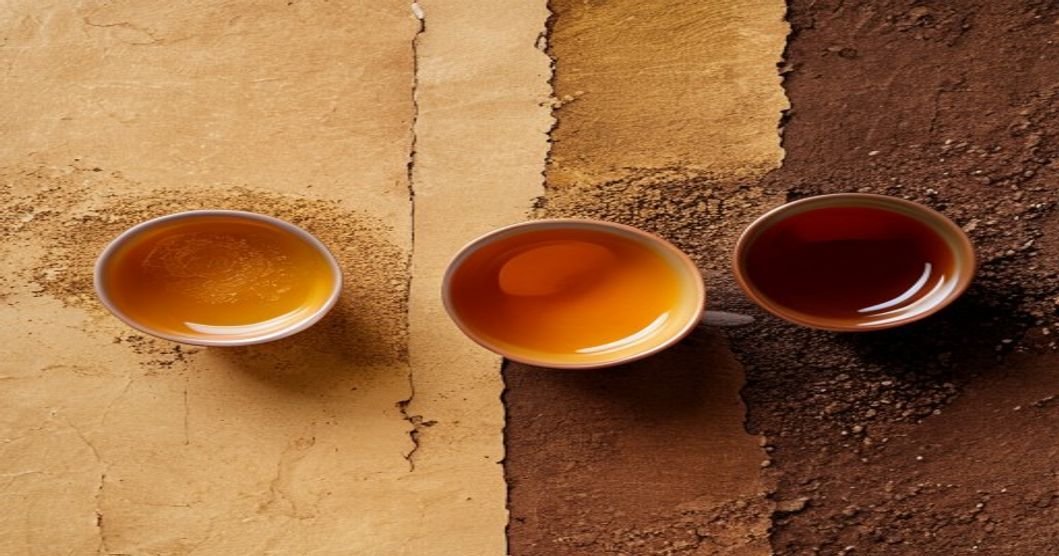
Assam: strong enough to carry milk. Darjeeling: too delicate for it. Meghalaya: a third path that is neither.
Meghalaya: Naturally Sweet, Never Bitter, Built to Re-Brew
West Garo Hills in Meghalaya sits at a moderate altitude — lower than Darjeeling, higher than the Assam plains — in a landscape that receives extraordinary rainfall and maintains deep, organically-rich soil under continuous forest cover. The tea grown here has a character that does not map neatly onto either of the established categories.
It is not as bold as Assam — it does not have that flat-valley robustness. But it is not as delicate as Darjeeling, either. The best description is: full without being heavy, naturally sweet without being weak, and completely free of the sharp, catching bitterness that you need milk to correct in strong Assam tea. It holds up to multiple steeps gracefully. It can be drunk without milk or sugar with genuine pleasure, but it also works well in masala chai because the base flavour is strong enough to carry the spices.
Why Meghalaya’s Tea Region Is Still Relatively Unknown
Assam and Darjeeling built their global reputations partly through colonial-era commodity trading — the British East India Company and then Brooke Bond and Lipton built enormous marketing infrastructure around these regions in the nineteenth and twentieth centuries. Meghalaya’s tea industry is younger, smaller-scale, and has not had the same institutional promotion behind it.
This is beginning to change. Direct-to-consumer brands — including our own operation in West Garo Hills — are making it possible for tea drinkers to access Meghalaya tea without going through the blending and bulk-trade system that historically obscured individual gardens. The terroir is exceptional. The question was always reach — and that question is now answerable.