
Tea Inflammation Arthritis Joint Pain — How green tea EGCG and ginger gingerol address chronic inflammation — mechanism, clinical evidence, and which teas help with arthritis and joint pain.
For further research, see EGCG anti-inflammatory mechanism research.
⚠ Medical Disclaimer: This article is for informational purposes only. Tea is a complement to a healthy lifestyle — not a treatment or cure for any medical condition. Always consult a qualified doctor or healthcare provider before making changes to manage any health condition. Do not replace prescribed medication with tea or any other food supplement.
Chronic inflammation is now understood to be a root driver of most non-communicable diseases — not just arthritis, but heart disease, Type 2 diabetes, Alzheimer’s disease, and certain cancers. The inflammatory process involves a complex cascade of cellular signalling, and several compounds in tea interrupt this cascade at specific molecular checkpoints.
EGCG and NF-κB inhibition
NF-κB (nuclear factor kappa-light-chain-enhancer of activated B cells) is often called the “master switch” of inflammation — it controls the transcription of dozens of pro-inflammatory genes. When NF-κB is chronically activated, the body produces continuous low-grade inflammation that damages tissues and organs over years. EGCG is one of the most potent natural inhibitors of NF-κB identified, inhibiting its activation through multiple pathways including direct binding to the IκB kinase complex.
A 2010 study in Arthritis Research & Therapy found that EGCG blocked the production of several inflammatory mediators in rheumatoid arthritis cells — including interleukin-1 (IL-1), TNF-alpha, and matrix metalloproteinases (enzymes that destroy joint cartilage). The study authors concluded that EGCG could be “a useful complementary agent” in rheumatoid arthritis management.
Ginger and COX inhibition
The primary mechanism of NSAIDs (aspirin, ibuprofen, naproxen) is cyclooxygenase (COX) inhibition — blocking the enzymes that convert arachidonic acid into prostaglandins, the primary inflammatory mediators in joints. Gingerols and shogaols in ginger have documented COX-1 and COX-2 inhibitory activity. A 2015 meta-analysis in Osteoarthritis and Cartilage found that ginger supplementation significantly reduced pain and disability in knee osteoarthritis compared to placebo, with effect sizes comparable to low-dose NSAIDs.
Unlike NSAIDs, ginger does not damage the stomach lining — it actually protects it. This is a significant practical advantage for people with arthritis who have been using NSAIDs for years.
Black pepper and bioavailability
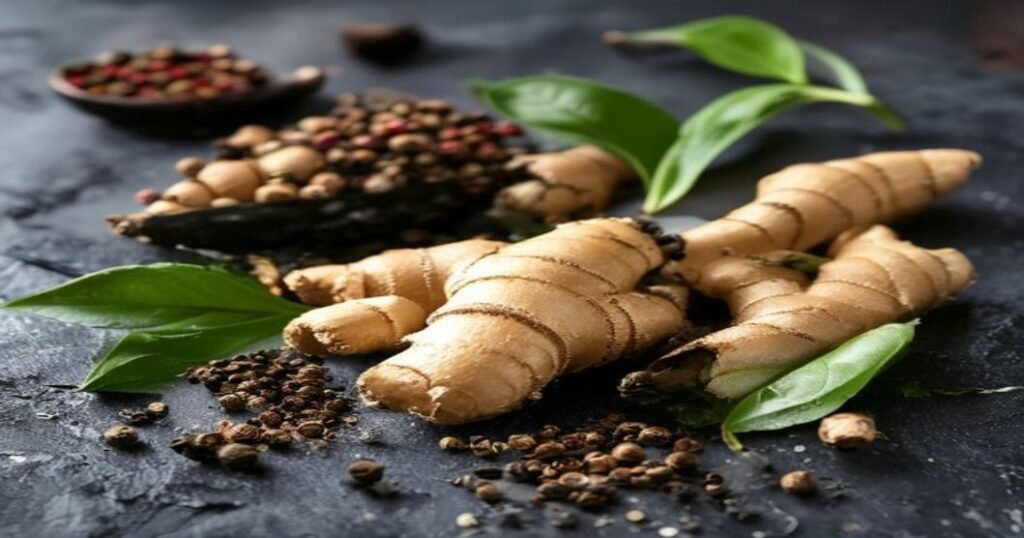
Piperine — the active compound in black pepper — is a potent inhibitor of its own right (inhibiting TNF-alpha and IL-6 production), but its most significant role is as a bioavailability enhancer. Piperine inhibits intestinal glucuronidation — the process by which the gut metabolises and deactivates compounds before they reach the bloodstream. Adding piperine increases the bioavailability of curcumin by 2,000%, of EGCG by approximately 20-30%, and of multiple other polyphenols. A ginger-and-black-pepper tea combination is therefore not merely additive — piperine enhances the absorption of ginger’s active compounds as well as any simultaneously consumed EGCG.
How much and how
For active joint inflammation: ginger tea 2-3 times daily provides the most direct anti-inflammatory effect. For systemic inflammation reduction over time: green tea 3-4 cups daily. The combination of a morning green tea and a mid-day or post-meal ginger tea addresses both acute and systemic pathways.
Teas to try from Tea Story: Premium Green Tea (NF-κB inhibition), Ginger Tea (COX inhibition, prostaglandin reduction), Ginger Tea with Black Pepper or add a pinch of black pepper to your ginger tea brew (piperine bioavailability amplification).
All Tea Story teas are single-garden whole-leaf teas from West Garo Hills, Meghalaya — no additives, no blending, no middlemen. Re-brews 3 times. Shop Tea Story teas →