
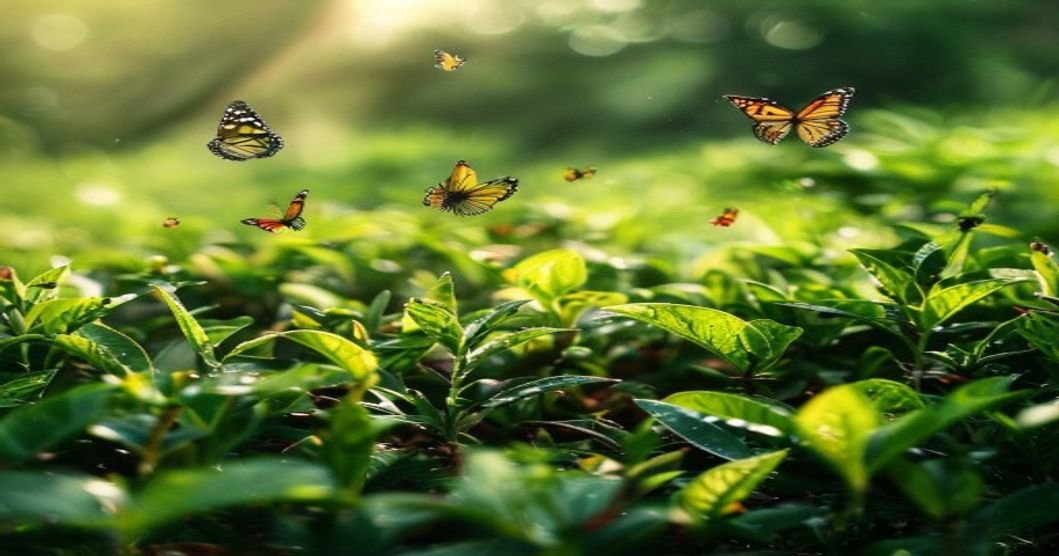
Why Our Tea Has — Why Our Tea Has Never Needed Pesticides: A Story About Biodiversity and Balance — is one of the topics we explore on The Tea Story blog, drawing on our direct experience growing, processing, and tasting tea from our own garden in West Garo Hills, Meghalaya.
The conventional argument for pesticides in agriculture goes like this: without chemical protection, insects and fungi will destroy the crop. The argument is not without merit in many contexts — in a monoculture landscape with no natural predators, no ecological complexity, and depleted soil, pest pressure can genuinely be unmanageable without intervention.
Our garden in West Garo Hills is not that context. And understanding why changes how you think about the “organic” label in tea, and why some teas are free of chemical inputs not because of certification but because of where and how they grow.
The Ecosystem That Controls Pest Pressure
The Garo Hills sit within the Indo-Burma biodiversity hotspot — one of thirty-six globally recognised zones of exceptional biological diversity. The landscape around our garden includes intact forest, mixed agricultural land, and watershed-protection areas, all of which support populations of the predatory insects, birds, and spiders that feed on the herbivorous insects that would otherwise attack tea plants.
Spiders are the unsung heroes of any tea garden with good ecological health: they are prolific predators of the thrips, aphids, and leafhoppers that most damage young tea growth. Spider diversity in our garden is high because the surrounding landscape provides the habitat complexity that sustains spider populations through the year — not just during the growing season.
A garden surrounded by forest does not need to import pest control. The forest provides it for free, continuously, with no negative residual effects.
Birds similarly play a role that most agricultural planning ignores entirely. Several species in the Garo Hills are significant consumers of caterpillars and insect larvae — the stage at which most tea pests cause the most damage. Their presence in and around the garden requires that the garden itself does not use inputs that would make it hostile to the birds or to the insects the birds eat.
Healthy Soil as Natural Defence
Pest pressure in agricultural plants is often a signal of plant stress. Tea plants that are nutritionally balanced, growing in active soil with good microbial communities, are measurably more resistant to fungal pathogens and insect attack than plants growing under nutritional stress in depleted soil.
Our soil, as described in the articles on topsoil richness and Meghalaya’s geological character, is genuinely healthy. The microbial activity is high. The plants are not deficient in any major nutrient. Plants in this condition do not present the kind of stressed biochemical profile that makes them more attractive to pests. This is not folklore — it is a well-documented principle in agroecological research that healthy plants emit different volatile signals than stressed plants, and that this affects insect foraging behaviour.
What ‘No Pesticides’ Actually Means for Your Cup
Chemical residues in tea are a legitimate concern. Tea leaves are processed but not washed before they reach your cup — the hot water you add when brewing is the first time the leaf has encountered water since it was grown. Any residues on the leaf at the time of harvest are still there when you brew.
FSSAI certification (our registration number 21719011000008) includes standards for food safety and hygiene in processing. But the absence of pesticide residues in our tea is a function of garden management rather than post-processing treatment. We do not need to test for compounds we have not applied.
This matters practically in one specific way: the taste. Pesticide-free tea, grown in active soil without chemical inputs, tends to have a cleaner finish in the cup — no chemical aftertaste, no unexpected sharpness that cannot be explained by the leaf’s natural chemistry. Some people notice this difference immediately. Others notice it in the way the tea sits with them after drinking — without the mild discomfort that some chemically-treated teas can cause.