
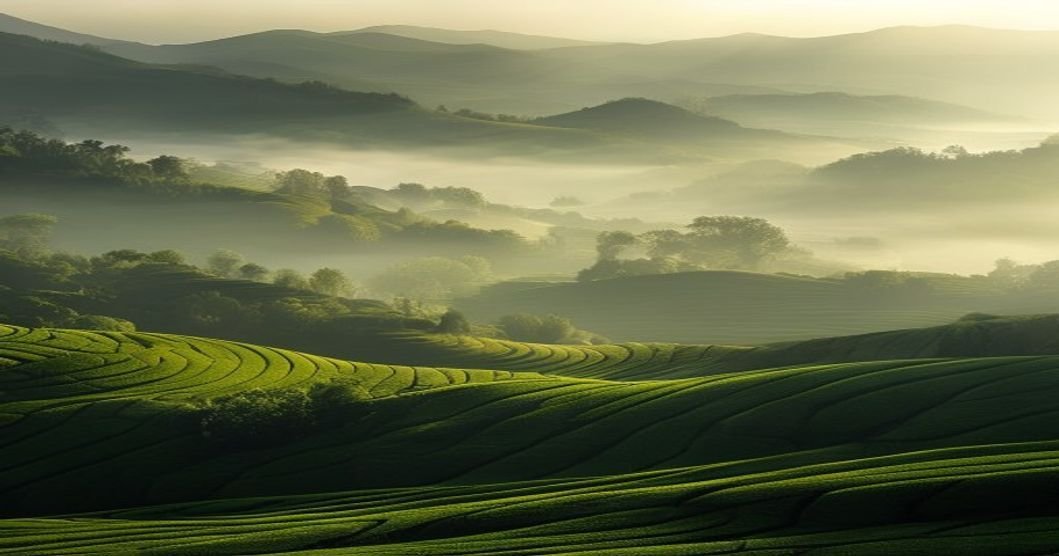
A Day In The — A Day in the Garden: What Tea Plucking in West Garo Hills Looks Like — is one of the topics we explore on The Tea Story blog, drawing on our direct experience growing, processing, and tasting tea from our own garden in West Garo Hills, Meghalaya.
The standard of hand-plucking for premium tea is called “two leaves and a bud.” Two leaves and a bud: the growing tip of the tea plant, the youngest and most chemically complex part of the stem, selected with care from among the older, tougher growth below. This standard has not changed in the centuries since the first orthodox teas were produced.
Understanding what this looks like in practice — what the garden sounds like before dawn, what the experienced plucker’s hands do automatically while their eyes scan for the right growth stage — is a way of understanding what makes hand-plucked tea different from mechanically-harvested material.
Before the Light Is Fully Up
Plucking in our garden in West Garo Hills begins early — ideally before the day’s heat is at its peak. The garden in the early morning carries a specific smell that anyone who has spent time in it recognises: the clean, vegetal, faintly grassy scent of living tea plants covered in dew, underlaid by the deep earthiness of the soil underneath.
The leaves at this hour have the highest moisture content of the day. The stomata — the microscopic pores through which the plant breathes — are open. The aromatic compounds inside the leaf are at their most concentrated. This is the optimal moment for plucking.
What the Hands Know
An experienced plucker does not look at each individual stem and consciously decide whether to take from it. The decision happens faster than thought, built from years of practice. The hand reads the plant: the slight upward curl of the youngest bud, the tender, slightly lighter green of the two young leaves beneath it, the way they differ in texture from the more leathery older growth below.
The pluck itself is a specific motion — not a pull, which would damage the stem, but a quick, downward press of the thumb against the forefinger that snaps the stem cleanly. The leaves go into a basket worn on the back or carried at the hip. A skilled plucker maintains this rhythm across long rows, covering significant ground without pause.
What feels like a simple agricultural task contains, in each individual pluck, a quality decision that no machine currently replicates with the same consistency.
The Journey to the Factory
Freshly-plucked tea is alive and actively changing. The leaves continue to breathe, to consume their own sugars, and to begin the enzymatic processes that will eventually become oxidation. Time between plucking and processing is not neutral — it is active deterioration if managed poorly, or the beginning of controlled quality if managed well.
Our factory is on the same land as our garden. The distance from the furthest row to the wither beds is measured in minutes, not hours. This proximity is not incidental. It is one of the core operational advantages of a garden-and-factory model: the leaf that is plucked in the morning is in the factory the same morning. No transport. No waiting. No heat damage in a truck.
What This Means in the Cup
The care at plucking and the speed of processing are not invisible once the tea is brewed. They are present in the aroma when you first open the packet — a freshness that diminishes in teas that have been handled more roughly or stored longer before reaching you. They are present in the complexity of the first steep and in the fact that the second steep holds up rather than collapsing into bitterness.
This is, ultimately, what we are trying to protect and deliver: the quality that lives in a leaf plucked at the right moment, processed with care, and sent to you without unnecessary delay. The garden is the beginning of it. Every cup you make is the end of it. The distance between those two points is shorter than it has ever been for most tea drinkers in India.