
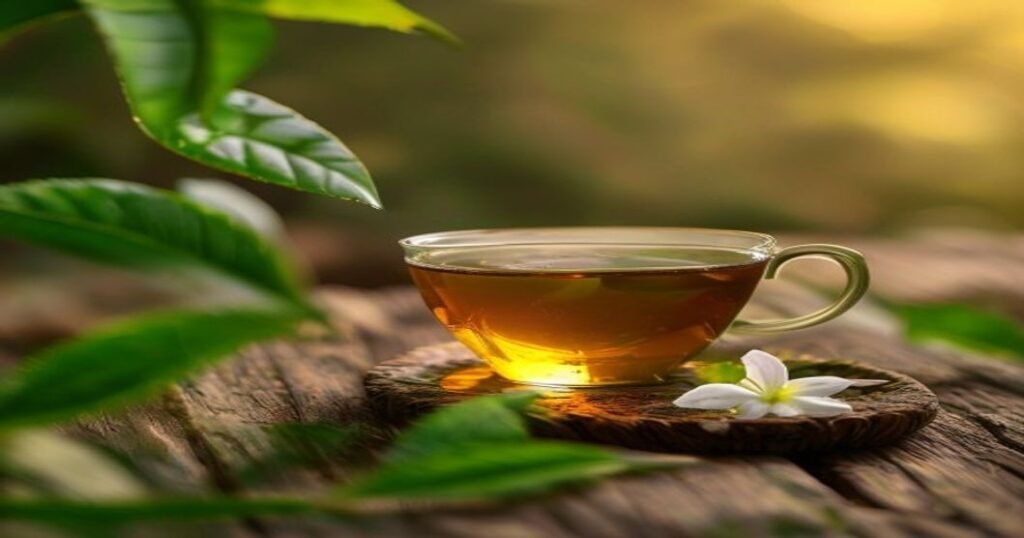
Jasmine tea is one of the most recognisable scented teas worldwide, but most people don’t know how the jasmine flavour actually gets into the leaf — or that “jasmine tea” can mean genuinely different things depending on the tea base it’s made with. We make two distinct jasmine teas, and they’re worth understanding separately.
How Jasmine Tea Is Traditionally Made
Authentic jasmine tea isn’t simply tea leaves with jasmine oil sprayed on. The traditional method involves layering tea leaves with fresh jasmine blossoms overnight, allowing the tea to absorb the flowers’ natural scent through direct contact, then removing the spent blossoms — sometimes repeating this process multiple times for a stronger, more layered aroma. This is a genuinely time-intensive method, which is part of why well-made jasmine tea costs more than tea with synthetic jasmine flavouring added.
Jasmine Green Tea
Our Jasmine Green Tea uses our single-garden green tea as its base, scented with jasmine. Green tea is the traditional pairing for jasmine in Chinese tea-making, and the combination works because green tea‘s relatively delicate character lets the jasmine aroma come through clearly rather than being overpowered by a stronger tea base.
Brewing: 75–85°C, 2–3 minutes, re-brewable up to 3 times like our other green teas — and notably, the jasmine aroma often becomes more pronounced rather than weaker on the second steep, as the leaf continues to release scent.
Jasmine Orthodox Tea
Our Jasmine Orthodox Tea takes a different approach: jasmine scenting on our full-leaf black orthodox base. This produces a noticeably different cup — the malty, bolder character of black tea underneath the jasmine aroma, rather than green tea‘s lighter profile. It’s a less common pairing than jasmine green tea, but one we think works particularly well with our orthodox base specifically because the tea has enough body to carry the floral note without becoming one-dimensional.
Brewing: 90–95°C, 3 minutes, re-brewable like our other orthodox teas.
Which Should You Try First?
If you’ve had jasmine tea before, it was very likely jasmine green tea — it’s by far the more common version internationally. Our Jasmine Green Tea is the closer match to that familiar profile.
If you already enjoy black tea and want to try jasmine without losing that boldness, Jasmine Orthodox Tea is the better starting point — it reads more as “black tea with floral notes” than “floral tea.”
Both From the Same Process
Whichever base you choose, both jasmine teas go through the same careful scenting process in our West Garo Hills factory — no shortcuts with synthetic jasmine oil. Try our Jasmine Green Tea or Jasmine Orthodox Tea.