
For further reading, see Hibiscus sabdariffa health effects (PubMed).
Hibiscus Roselle Tea Benefits — Everything about hibiscus roselle tea — blood pressure research, anthocyanin content, taste profile, and step-by-step brewing guide.
For further research, see hibiscus blood pressure clinical evidence.
Roselle — more commonly known internationally as hibiscus tea — is a tart, deep-red infusion that’s become popular well beyond its traditional growing regions, and for reasons that hold up reasonably well under scrutiny.
What Roselle Actually Is
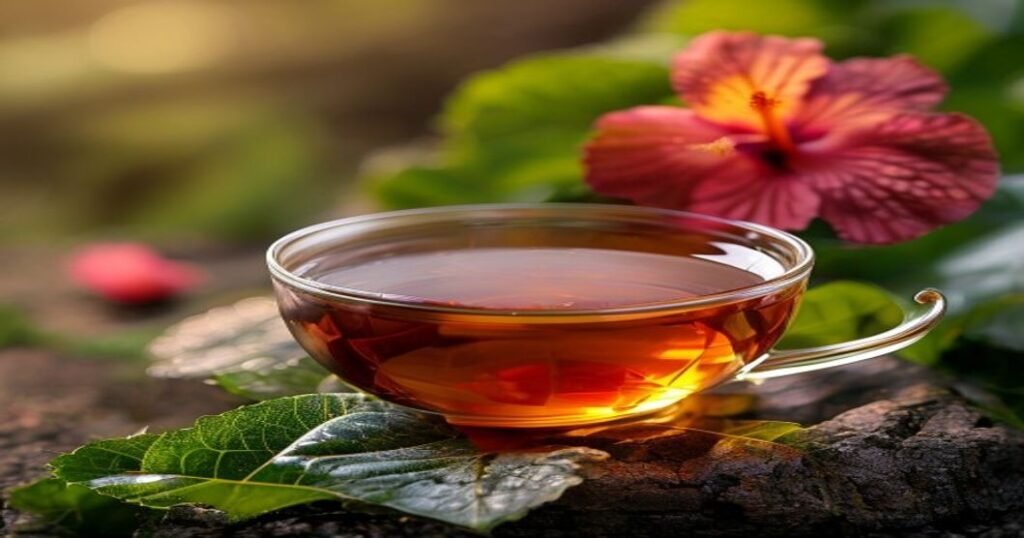
Roselle (*Hibiscus sabdariffa*) is a different plant from the ornamental hibiscus flowers you might see in a garden — it’s grown specifically for its calyces (the fleshy part surrounding the seed pod), which are dried and steeped to make the tea most people know as “hibiscus tea.” Our Roselle Tea blends dried roselle calyces with an orthodox black tea base from our own garden, rather than being a pure herbal infusion.
What’s Genuinely Supported About Its Benefits
Roselle has one of the better-evidenced reputations among “wellness” teas, specifically around blood pressure. Multiple studies have looked at hibiscus tea’s effect on blood pressure, with a reasonably consistent finding of a modest reduction with regular consumption. This is a meaningfully stronger evidence base than many other herbal tea claims.
Roselle is also notably high in Vitamin C and anthocyanins (the same antioxidant pigment family found in our Blue Tea) — both genuinely present in the plant, not marketing additions.
A necessary caveat: if you have existing blood pressure concerns or are on blood pressure medication, talk to a doctor before treating hibiscus tea as a regular intervention rather than an occasional drink. A tea that modestly affects blood pressure is exactly the kind of thing worth discussing with a doctor if you’re already managing that condition medically.
What It Tastes Like
Roselle has a distinctly tart, almost cranberry-like sourness — closer to a fruit infusion than a typical tea. Blended onto our orthodox black base, the result is a tea with real body and depth rather than a thin herbal taste, with the roselle’s tartness balancing the malty character of the black tea underneath.
How to Brew It
- Water temperature: 90–95°C
- Steep time: 5 minutes (slightly longer than our other orthodox blends, to let the roselle calyces release their colour and tartness fully)
- Re-brewable: yes, as with our other orthodox-based teas — though the second steep will be notably milder in tartness
- Many people add a small amount of honey to balance the tartness, rather than milk
Try It
Roselle Tea sits alongside our other orthodox blends — Rose, Jasmine Orthodox, and Vanilla — all built on the same single-garden black tea base. Explore our Black Orthodox Tea range.