
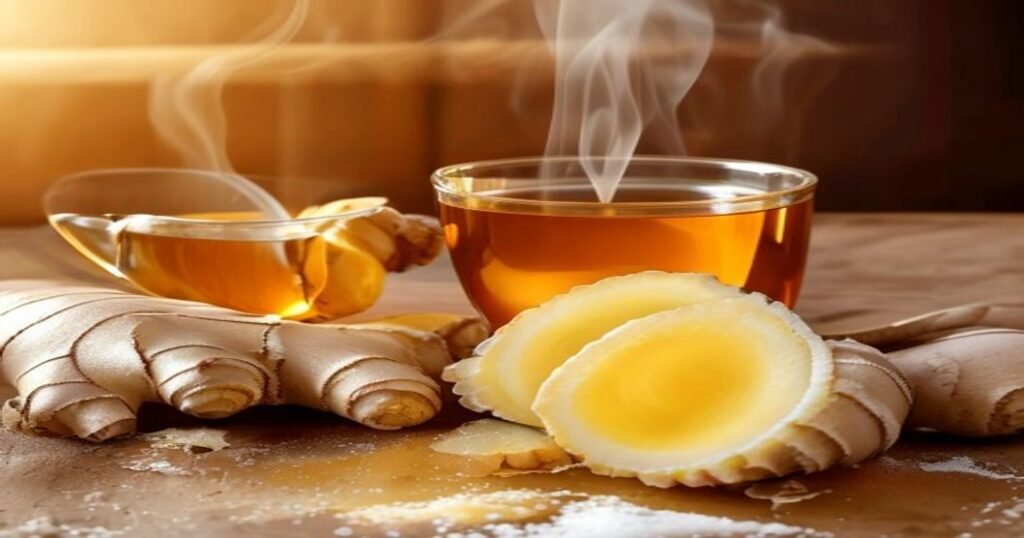
Ginger In Tea — Ginger in Tea: The Root That Has Been Warming India for Three Thousand Years — is one of the topics we explore on The Tea Story blog, drawing on our direct experience growing, processing, and tasting tea from our own garden in West Garo Hills, Meghalaya.
Zingiber officinale — ginger — arrived in Indian culinary and medicinal practice so long ago that its exact origin has been debated by botanists for generations. The plant no longer exists in a wild state that can be definitively identified as ancestral; it has been cultivated for so long, and selected so thoroughly for useful characteristics, that the lineage is blurred. What is not blurred is its centrality to Indian food and medicine across three thousand years of documented use.
In tea, ginger does one specific thing very well: it produces warmth. Not the warmth of temperature, though that is part of it, but a spreading internal warmth — a mild vasodilatory and circulatory effect — that arrives within a few minutes of drinking ginger tea and persists for some time after the cup is finished. This is the quality that makes ginger the standard addition to winter chai across the subcontinent.
Fresh vs Dried: A Genuine Difference
Ginger in tea can be used in two forms: freshly grated or sliced, and dried ground or whole-dried pieces. These are chemically different materials that produce different effects. Fresh ginger contains primarily gingerols — the compounds responsible for the sharp, clean, bright bite of raw ginger. Dried ginger converts some gingerols to shogaols — more intensely spicy compounds that produce a deeper, more lingering heat. The dried form is more potent weight-for-weight than fresh.
In chai, fresh ginger gives a lively, immediate warmth. In spiced blends where the ginger is dried and brewed with tea leaves, the warmth is deeper and stays longer. Neither is better; they are different, and the choice depends on what you want from the cup.
Every Indian family that makes chai from scratch has a different ginger ratio — and they are all certain theirs is the right one. The correct answer is that there is no correct answer, which is what makes regional chai culture so interesting.
What the Research Says About Ginger
Ginger has a substantial body of clinical research behind it for nausea — specifically for chemotherapy-induced nausea, post-operative nausea, and pregnancy-related morning sickness — with multiple randomised controlled trials showing statistically significant reduction in nausea symptoms. This is one of the better-evidenced claims in herbal medicine.
Research on ginger’s anti-inflammatory and digestive effects is more preliminary but consistent in direction: gingerols and shogaols inhibit inflammatory pathways in laboratory studies, and several clinical trials suggest meaningful effects on markers of inflammation in conditions like osteoarthritis. The evidence for digestion support — reduced bloating, improved gastric motility — is positive but smaller in scale.
Our Ginger Tea
Our Ginger Tea from West Garo Hills uses whole dried ginger with our CTC tea base — the combination that produces a robust, warming cup that can stand up to milk and work as a genuine chai base, or be drunk without milk as a clean, ginger-forward brew. The ginger is dried and sized to release its compounds gradually through the brewing process, not in an immediate rush of spice. The result is warmth that builds across the cup rather than hitting immediately and fading.