
Posted on Leave a comment

Roselle Tea Galda Tea (Hibiscus Tea): The Deep-Red Flower That Turns Tea Into Something Extraordinary

Roselle tea

Roselle Tea also known as galda tea in garo : The Deep-Red Flower That Turns Tea Into Something Extraordinary — is one of the topics we explore on The Tea Story blog, drawing on our direct experience growing, processing, and tasting tea from our own garden in West Garo Hills, Meghalaya.

Most people who have drunk hibiscus tea have encountered roselle without knowing the distinction. Hibiscus is a large genus of over two hundred flowering plant species. The one used in tea is a specific species — Hibiscus sabdariffa, commonly called roselle — grown primarily for the fleshy calyces (the cup-shaped structure that holds the flower) rather than the petals themselves. When someone says “hibiscus tea,” they almost always mean roselle tea.

The distinction matters because the flavour and the active compounds are both specific to this species. Other hibiscus flowers do not produce the same tea.

What Roselle Tastes Like

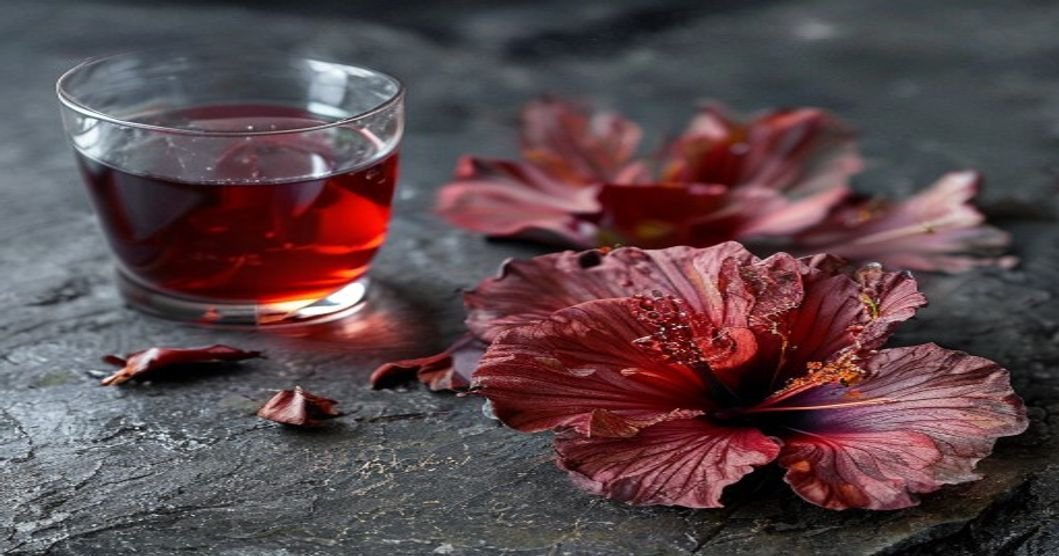
Roselle tea is tart — genuinely, pleasurably tart, in the way that good cranberry or pomegranate juice is tart. The colour is deep red, almost purple-burgundy, and it does not lighten much with dilution. The aroma is floral and slightly acidic. There is no bitterness in the way that over-brewed black tea is bitter: the sharpness of roselle is from organic acids (primarily hibiscic acid, citric acid, and malic acid) rather than tannins. A taste that also reminds us of gooseberry (amla).

It can be drunk hot or cold. Cold-brewed roselle tea is one of the more visually striking beverages you can prepare at home: deeply coloured, clear, and with an aroma that carries even at fridge temperature. Hot, it warms up the sourness slightly and brings out a more floral background note. Either way, it is a drink that does not resemble black or green tea and that people who “don’t like tea” often find they like immediately.


Roselle is not a flavoured tea. It is an entirely different category of brewed drink that happens to use hot water and a dried plant material. Approaching it with black-tea expectations will confuse you. Approaching it on its own terms will not.

The Research

Roselle is one of the better-researched functional foods. The anthocyanins that give it its deep colour are potent antioxidants. Multiple studies — including some randomised controlled trials in humans, which are a higher standard of evidence than most wellness ingredients achieve — have found meaningful associations between regular roselle consumption and reduced blood pressure, with effect sizes that are modest but consistent across different populations.

Studies have also documented effects on cholesterol profiles and on inflammatory markers. None of this is large enough to replace medical treatment for hypertension or cardiovascular disease. But as part of a daily routine for general wellness maintenance, the evidence for roselle is more substantial than for most of the “superfoods” that occupy adjacent shelf space in health stores.

How to Brew It

One teaspoon of dried roselle calyx pieces per cup, water at full boil, steep for five to eight minutes. The longer the steep, the deeper the colour and the more pronounced the tartness. If you want to reduce the tartness, add a small amount of honey or jaggery — the sweetness balances the acid without eliminating it. Cold brew works at the ratio of one tablespoon per 500ml overnight in the refrigerator.

Our Hibiscus Tea blend uses dried roselle calyces paired with the natural sweetness of our West Garo Hills green tea, which rounds the tartness and adds a gentle floral background. The combination is more complex than either component alone — the green tea’s L-theanine softens the overall profile while the roselle provides structure and colour that green tea alone does not have.
Posted on Leave a comment

Ginger in Tea: The Root That Has Been Warming India for Three Thousand Years

Ginger In Tea — Ginger in Tea: The Root That Has Been Warming India for Three Thousand Years — is one of the topics we explore on The Tea Story blog, drawing on our direct experience growing, processing, and tasting tea from our own garden in West Garo Hills, Meghalaya.

Zingiber officinale — ginger — arrived in Indian culinary and medicinal practice so long ago that its exact origin has been debated by botanists for generations. The plant no longer exists in a wild state that can be definitively identified as ancestral; it has been cultivated for so long, and selected so thoroughly for useful characteristics, that the lineage is blurred. What is not blurred is its centrality to Indian food and medicine across three thousand years of documented use.

In tea, ginger does one specific thing very well: it produces warmth. Not the warmth of temperature, though that is part of it, but a spreading internal warmth — a mild vasodilatory and circulatory effect — that arrives within a few minutes of drinking ginger tea and persists for some time after the cup is finished. This is the quality that makes ginger the standard addition to winter chai across the subcontinent.

Fresh vs Dried: A Genuine Difference

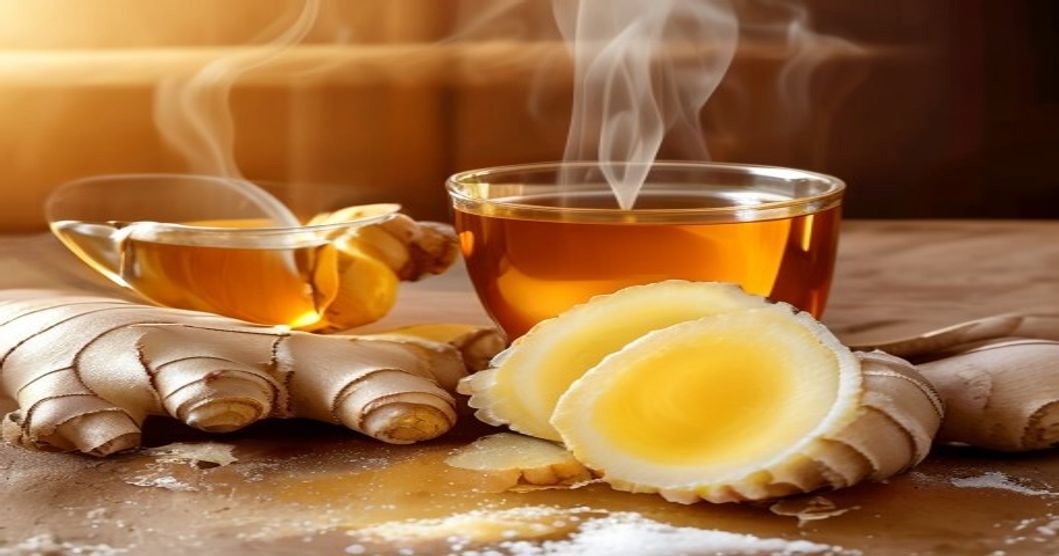
Ginger in tea can be used in two forms: freshly grated or sliced, and dried ground or whole-dried pieces. These are chemically different materials that produce different effects. Fresh ginger contains primarily gingerols — the compounds responsible for the sharp, clean, bright bite of raw ginger. Dried ginger converts some gingerols to shogaols — more intensely spicy compounds that produce a deeper, more lingering heat. The dried form is more potent weight-for-weight than fresh.

In chai, fresh ginger gives a lively, immediate warmth. In spiced blends where the ginger is dried and brewed with tea leaves, the warmth is deeper and stays longer. Neither is better; they are different, and the choice depends on what you want from the cup.

Every Indian family that makes chai from scratch has a different ginger ratio — and they are all certain theirs is the right one. The correct answer is that there is no correct answer, which is what makes regional chai culture so interesting.

What the Research Says About Ginger

Ginger has a substantial body of clinical research behind it for nausea — specifically for chemotherapy-induced nausea, post-operative nausea, and pregnancy-related morning sickness — with multiple randomised controlled trials showing statistically significant reduction in nausea symptoms. This is one of the better-evidenced claims in herbal medicine.

Research on ginger’s anti-inflammatory and digestive effects is more preliminary but consistent in direction: gingerols and shogaols inhibit inflammatory pathways in laboratory studies, and several clinical trials suggest meaningful effects on markers of inflammation in conditions like osteoarthritis. The evidence for digestion support — reduced bloating, improved gastric motility — is positive but smaller in scale.

Our Ginger Tea

Our Ginger Tea from West Garo Hills uses whole dried ginger with our CTC tea base — the combination that produces a robust, warming cup that can stand up to milk and work as a genuine chai base, or be drunk without milk as a clean, ginger-forward brew. The ginger is dried and sized to release its compounds gradually through the brewing process, not in an immediate rush of spice. The result is warmth that builds across the cup rather than hitting immediately and fading.