Posted on Leave a comment

Green Tea and Your Liver: The Evidence on NAFLD, Liver Enzymes, and Hepatoprotection

Tea Liver Health Nafld Detox — The evidence on green tea and liver health — NAFLD reversal, liver enzyme reduction, hepatoprotective mechanisms, and what the research shows about daily green tea.

Tea Liver Health Nafld Detox: What You Need to Know

For further research, see green tea liver health NAFLD research.

⚠ Medical Disclaimer: This article is for informational purposes only. Tea is a complement to a healthy lifestyle — not a treatment or cure for any medical condition. Always consult a qualified doctor or healthcare provider before making changes to manage any health condition. Do not replace prescribed medication with tea or any other food supplement.

Non-alcoholic fatty liver disease (NAFLD) — the accumulation of fat in liver cells in people who drink little or no alcohol — has become one of India’s most prevalent and underdiagnosed conditions. Estimates suggest NAFLD affects between 9% and 32% of the Indian adult population, driven primarily by obesity, Type 2 diabetes, insulin resistance, and high-carbohydrate diets.

NAFLD is significant because it can progress to non-alcoholic steatohepatitis (NASH), liver cirrhosis, and liver failure. There is currently no approved pharmaceutical treatment for NAFLD — lifestyle modification remains the primary intervention. This makes the evidence for green tea particularly relevant.

What the clinical trials show

A 2016 randomised controlled trial published in the International Journal of Molecular Sciences found that 12 weeks of green tea extract supplementation (equivalent to approximately 4 cups of green tea daily) significantly reduced liver fat content (measured by ultrasound), and lowered serum ALT and AST enzyme levels — the standard markers of liver inflammation and damage.

A 2017 systematic review in the Nutrition Journal pooling data from 15 randomised trials found consistent evidence that green tea consumption reduced serum levels of ALT (alanine aminotransferase) and AST (aspartate aminotransferase) — enzymes that leak from damaged liver cells into the bloodstream. Normalisation of these enzymes is a standard measure of improved liver health.

A 2021 meta-analysis specifically examining green tea and NAFLD found that green tea supplementation for 8-12 weeks significantly reduced hepatic fat accumulation and liver enzyme levels compared to placebo, with the effect being more pronounced in participants with higher baseline liver fat.

The mechanism

EGCG and other catechins in green tea protect the liver through multiple pathways. They reduce lipid peroxidation — the oxidative damage of fats in liver cells that initiates the inflammatory cascade. They inhibit fatty acid synthase — an enzyme involved in the synthesis of new fat in the liver. They activate AMPK, a cellular energy sensor that promotes fat burning and reduces fat storage in liver cells. They also reduce inflammatory cytokine production in liver tissue, interrupting the progression from simple fatty liver to inflammatory NASH.

Important caution

Green tea extract supplements (capsules with concentrated EGCG) have been associated with rare cases of drug-induced liver injury when taken in high doses — particularly above 800mg EGCG per day. This risk does not apply to drinking tea (which provides 50-100mg EGCG per cup, well within safe limits). Drink the tea; be cautious with concentrated supplements.

Teas to try from Tea Story: Premium Green Tea — 3-4 cups daily for the EGCG doses used in the clinical trials showing liver benefit. Unsweetened, between meals.
Posted on Leave a comment

Tea for Skin: How Green Tea and Hibiscus Affect Acne, Aging, and UV Protection from the Inside

Green Tea For Skin Health Acne Aging — How green tea and hibiscus affect skin health — acne, aging, UV protection and collagen. Evidence-based guide from The Tea Story.

Green Tea For Skin Health Acne Aging: What You Need to Know

Green Tea For Skin Health Acne Aging: What You Need to Know

Green Tea For Skin Health Acne Aging: What You Need to Know

Green Tea For Skin Health Acne Aging: What You Need to Know

Green Tea For Skin Health Acne Aging: What You Need to Know

Green Tea For Skin Health Acne Aging: What You Need to Know

Green Tea For Skin Health Acne Aging: What You Need to Know

Green Tea For Skin Health Acne Aging: What You Need to Know

Green Tea For Skin Health Acne Aging: What You Need to Know

Green Tea For Skin Health Acne Aging: What You Need to Know

⚠ Medical Disclaimer: This article is for informational purposes only. Tea is a complement to a healthy lifestyle — not a treatment or cure for any medical condition. Always consult a qualified doctor or healthcare provider before making changes to manage any health condition. Do not replace prescribed medication with tea or any other food supplement.

Skin health is one of the areas where tea’s benefits are supported by both strong mechanistic evidence and a growing body of clinical trials. The skin is the body’s largest organ, and it is constantly exposed to oxidative stress from UV radiation, pollution, and internal metabolic processes. Tea’s antioxidant compounds — particularly EGCG in green tea and anthocyanins in hibiscus — address multiple pathways of skin damage simultaneously.

Green tea and UV protection

A landmark 2003 study in the Journal of Nutrition found that women consuming green tea daily for 12 weeks had significantly better UV-induced skin protection as measured by minimal erythemal dose (the UV threshold for skin reddening). The green tea group also showed improved skin elasticity, roughness, scaling, and density compared to the placebo group. The mechanism is EGCG’s ability to inhibit UV-induced DNA damage in skin cells and reduce the inflammatory cascade that follows sun exposure.

Green tea and acne

Acne is primarily driven by excess sebum production and the inflammation triggered by Cutibacterium acnes bacteria. A 2012 randomised controlled trial published in the Journal of Investigative Dermatology found that EGCG directly inhibits sebum production by suppressing the androgen receptor activity in sebaceous glands — the skin cells that produce oil. A 2017 split-face trial found topical green tea application significantly reduced lesion count and sebum levels versus placebo.

For internal consumption, regular green tea drinking reduces systemic inflammation levels (including IL-6 and TNF-alpha), which is relevant because inflammatory acne (the red, cystic type rather than comedonal whiteheads/blackheads) is driven by systemic rather than purely local inflammation.

Hibiscus and collagen synthesis

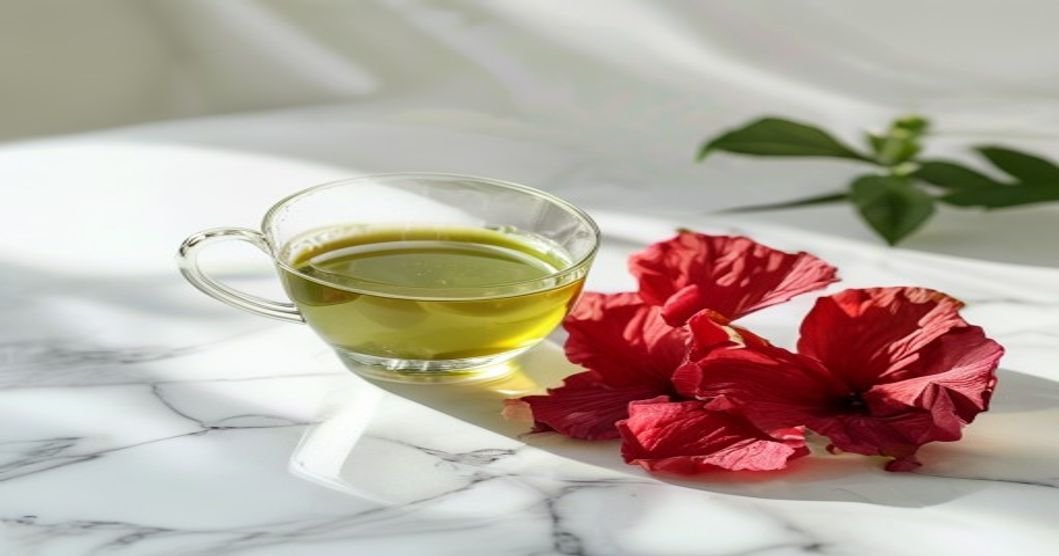
Collagen is the structural protein that gives skin its firmness and elasticity. Collagen synthesis requires Vitamin C as a cofactor — without Vitamin C, collagen fibres cannot form properly. Hibiscus (Roselle) contains a remarkable concentration of Vitamin C — studies have measured between 12mg and 40mg per 100g of dried hibiscus, with concentrations varying by growing conditions. More significantly, hibiscus contains anthocyanins that directly inhibit collagenase and elastase — the enzymes that break down existing collagen and elastin in the skin. This dual action (supporting synthesis + inhibiting breakdown) makes hibiscus unusually effective for skin integrity.

Anti-aging: the oxidative stress pathway

Skin aging is fundamentally an oxidative stress process — reactive oxygen species (from UV, pollution, and normal metabolism) damage cellular DNA, lipid membranes, and structural proteins. Green tea catechins have ORAC (oxygen radical absorbance capacity) values among the highest measured for any food compound. Regular consumption significantly reduces systemic oxidative stress markers, protecting skin cells along with every other cell in the body.

Teas to try from Tea Story: Premium Green Tea for EGCG (UV protection, acne, anti-aging antioxidants) and Hibiscus Roselle Tea for collagenase inhibition and Vitamin C. Both best consumed without sugar.

Posted on Leave a comment

Tea and Your Brain: The Emerging Science of Green Tea and Cognitive Decline Prevention

Tea Cognitive Decline Brain Health — The emerging science on green tea and cognitive decline — EGCG, neuroplasticity, and what the research says about Alzheimer's prevention.

Tea Cognitive Decline Brain Health: What You Need to Know

For further research, see green tea cognitive decline research.

⚠ Medical Disclaimer: This article is for informational purposes only. Tea is a complement to a healthy lifestyle — not a treatment or cure for any medical condition. Always consult a qualified doctor or healthcare provider before making changes to manage any health condition. Do not replace prescribed medication with tea or any other food supplement.

Dementia and cognitive decline are among the most feared consequences of aging. India is projected to have among the largest dementia populations in the world by 2050, given its aging demographic. While there is no cure for Alzheimer’s disease or other dementias, the evidence that lifestyle factors — including diet — can delay onset and slow progression has become increasingly strong.

Epidemiological evidence

A large Japanese cohort study — the Ohsaki cohort — following 14,001 elderly adults found that those consuming 2 or more cups of green tea daily had significantly lower rates of cognitive impairment compared to those drinking less, after adjusting for potential confounders including education, smoking, and physical activity. The protective effect was dose-dependent: more cups, stronger protection.

A 2006 cross-sectional study of 1,003 Japanese adults aged 70+ found that higher green tea consumption was independently associated with lower prevalence of cognitive impairment — not so for black tea or coffee, suggesting a specific green tea compound effect rather than a caffeine effect.

EGCG and amyloid-beta plaques

The defining pathology of Alzheimer’s disease is the accumulation of amyloid-beta (Aβ) plaques in the brain. EGCG has been shown in multiple in vitro and animal studies to inhibit the aggregation of amyloid-beta peptides and promote the disaggregation of existing plaques. A 2008 study in Proceedings of the National Academy of Sciences identified the mechanism: EGCG binds directly to amyloid-beta monomers, redirecting their folding away from the aggregation pathway. Human clinical trials of EGCG for Alzheimer’s prevention are ongoing — the preclinical evidence is strong enough to have generated multiple Phase II trials.

L-theanine and hippocampal neurogenesis

The hippocampus — the brain region critical for forming new memories — is one of the first areas damaged in Alzheimer’s disease and is also suppressed by chronic stress. L-theanine has been shown to promote neurogenesis (the formation of new neurons) in the hippocampus and to protect hippocampal neurons from glutamate-induced excitotoxicity — a major pathway of neuronal death in both acute brain injury and chronic neurodegenerative conditions.

BDNF: the brain’s growth factor

Brain-derived neurotrophic factor (BDNF) is a protein that supports neuronal survival, growth, and the formation of new synaptic connections — it is essentially the brain’s growth hormone. Depression, chronic stress, sedentary behaviour, and poor diet all reduce BDNF levels, and low BDNF is strongly associated with cognitive decline. Green tea polyphenols and L-theanine have been shown to increase BDNF expression in animal models, representing a plausible mechanism for the observed cognitive protection in epidemiological studies.

How much and how

The cohort studies showing cognitive benefit found associations beginning at 2 cups daily. The benefit appears to increase with consumption up to 4-5 cups. Consistency over years and decades is what the epidemiological data represents — this is a lifestyle protection, not a short-term intervention.

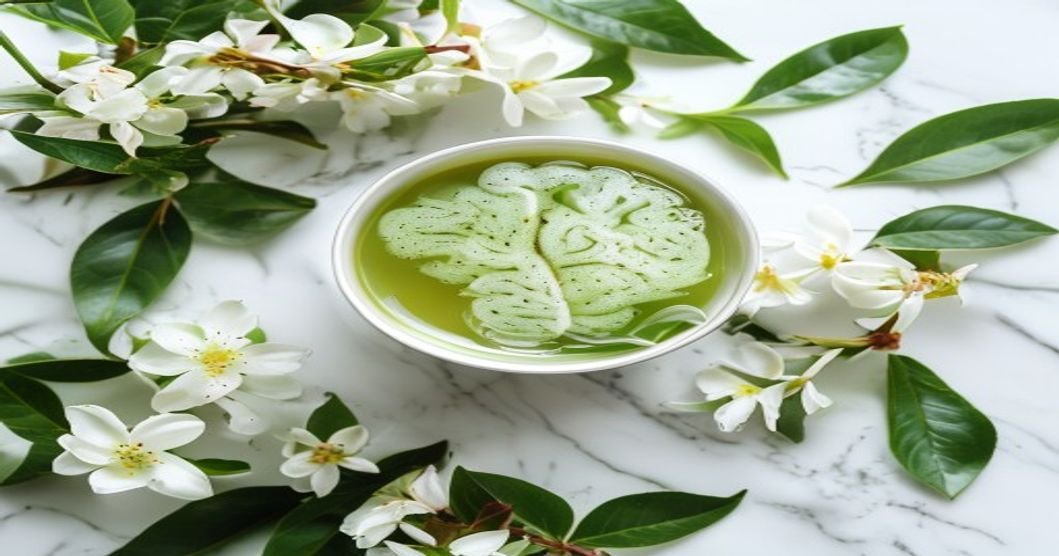
Teas to try from Tea Story: Premium Green Tea for EGCG and L-theanine. Jasmine Green Tea for the additional olfactory stimulation (scent perception is processed in the same brain regions vulnerable to Alzheimer’s, and maintaining olfactory engagement is associated with reduced risk).

Posted on Leave a comment

Green Tea and Your Eyes: How EGCG Reaches Ocular Tissue and What It Does There

Tea Eye Health Macular Degeneration — How green tea EGCG reaches ocular tissue — the research on macular degeneration, glaucoma prevention, and eye health benefits of daily green tea.

Tea Eye Health Macular Degeneration: What You Need to Know

For further research, see EGCG ocular tissue research.

⚠ Medical Disclaimer: This article is for informational purposes only. Tea is a complement to a healthy lifestyle — not a treatment or cure for any medical condition. Always consult a qualified doctor or healthcare provider before making changes to manage any health condition. Do not replace prescribed medication with tea or any other food supplement.

Age-related macular degeneration (AMD) is the leading cause of vision loss in people over 50, and glaucoma — characterised by elevated intraocular pressure damaging the optic nerve — affects an estimated 12 million Indians. Both conditions involve significant oxidative stress components, making the antioxidant properties of tea directly relevant.

EGCG penetrates ocular tissue

A critical question for any potential dietary intervention for eye health is whether the active compounds actually reach the eye. A landmark 2010 study published in the Journal of Agricultural and Food Chemistry provided direct evidence: researchers fed rats green tea and measured catechin levels in different eye tissues 0.5-20 hours later. They found that EGCG and other catechins were detected in the retina, vitreous humour, aqueous humour, lens, and choroid — with the retina showing the highest absorption. This established that orally consumed green tea catechins do reach ocular tissue at biologically meaningful concentrations.

EGCG and retinal protection

The retina is one of the highest oxygen-consuming tissues in the body, making it particularly vulnerable to oxidative stress. A 2010 study in Chemical-Biological Interactions found that EGCG protected retinal ganglion cells (the neurons that transmit visual information to the brain) from oxidative damage, significantly reducing cell death in a hydrogen peroxide stress model. Retinal ganglion cell death is the primary mechanism of vision loss in glaucoma.

A 2012 epidemiological study found that regular green tea consumption was associated with a significantly lower prevalence of glaucoma in a population-based study of over 10,000 adults.

AMD and antioxidant protection

AMD involves the progressive destruction of the macula — the central area of the retina responsible for sharp, detailed vision — driven by oxidative damage to retinal pigment epithelial cells. The Age-Related Eye Disease Study (AREDS) established that antioxidant supplementation (vitamins C, E, zinc, and lutein) slows AMD progression. Tea catechins, with their exceptional antioxidant capacity, complement this antioxidant protective strategy. The specific penetration of EGCG into retinal tissue (demonstrated in the 2010 study) suggests it may provide protection specifically at the site of AMD damage.

Digital eye strain: a modern concern

Blue light emitted by digital screens produces a specific form of oxidative stress in photoreceptor cells called blue-light-induced retinal phototoxicity. A 2017 study found that EGCG significantly protected photoreceptor cells from blue-light-induced damage — a finding with practical relevance for the majority of Indian professionals spending 8+ hours daily in front of screens.

Teas to try from Tea Story: Premium Green Tea — the documented ocular benefits are specifically attributable to green tea catechins, particularly EGCG. 2-3 cups daily provides meaningful retinal antioxidant coverage. Whole-leaf is preferred as it provides catechins in their native matrix.

Posted on Leave a comment

Tea and Bone Density: The Research on Green Tea, Osteoblasts, and Osteoporosis Prevention

Tea Bone Density Osteoporosis — The research on green tea and bone density — how EGCG stimulates osteoblasts, reduces bone resorption, and what it means for osteoporosis prevention.

Tea Bone Density Osteoporosis: What You Need to Know

For further research, see tea and bone density research.

⚠ Medical Disclaimer: This article is for informational purposes only. Tea is a complement to a healthy lifestyle — not a treatment or cure for any medical condition. Always consult a qualified doctor or healthcare provider before making changes to manage any health condition. Do not replace prescribed medication with tea or any other food supplement.

Osteoporosis — the progressive loss of bone density that leads to increased fracture risk — is a significant and often underappreciated public health burden in India. An estimated 50 million Indians are affected, with women being at particular risk post-menopause due to oestrogen loss (oestrogen plays a key role in maintaining bone density). Hip fractures from osteoporosis-related falls carry a mortality rate of up to 30% in the year following injury.

Tea drinkers have higher bone mineral density

The epidemiological evidence is consistent: regular tea drinkers have higher bone mineral density (BMD) than non-tea drinkers. A 2002 cross-sectional study in the American Journal of Clinical Nutrition of 1,256 older women found that long-term tea drinkers had significantly higher BMD at the spine and hip compared to non-drinkers, after adjusting for confounders including calcium intake, physical activity, and smoking. A 2009 review of multiple population studies confirmed this association.

The cellular mechanism: osteoblasts and osteoclasts

Bone is continuously remodelled through a balance between two cell types: osteoblasts (which form new bone) and osteoclasts (which break down old bone). Osteoporosis occurs when osteoclast activity exceeds osteoblast activity — the balance shifts toward net bone loss.

EGCG acts on both sides of this balance. A 2011 study in the Journal of Nutritional Biochemistry found that EGCG significantly stimulated osteoblast differentiation and mineralisation (bone formation), while simultaneously inhibiting osteoclastogenesis (the development of bone-destroying osteoclasts). The mechanism involves EGCG’s stimulation of the Wnt/beta-catenin signalling pathway — the primary cellular pathway driving osteoblast activity — and inhibition of RANKL-mediated osteoclast formation.

Fluoride and the bone complexity

An important nuance: while tea’s polyphenols support bone health, the fluoride content of tea (discussed in the thyroid article) is also relevant for bones. Moderate fluoride exposure (1-4mg/day) actually strengthens bone mineral density. High exposure (above 8mg/day chronically) causes skeletal fluorosis — abnormally dense but brittle bone. The 2-4 cups of whole-leaf green tea per day referenced in the BMD studies is well within the safe range.

How much and how

The BMD associations were found with habitual consumption of 3+ cups per day over many years. This is a long-term protective effect, not a short-term intervention. For post-menopausal women at risk of osteoporosis, regular green tea consumption is a safe, evidence-supported complement to calcium, Vitamin D, and weight-bearing exercise.

Teas to try from Tea Story: Premium Green Tea for EGCG-mediated osteoblast stimulation and osteoclast inhibition. Black Orthodox Tea — the same bone density associations have been observed with black tea in some studies, likely through different polyphenol mechanisms.