

Posted on Leave a comment

Tea for Energy: Why Green Tea Gives Sustained Energy Without the Coffee Crash — The Physiology

Tea Energy Chronic Fatigue Crash — The physiology of green tea energy — how L-theanine and caffeine work together to produce sustained alertness without the spike-and-crash pattern of coffee.

Tea Energy Chronic Fatigue Crash: What You Need to Know

For further research, see L-theanine caffeine energy research.

⚠ Medical Disclaimer: This article is for informational purposes only. Tea is a complement to a healthy lifestyle — not a treatment or cure for any medical condition. Always consult a qualified doctor or healthcare provider before making changes to manage any health condition. Do not replace prescribed medication with tea or any other food supplement.

Chronic fatigue is one of the most common complaints in modern Indian professional life — not the severe fatigue of CFS/ME (Chronic Fatigue Syndrome), but the persistent, daily tiredness that affects focus, mood, and productivity for millions of working adults. Understanding why different caffeinated beverages produce different energy profiles is physiologically interesting and practically useful.

Why coffee crashes and tea doesn’t (usually)

Coffee contains caffeine and relatively little else of psychoactive significance. Caffeine blocks adenosine receptors in the brain — adenosine is the molecule that accumulates during waking hours and creates sleep pressure. By blocking adenosine receptors, caffeine suppresses the sensation of tiredness. But caffeine also triggers cortisol release (stress hormone) and adrenaline, which creates the heart-rate increase, jitteriness, and anxiety that many coffee drinkers experience. When caffeine clears (4-6 hours after consumption), the accumulated adenosine floods back to its receptors simultaneously, producing the characteristic crash.

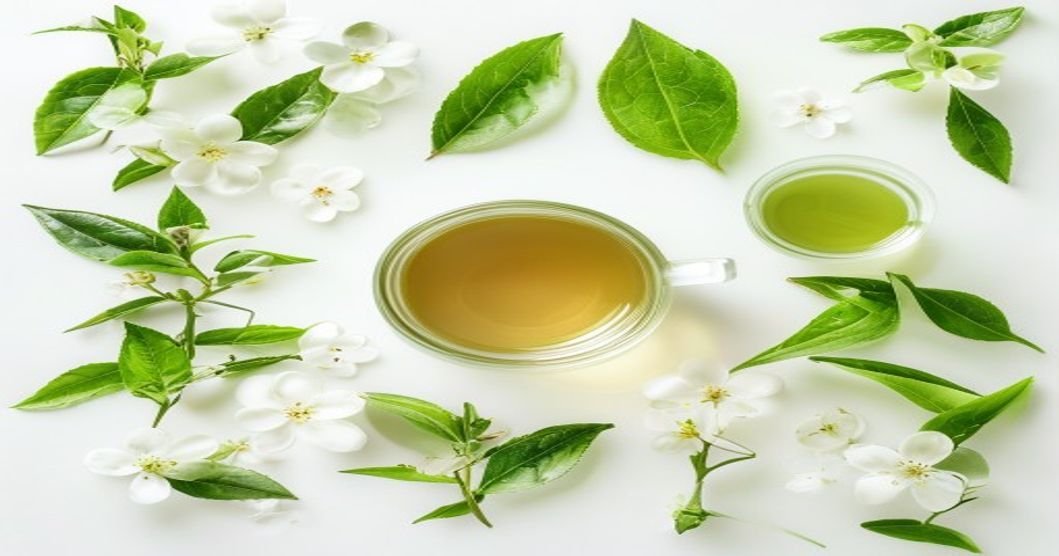
Green tea contains caffeine (roughly 25-35mg per cup, versus 80-100mg in a typical coffee) alongside L-theanine (20-50mg per cup). The L-theanine modulates caffeine’s effects in three important ways:

  • It reduces caffeine-induced cortisol and adrenaline release — the anxious edge disappears
  • It promotes alpha-wave brain activity that produces calm focus rather than anxious alertness
  • The lower caffeine dose means a gentler adenosine receptor blockade, producing a smoother energy curve and a less dramatic crash when it clears

Multiple randomised controlled trials have confirmed that the L-theanine + caffeine combination produces superior attention, reaction time, and working memory performance compared to caffeine alone, with significantly reduced reports of headache, jitteriness, and anxiety.

Ginger and mitochondrial energy

Ginger’s role in energy is distinct from caffeine’s — it operates through mitochondrial pathways rather than adenosine blockade. Gingerols activate AMPK (AMP-activated protein kinase), the cell’s master energy sensor, improving mitochondrial efficiency and fatty acid oxidation. A 2015 study found ginger supplementation significantly reduced fatigue scores and improved physical performance in athletes. For chronic fatigue, ginger’s anti-inflammatory effects are also relevant — chronic low-grade inflammation is both a cause and consequence of persistent fatigue.

Iron absorption and energy

An important practical note: tea tannins inhibit non-haem iron absorption when consumed with or immediately after meals. Iron deficiency is the most common nutritional deficiency in India, particularly among women, and iron deficiency anaemia is a primary cause of fatigue. Drinking tea within 30 minutes of meals can reduce iron absorption by 60-70%. Drink tea between meals (at least 1 hour away from food) to preserve iron absorption. This is one of the most practically significant tea-health interactions for Indian consumers.

How much and when

Green tea: 2 cups in the morning (not on an empty stomach — can increase stomach acid) and 1 cup mid-afternoon. Ginger tea: any time, especially when fatigue has a heavy or sluggish quality rather than a stressed quality. Not tea within 1 hour of meals for anyone monitoring iron levels.

Teas to try from Tea Story: Premium Green Tea for the L-theanine + caffeine sustained energy profile. Ginger Tea for AMPK-mediated metabolic energy support.
Posted on Leave a comment

Green Tea and Oral Health: How Tea Catechins Fight Cavities, Gum Disease, and Bad Breath

Tea Oral Health Dental Cavities — How green tea catechins fight cavities, gum disease, and bad breath — the antimicrobial mechanism, clinical evidence, and practical brewing guide.

Tea Oral Health Dental Cavities: What You Need to Know

For further research, see green tea oral health research.

⚠ Medical Disclaimer: This article is for informational purposes only. Tea is a complement to a healthy lifestyle — not a treatment or cure for any medical condition. Always consult a qualified doctor or healthcare provider before making changes to manage any health condition. Do not replace prescribed medication with tea or any other food supplement.

Oral health is more closely connected to systemic health than most people realise. Periodontal (gum) disease is associated with increased cardiovascular risk, worse diabetes control, and adverse pregnancy outcomes. India has a high prevalence of dental caries (cavities) and gum disease, driven partly by diet and partly by oral hygiene habits.

Green tea and cavity prevention

The primary bacterium responsible for dental cavities is Streptococcus mutans, which metabolises sugars into lactic acid that dissolves tooth enamel. EGCG and other green tea catechins have well-documented antibacterial activity against S. mutans — multiple in vitro studies have demonstrated that green tea catechins inhibit S. mutans growth, biofilm formation, and its ability to adhere to tooth surfaces.

A 2009 randomised controlled trial found that rinsing with a green tea catechin solution significantly reduced S. mutans counts in saliva compared to placebo. A 2016 clinical study in India found that green tea mouthwash was as effective as chlorhexidine (the standard antibacterial mouthwash) in reducing S. mutans counts and plaque scores, without chlorhexidine’s side effect of tooth staining.

Green tea and gum disease

A 2009 cross-sectional study of 940 Japanese men found a statistically significant inverse relationship between green tea consumption and multiple measures of periodontal disease — including bleeding on probing (an indicator of gum inflammation), probing depth (a measure of gum pocket depth), and clinical attachment loss. Men who drank at least one cup of green tea daily had significantly better periodontal health than those who did not, after adjusting for smoking and dental hygiene habits.

A 2012 randomised controlled trial found that 4 weeks of green tea supplementation significantly reduced gingival inflammation (measured by the gingival index) and pro-inflammatory cytokines in gingival crevicular fluid compared to placebo.

Tea and bad breath (halitosis)

Halitosis is caused primarily by anaerobic bacteria that produce volatile sulfur compounds (VSCs) — hydrogen sulfide, methyl mercaptan, and dimethyl sulfide. These bacteria thrive in low-oxygen environments (tongue coating, gum pockets). EGCG has documented bactericidal activity against the primary halitosis-causing anaerobes (Fusobacterium nucleatum, Porphyromonas gingivalis). A 2004 study found that polyphenols in black and green tea significantly reduced VSC production in oral bacterial cultures, explaining the traditional observation that tea drinkers tend to have better breath.

Important note: don’t add sugar

Adding sugar to tea completely reverses the cavity-prevention benefit — sugar feeds S. mutans, directly causing the damage that catechins are protecting against. Plain green tea provides oral health benefits; sweetened tea may worsen them.

Teas to try from Tea Story: Premium Green Tea — unsweetened, ideally swished gently in the mouth before swallowing (the catechins need contact time with oral surfaces). Also effective as a post-meal beverage to inhibit residual sugar-feeding bacteria.

Posted on Leave a comment

Tea and Cancer Prevention: What the Research on EGCG, Apoptosis, and Antioxidants Actually Shows

Tea Cancer Prevention Antioxidants Egcg — A careful look at the research on green tea EGCG and cancer prevention — apoptosis, antioxidant mechanisms, and what the evidence actually supports.

Tea Cancer Prevention Antioxidants Egcg: What You Need to Know

For further research, see EGCG cancer prevention research.

⚠ Medical Disclaimer: This article is for informational purposes only. Tea is a complement to a healthy lifestyle — not a treatment or cure for any medical condition. Always consult a qualified doctor or healthcare provider before making changes to manage any health condition. Do not replace prescribed medication with tea or any other food supplement.

Important context: No food, beverage, or supplement can cure cancer or guarantee prevention. What research shows for green tea is a reduced statistical risk in population studies, and specific mechanisms that may contribute to this risk reduction. This article is an honest summary of the evidence — including its significant limitations.

The epidemiological evidence

Japan — the world’s largest per-capita green tea consumer — has consistently lower incidence rates of certain cancers than comparable populations. A landmark 2001 cohort study of over 8,000 people in Nakagawa-machi found that individuals consuming more than 10 cups of green tea daily had significantly later average age of cancer onset and cancer-specific mortality. The effect was largest for breast and stomach cancers.

Multiple cohort studies have found associations between green tea consumption and reduced risk of:

  • Colorectal cancer: A 2006 meta-analysis found 18% lower risk in the highest green tea consumers
  • Stomach cancer: A 2009 meta-analysis found significantly lower gastric cancer incidence in green tea drinkers
  • Breast cancer: Cohort studies in Japan show dose-dependent inverse associations
  • Prostate cancer: A 2006 randomised trial found EGCG supplementation significantly reduced prostate cancer incidence in men with high-grade PIN (a pre-cancerous condition)

These are associations, not proof of causation. Green tea drinkers may differ systematically from non-drinkers in other lifestyle factors that reduce cancer risk.

The mechanistic evidence

What makes the epidemiological associations plausible is the strong mechanistic evidence for EGCG’s anti-cancer activity:

DNA protection: Cancer begins with DNA mutations caused by oxidative damage. EGCG’s exceptional antioxidant activity protects DNA from reactive oxygen species — reducing the fundamental initiating event of carcinogenesis.

Apoptosis induction: Cancer cells evade programmed cell death (apoptosis) — a normal mechanism by which damaged cells destroy themselves. EGCG has been shown in multiple cancer cell lines to restore apoptotic signalling, causing cancer cells to undergo programmed death. This operates through multiple pathways including caspase activation and p53 modulation.

Anti-angiogenesis: Tumours require new blood vessel formation (angiogenesis) to grow beyond 1-2mm. EGCG is a documented inhibitor of VEGF (vascular endothelial growth factor) — the primary signal for tumour angiogenesis. By blocking new blood vessel formation to tumours, EGCG limits their ability to grow and metastasise. This mechanism is significant enough that EGCG is being investigated in Phase II clinical trials as an adjunct to conventional chemotherapy.

Cell cycle arrest: EGCG interferes with the cell cycle at multiple checkpoints, preventing cancer cells from completing division. This anti-proliferative effect has been documented in breast, colon, prostate, lung, and pancreatic cancer cell lines.

How much and how

The strongest epidemiological associations were with 5-10 cups of green tea daily — a consumption level common in Japan but uncommon in India. Meaningful but smaller protective associations are observed at 3-5 cups daily. Consistency over years and decades appears to be the relevant variable.

Consuming green tea without milk (which binds catechins) and without sugar maximises bioavailability. Drinking it between meals rather than with meals also improves catechin absorption.

Teas to try from Tea Story: Premium Green Tea from West Garo Hills — whole leaf, first flush, minimal processing. These conditions preserve the highest EGCG concentrations. Whole-leaf tea provides significantly higher catechin concentrations than tea bags made from processed dust and fannings.

Tea is a complement to, not a replacement for, cancer screening, a balanced diet, regular physical activity, and medical care. If you have any concerns about cancer risk, please consult an oncologist.

Posted on Leave a comment

Tea and Bone Density: The Research on Green Tea, Osteoblasts, and Osteoporosis Prevention

Tea Bone Density Osteoporosis — The research on green tea and bone density — how EGCG stimulates osteoblasts, reduces bone resorption, and what it means for osteoporosis prevention.

Tea Bone Density Osteoporosis: What You Need to Know

For further research, see tea and bone density research.

⚠ Medical Disclaimer: This article is for informational purposes only. Tea is a complement to a healthy lifestyle — not a treatment or cure for any medical condition. Always consult a qualified doctor or healthcare provider before making changes to manage any health condition. Do not replace prescribed medication with tea or any other food supplement.

Osteoporosis — the progressive loss of bone density that leads to increased fracture risk — is a significant and often underappreciated public health burden in India. An estimated 50 million Indians are affected, with women being at particular risk post-menopause due to oestrogen loss (oestrogen plays a key role in maintaining bone density). Hip fractures from osteoporosis-related falls carry a mortality rate of up to 30% in the year following injury.

Tea drinkers have higher bone mineral density

The epidemiological evidence is consistent: regular tea drinkers have higher bone mineral density (BMD) than non-tea drinkers. A 2002 cross-sectional study in the American Journal of Clinical Nutrition of 1,256 older women found that long-term tea drinkers had significantly higher BMD at the spine and hip compared to non-drinkers, after adjusting for confounders including calcium intake, physical activity, and smoking. A 2009 review of multiple population studies confirmed this association.

The cellular mechanism: osteoblasts and osteoclasts

Bone is continuously remodelled through a balance between two cell types: osteoblasts (which form new bone) and osteoclasts (which break down old bone). Osteoporosis occurs when osteoclast activity exceeds osteoblast activity — the balance shifts toward net bone loss.

EGCG acts on both sides of this balance. A 2011 study in the Journal of Nutritional Biochemistry found that EGCG significantly stimulated osteoblast differentiation and mineralisation (bone formation), while simultaneously inhibiting osteoclastogenesis (the development of bone-destroying osteoclasts). The mechanism involves EGCG’s stimulation of the Wnt/beta-catenin signalling pathway — the primary cellular pathway driving osteoblast activity — and inhibition of RANKL-mediated osteoclast formation.

Fluoride and the bone complexity

An important nuance: while tea’s polyphenols support bone health, the fluoride content of tea (discussed in the thyroid article) is also relevant for bones. Moderate fluoride exposure (1-4mg/day) actually strengthens bone mineral density. High exposure (above 8mg/day chronically) causes skeletal fluorosis — abnormally dense but brittle bone. The 2-4 cups of whole-leaf green tea per day referenced in the BMD studies is well within the safe range.

How much and how

The BMD associations were found with habitual consumption of 3+ cups per day over many years. This is a long-term protective effect, not a short-term intervention. For post-menopausal women at risk of osteoporosis, regular green tea consumption is a safe, evidence-supported complement to calcium, Vitamin D, and weight-bearing exercise.

Teas to try from Tea Story: Premium Green Tea for EGCG-mediated osteoblast stimulation and osteoclast inhibition. Black Orthodox Tea — the same bone density associations have been observed with black tea in some studies, likely through different polyphenol mechanisms.

Posted on Leave a comment

Tea for Respiratory Health: How Green Tea and Ginger Support Lung Function and Asthma Management

Tea Respiratory Health Asthma — How green tea and ginger support respiratory health — anti-inflammatory mechanisms, asthma management, and lung function research.

Tea Respiratory Health Asthma: What You Need to Know

For further research, see green tea anti-inflammatory respiratory research.

⚠ Medical Disclaimer: This article is for informational purposes only. Tea is a complement to a healthy lifestyle — not a treatment or cure for any medical condition. Always consult a qualified doctor or healthcare provider before making changes to manage any health condition. Do not replace prescribed medication with tea or any other food supplement.

India’s air quality crisis makes respiratory health a universal concern. The Global Burden of Disease study ranks air pollution as India’s largest environmental health risk factor, contributing to chronic obstructive pulmonary disease (COPD), reduced lung function, and exacerbated asthma across the population. Asthma alone affects approximately 30 million Indians, and this number is growing.

EGCG and pulmonary inflammation

A 2011 study in the European Respiratory Journal found that EGCG significantly reduced pulmonary inflammation in a mouse model of asthma — reducing airway hyperresponsiveness, eosinophil infiltration, and inflammatory cytokine levels. The mechanism is EGCG’s inhibition of NF-κB (the inflammatory master switch discussed in the arthritis article), which controls the production of pro-inflammatory mediators that drive airway inflammation.

A 2020 retrospective study in humans found that regular green tea consumption (3+ cups daily) was associated with significantly better lung function (measured by FEV1 — forced expiratory volume) compared to non-drinkers, after adjusting for smoking status and air quality exposure. Notably, the protective effect was largest in people living in high-pollution urban environments — exactly the population who most needs it.

Ginger and bronchial smooth muscle

A 2014 study published in the American Journal of Respiratory Cell and Molecular Biology — specifically studying human airway smooth muscle cells — found that ginger compounds (6-gingerol, 8-gingerol, and 6-shogaol) produced direct bronchodilation, relaxing the smooth muscle that contracts during asthma attacks. The mechanism was through a phosphodiesterase inhibition pathway — the same mechanism as theophylline, a pharmaceutical bronchodilator used in asthma treatment. This is not a replacement for asthma medication but provides complementary support.

Menthol and breathing

Menthol from peppermint activates TRPM8 receptors in the nasal and respiratory passages — the same “cold” receptors that make mint feel cool. This activation increases perceived airflow and reduces the sensation of breathlessness even when actual airflow is unchanged. Beyond this perceptual effect, menthol has genuine mild bronchodilatory properties and is an effective decongestant, reducing nasal passage inflammation and improving breathing quality during upper respiratory infections.

How much and how

For daily respiratory protection in a polluted environment: 3 cups of green tea daily provides sustained antioxidant protection for pulmonary tissue. For acute respiratory symptoms (congestion, mild bronchospasm): ginger tea with a few mint leaves provides bronchodilation and decongestant effects within 20-30 minutes.

Teas to try from Tea Story: Premium Green Tea (EGCG pulmonary protection, daily), Ginger Tea (bronchodilation support), Mint Tea (menthol decongestant and TRPM8 airway support).